
.svg)
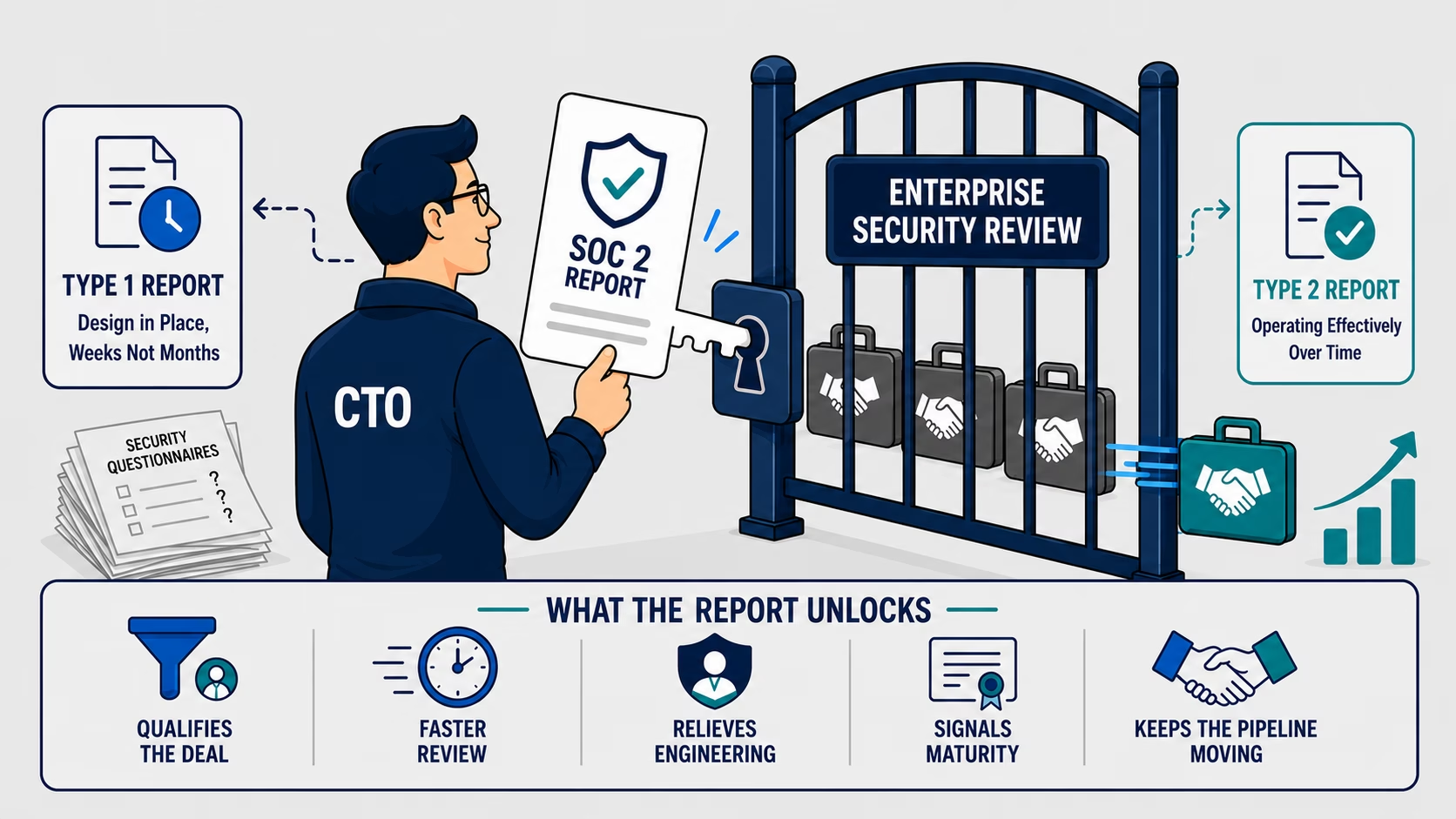
Enterprise buyers treat a SOC 2 report as the price of admission for SaaS vendors that touch their data or systems. For a CTO, that turns SOC 2 from a compliance chore into a revenue decision: the report shortens security reviews, answers most of the questionnaire before it arrives, and keeps deals moving that would otherwise stall in procurement.
This happens over and over again with our clients. During the sales process, the buyer's procurement or security team asks for a SOC 2 report and a completed security questionnaire. If you don't have them, the deal sits in security review for weeks, and sometimes the budget cycle closes before you get out. The SOC 2 primer for enterprise sales covers the framework itself; this post is about the sales side.
The Revenue Math
A SOC 2 report is an independent attestation an enterprise can reuse across its own vendor-risk process. One audit, shared with every prospect, replaces a bespoke security review per deal. That is why procurement teams ask for it first, and why vendors without one answer the same questionnaire again and again.
Why Enterprise Procurement Asks for SOC 2
Enterprises evaluate dozens or hundreds of vendors a year. They cannot audit each one themselves, so they rely on independent attestations. In North America, the default attestation for B2B software is SOC 2, defined by the AICPA and audited by CPA firms against the Trust Services Criteria: Security, Availability, Processing Integrity, Confidentiality, and Privacy.
When a vendor has a current report, the procurement process moves: the security reviewer reads the report, asks a handful of follow-ups, and signs off. When the vendor does not, the review falls back to long-form questionnaires, evidence requests, and calls with the security team, work that lands on engineering leadership in the middle of a sales cycle.
In practice, a SOC 2 report changes four things in the sales motion:
- It qualifies the deal earlier. Many enterprise procurement processes screen for SOC 2 before a technical evaluation begins. Vendors without a report or a credible timeline get filtered out before anyone sees the product.
- It compresses the security review. A report answers a large share of a standard security questionnaire in one document, so the review shifts from weeks of back-and-forth to a focused read.
- It takes the load off engineering. Without a report, questionnaire responses get drafted by whoever knows the systems, usually the CTO. With one, sales can share the report under NDA and keep the deal moving.
- It signals operating maturity. An independent audit says a third party examined the program and its evidence. That carries more weight with a security reviewer than any self-attestation a vendor can write.
The 70 Percent That Sets Your Sales Timeline
Technical teams tend to budget for SOC 2 as an infrastructure exercise: encryption, access controls, logging. The SOC 2 enterprise sales primer breaks this down in full; the short version is that technical controls are roughly 30 percent of what the audit examines, and the rest is the management work of a security program: risk assessment, policies, vendor management, incident response, training, and access reviews, each with an evidence trail an auditor can sample.
That split matters commercially because it is where timelines slip. The date sales can promise a report depends on the slowest capability, and the slow ones are process and documentation, not engineering. A CTO who scopes SOC 2 as a quarter of infrastructure work will quote a report date the program cannot hit, and a missed compliance date does more damage to a deal than a longer honest one.
Compliance as a Byproduct
Teams that build the underlying security capabilities first, then map them to the Trust Services Criteria, pass audits as a side effect. Teams that chase the checklist in reverse end up with paper controls that fail the first serious security review, and the audit after that.
Type 1 vs Type 2: The Distinction That Matters in a Deal
There are two report types, and the difference determines how to sequence sales conversations.
| SOC 2 Type 1 | SOC 2 Type 2 | |
| What it attests | Controls are designed correctly as of a specific date | Controls operated effectively over a period, typically 3 to 12 months |
| Timeline | 3 to 4 weeks of audit once the program is built | Observation period plus audit; months, not weeks |
| Sales role | Satisfies near-term procurement requirements, shows the program exists | What mature enterprise procurement ultimately requires |
| Sequencing | Get it quickly after the build | Start the observation period immediately after Type 1 |
The sequence that keeps deals moving: build the program, take Type 1 first to clear near-term procurement gates, and start the Type 2 observation period the same month. Then, when a late-stage enterprise deal demands Type 2, the answer is a delivery date rather than a project kickoff.
Selling While the Program Is Being Built
A security review does not require a finished report to pass; it requires a credible answer. Vendors mid-build get through reviews by sharing three things under NDA: where the build stands, the audit timeline with the CPA firm engaged, and the Type 1 report as soon as it exists. The reviewer is scoring whether security is taken seriously and whether the dates will hold.
When the requirement is contractual, the standard structure is a commitment to deliver a Type 2 report within twelve months of signing. Procurement teams accept this routinely: the customer gets a binding obligation, and the vendor keeps the close date.
The failure mode is sequencing. Waiting for a finished report before opening enterprise conversations forfeits pipeline the program was meant to unlock, and waiting for the requirement to appear in an RFP is the most expensive way to do compliance. Run the program and the sales motion in parallel and let the Type 1 date anchor the conversation.
Where Stalled Deals Come From
Deals rarely die on the security review; they stall there. Each week a questionnaire sits unanswered, the internal champion loses momentum and the budget window narrows. A report, or a credible dated commitment to one, is what keeps the review from becoming the bottleneck.
The Practical Roadmap
A structured path to a first report, manageable even for a small team:
- Define scope. Identify the systems, data, and processes the report will cover. Tight audit scoping controls both audit complexity and cost.
- Run a capability assessment. Score the security capabilities that make up the program against the Trust Services Criteria and identify the gaps.
- Build and document. Policies, controls, and the evidence trail behind them: access management, incident response, vendor reviews, training. This is the 70 percent.
- Operate and monitor. Controls have to run continuously, not exist on paper. This is what the Type 2 observation period examines.
- Engage an auditor. An independent CPA firm performs the audit and issues the report.
Budget and timeline expectations for each phase are covered in the SOC 2 cost breakdown.
Where GRC Platforms Fit
GRC platforms like Vanta, Drata, and Secureframe are genuine accelerators. They connect to cloud infrastructure and identity providers to collect evidence automatically, provide policy templates, monitor control status continuously, and centralize the auditor's document requests. For a cloud-native SaaS company, that automation covers a substantial share of the technical evidence work.
The tool is essential, but without the right program design and ongoing operations it is an expensive dashboard. The platform collects evidence; it does not run the risk assessment, review vendor reports, or decide what belongs in scope. Those remain program work, whoever does them.
After the First Report
The first report starts an annual cycle: maintain the controls, run internal reviews, and re-audit each year so there is never a coverage gap a procurement team can question. Companies that keep the program running treat each renewal as routine; companies that let it lapse rebuild under deal pressure.
The program also compounds. SOC 2 and ISO 27001 share a large foundation, so companies selling into Europe can extend the same program rather than starting over; the ISO 27001 vs SOC 2 comparison covers which to pursue first. The same capabilities carry into HIPAA, PCI DSS, and government frameworks as the customer base widens. The first framework is the expensive one; each subsequent one reuses most of the work.
SOC 2 Standing Between You and a Deal?
We build effective security programs that pass audits as a byproduct and keep enterprise deals moving.
Frequently Asked Questions
Why do enterprise customers require SOC 2 from SaaS vendors?
Enterprises need a way to evaluate many vendors' security without auditing each one themselves. A SOC 2 report is an independent attestation, issued by a CPA firm against the AICPA Trust Services Criteria, that their vendor-risk process can rely on. Vendors with a current report move through procurement; vendors without one face long-form questionnaires or get screened out.
Does SOC 2 replace security questionnaires?
It answers a large share of a standard questionnaire in one document, which typically shortens the review from weeks of back-and-forth to a focused read with a few follow-ups. Some enterprises still send a shorter questionnaire alongside the report, but the burden drops substantially.
Do we need SOC 2 Type 1 or Type 2 for enterprise deals?
Type 1 confirms controls are designed correctly as of a specific date and can satisfy near-term procurement requirements. Type 2 confirms controls operated effectively over an observation period, typically 3 to 12 months, and is what mature enterprise procurement ultimately requires. The working sequence is Type 1 first, with the Type 2 observation period starting immediately after.
Can we sell to enterprises before we have a SOC 2 report?
Yes. Security reviewers accept a credible in-progress answer: share the build status, the audit timeline, and the Type 1 report under NDA once it exists. Where the requirement is contractual, a commitment to deliver Type 2 within twelve months of signing is widely accepted, so the program and the sales motion can run in parallel.
Do GRC platforms like Vanta or Drata get us to SOC 2 on their own?
They automate a substantial share of evidence collection and monitoring, especially in cloud-native environments, and they are the right foundation. But the program work remains: scoping, risk assessment, policy decisions, vendor reviews, and operating the controls. The platform collects evidence of a program; it does not run one.
Ready to Build Your SOC 2 Roadmap?
Our free, no-obligation assessment will give you a clear, actionable plan to achieve compliance.
Contact Us
Sample SOC 2 Control List
Input your email to download the list
About the Author

Former security architect for Bank of Canada and Payments Canada. 20+ years building compliance programs for critical infrastructure.