
.svg)
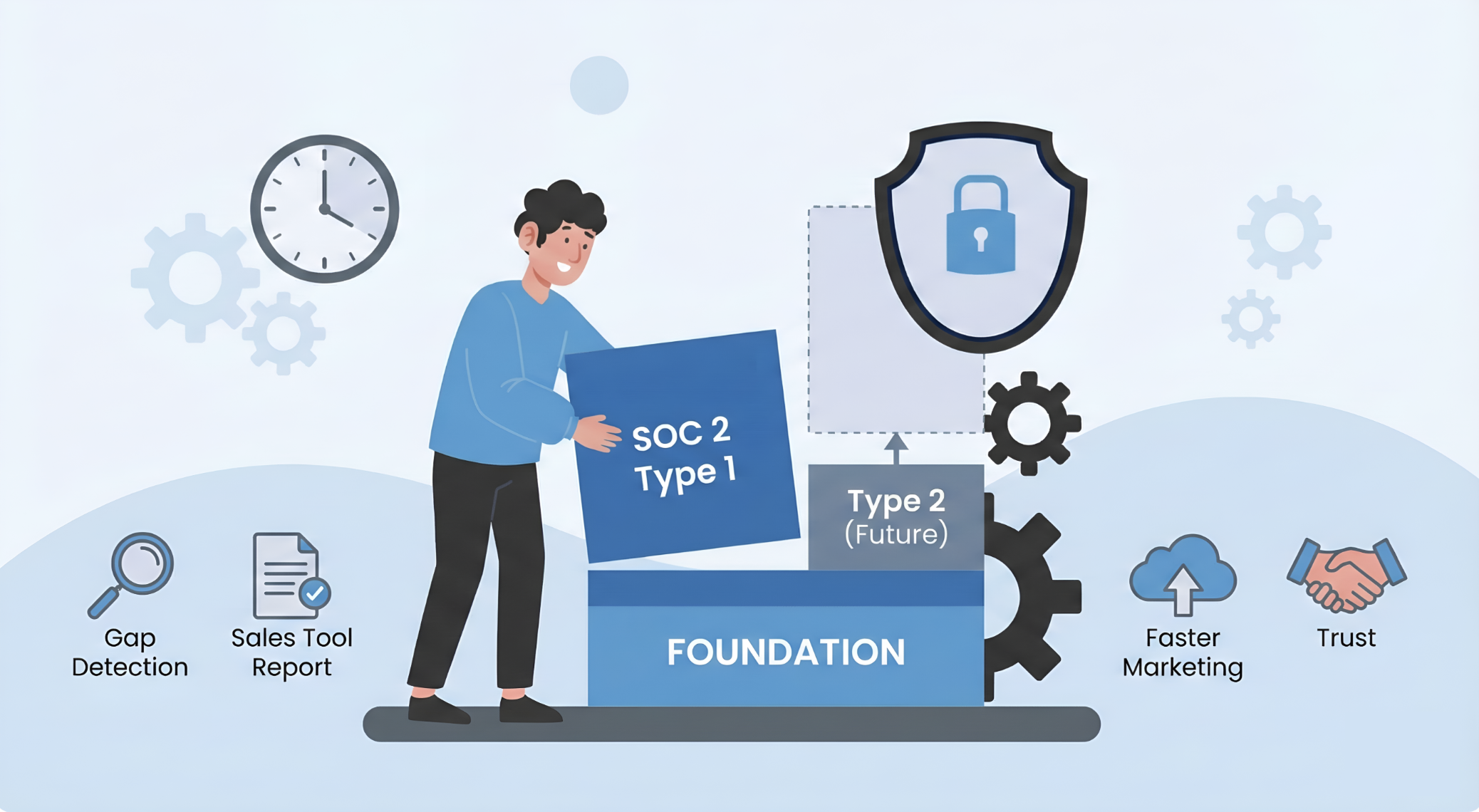
Most companies skip straight to Type 2. It's the *real* SOC 2, right? Type 1 is just not worth it. We used to think that way too. We've changed our mind. Here's why we now recommend Type 1 for first-timers, even though it's technically optional.
Type 1 catches gaps before they're expensive
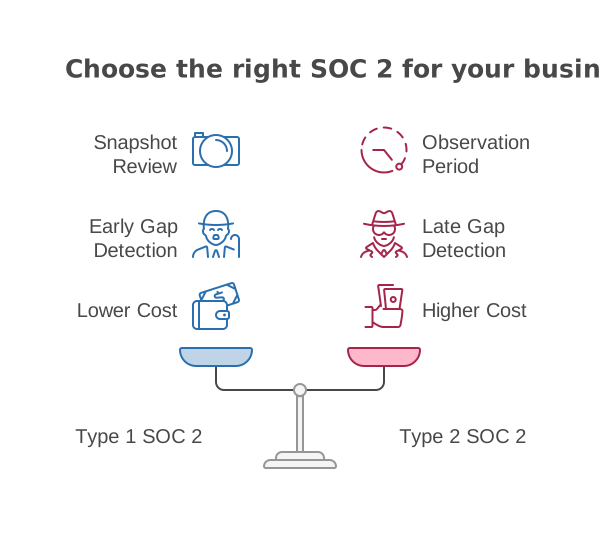
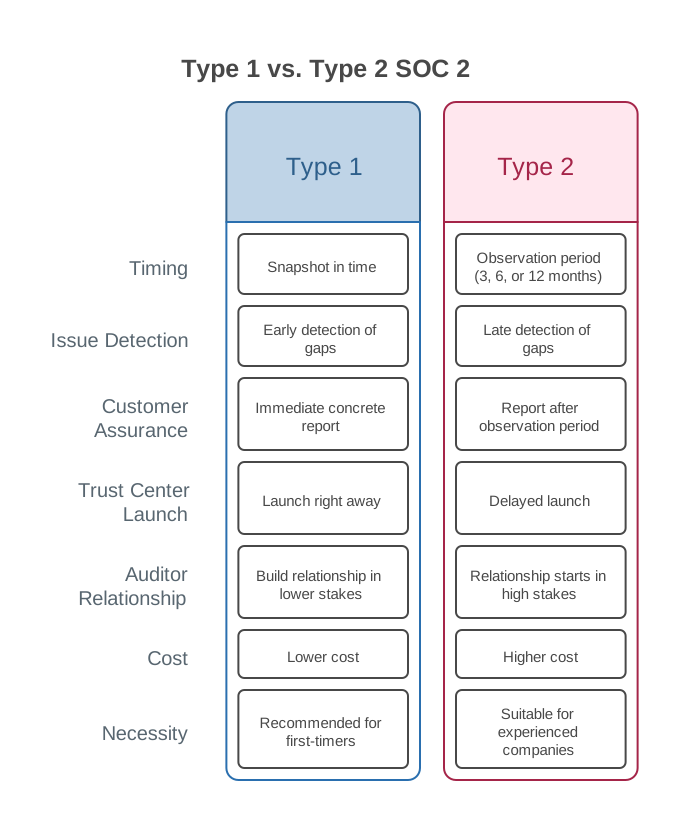
Type 2 has an observation period, usually 3-6 months where the auditor watches whether you actually follow your controls. If something's broken, you don't find out until the end. Then you're scrambling, or worse, failing the audit.
Type 1 is a snapshot. The auditor reviews your security program as it exists today: policies, controls, documentation. They tell you what's solid and what needs work before the clock starts on Type 2.
We've seen companies discover during Type 1 that their access review process was undocumented, or their vendor management was a spreadsheet that hadn't been touched in 8 months. Better to catch that now than 4 months into a Type 2 observation period.
Key Insight
Type 1 is not a lesser version of SOC 2. It's a low-cost validation checkpoint that catches gaps in your security program before the higher-stakes Type 2 observation period begins. For first-timers, the $2,500-7,500 investment typically saves tens of thousands in rework and lost deals.
You get something to show customers immediately
Here's the reality: your sales team is fielding security questionnaires right now. Prospects are asking whether you're SOC 2 compliant, and your team is dancing around the answer.
A Type 1 report gives you something concrete. You can tell prospects that you completed your SOC 2 Type 1 and are currently in your Type 2 observation period. That's a real answer. It shows you're serious, you've been audited, and you're on track.
For companies stuck in long sales cycles with enterprise buyers, that's often the difference between staying in the deal and getting cut from the shortlist.
You can launch your Trust Center right away
Once you have a Type 1 report, you can confidently launch a Trust Center on your website. That's a public-facing page that shows prospects your security posture before they even ask.
Instead of waiting 6-9 months for Type 2 to finish, you're establishing credibility proactively. Prospects see you take security seriously. Your sales team can point to it in early conversations. Security questionnaires get shorter because half the answers are already public.
It shifts the dynamic from having to prove you're secure to presenting your effective security program and asking what questions remain.
You build a relationship with your auditor
Audits aren't just pass/fail exams. Your auditor is someone you'll work with year after year. Type 1 lets you establish that relationship in lower-stakes conditions.
You learn how they communicate, what evidence formats they prefer, where they tend to dig deeper. They learn your environment, your tech stack, your team. When Type 2 comes around, you're not strangers, you're picking up where you left off.
The cost is lower than you think
Type 1 audits typically run $2,500-7,500 for SMBs with fewer than 50 employees. That's a fraction of what you'd spend recovering from a failed Type 2 or losing a deal because you couldn't prove your security posture.
Think of it as risk reduction, not an extra expense.
When to skip Type 1
To be fair, Type 1 isn't always necessary. If you've been through SOC 2 before at another company and know the process cold, or if your security program is already mature and well-documented, you might be fine going straight to Type 2.
But if this is your first rodeo, or if you're not 100% confident in your documentation, Type 1 is cheap insurance.
Bottom line
Type 1 isn't the *lesser* SOC 2. It's a validation checkpoint. You catch problems early, give your sales team something to work with, launch your Trust Center, and build auditor rapport before the real observation period begins.
For first-timers, that's worth the investment.
Build Your Effective Security Program First
Our vCISO assessment gives you a clear picture of where your controls stand today, before the audit clock starts.
Frequently Asked Questions
What is the difference between SOC 2 Type 1 and Type 2?
Type 1 evaluates whether your security controls are properly designed at a single point in time. Type 2 evaluates whether those controls actually operate effectively over a sustained period, typically three to twelve months. Type 2 provides stronger assurance because it proves consistency, not just intent.
How much does a SOC 2 Type 1 audit cost?
For SMBs with fewer than 50 employees, Type 1 audits typically run $2,500 to $7,500. This is a fraction of the cost of a failed Type 2 audit or a lost enterprise deal. The investment is best viewed as risk reduction, catching gaps early before the higher-stakes observation period begins.
Can I skip Type 1 and go straight to Type 2?
Yes, Type 1 is not a prerequisite. If your security program is mature, well-documented, and you have prior experience with SOC 2 audits, going directly to Type 2 is reasonable. For first-timers or teams with any uncertainty about their documentation and controls, Type 1 provides a low-cost validation checkpoint.
How does a Type 1 report help with sales?
A Type 1 report gives your sales team a concrete, auditor-verified document to share with prospects asking about security posture. You can say you have completed your SOC 2 Type 1 and are currently in your Type 2 observation period. For enterprise buyers, that answer keeps you in the deal rather than getting cut from the shortlist.
What is a Trust Center and when should I launch one?
A Trust Center is a public-facing page on your website that displays your security posture, certifications, and compliance status. You can launch one as soon as you have a Type 1 report. It proactively answers security questions before prospects even ask, shortening sales cycles and reducing the volume of security questionnaires your team handles.