
.svg)
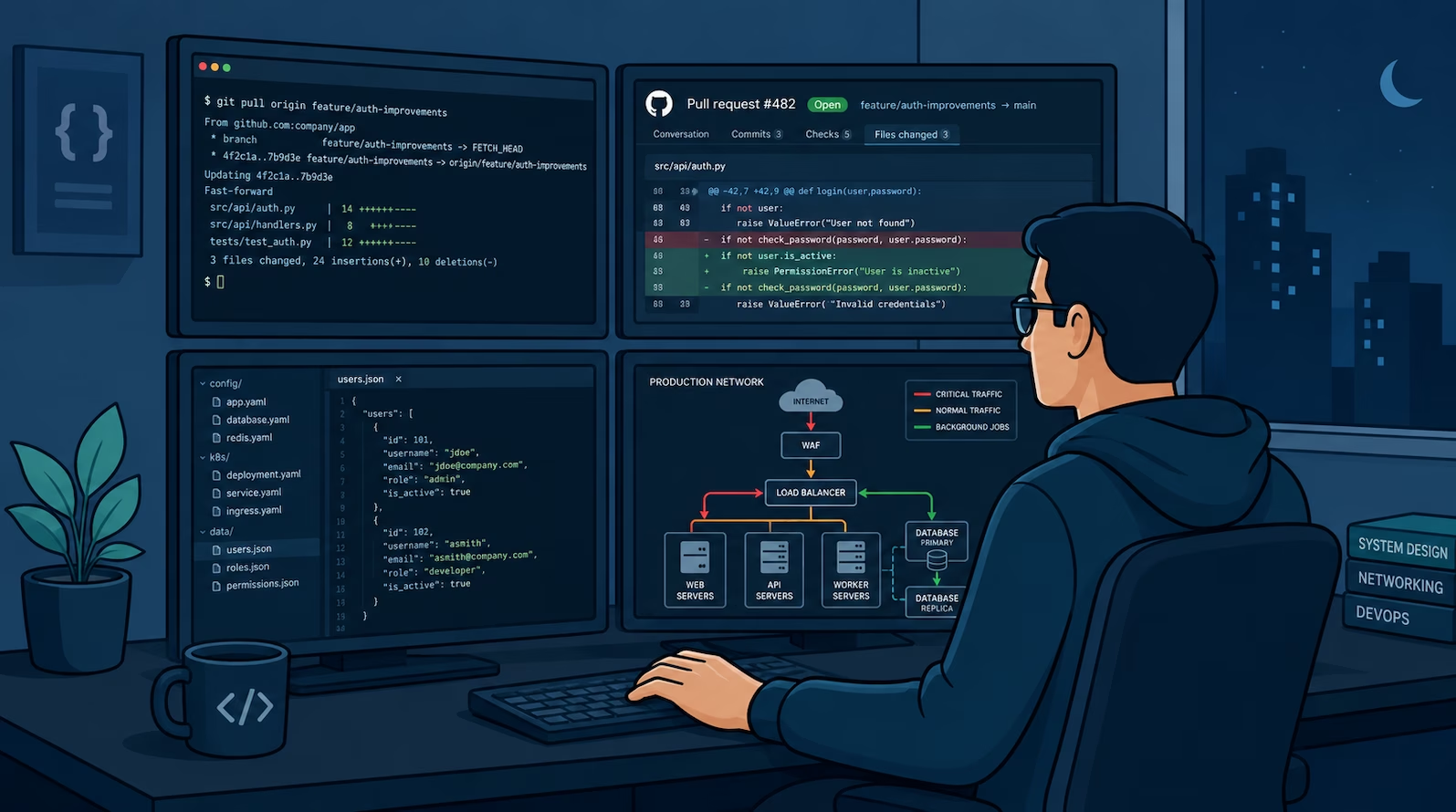
At Truvo, GRC engineering is how we run compliance: we treat governance, risk, and compliance as an engineering discipline rather than an administrative one, replacing clicks with code, GUIs with APIs, and manual evidence-gathering with automated pipelines.
GRC engineering is the practice of building, automating, and continuously validating a compliance program the way a software team builds and ships code: version-controlled, API-driven, and auditable by default.
The term shows up in conference talks and the occasional LinkedIn post, but the conversation usually stays abstract: apply engineering principles to GRC. Okay, but what does that look like on a Tuesday morning, running compliance programs for multiple clients?
In this article we explore how GRC engineering services look like in practice, day to day, with specific examples.
How GRC Work Still Gets Done at Most Companies
GRC delivery at most companies is still manual, repetitive, and error-prone, even at companies that already own a GRC platform: the custom integration work that would automate it was never done. Here is what a typical day looks like.
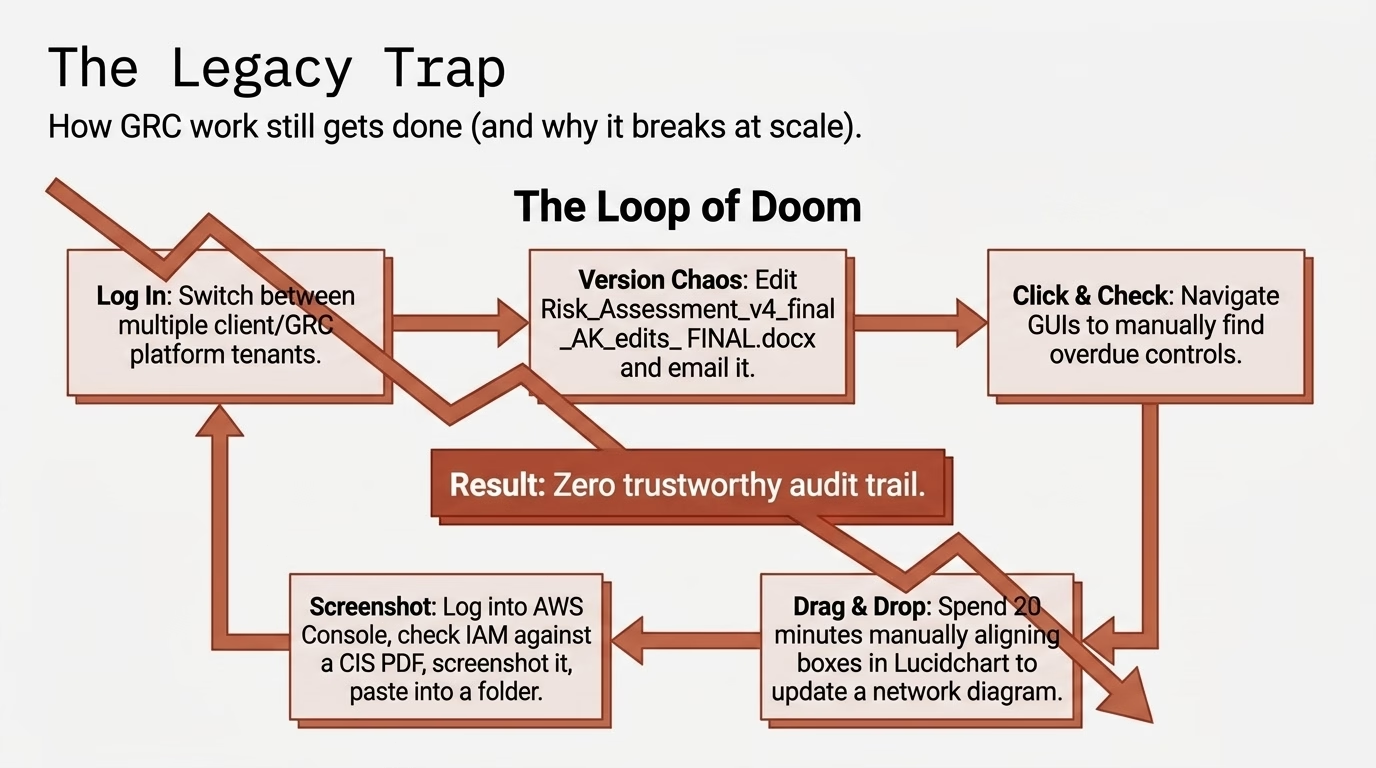
Log into Client A's GRC platform. Click through to the evidence tracker. Check which controls have evidence submitted. Note which ones are overdue. Switch to Client B's tenant. Repeat. Switch to Client C. Repeat again.
Open Lucidchart. Drag boxes around to update Client A's network diagram because they added a new server last week. Try to remember the color conventions. Spend 20 minutes making it look presentable.
Open Word. Find the latest version of Client B's risk assessment. It is called Risk_Assessment_v4_final_AK_edits_FINAL.docx. Make edits. Save as v5. Email it.
Log into AWS console for Client C. Click through IAM, check permissions, cross-reference with the CIS benchmark PDF open in another tab. Screenshot the settings. Paste into a compliance evidence folder.
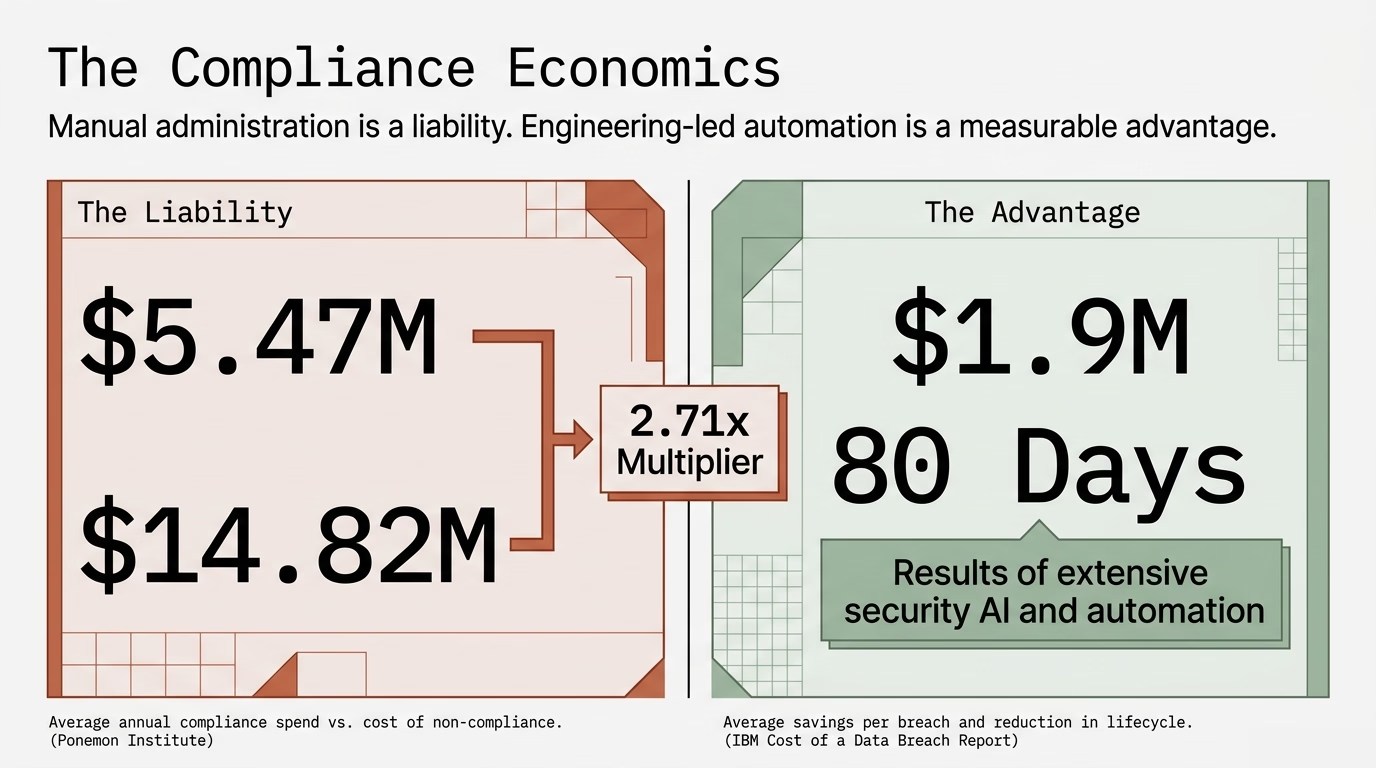
This is how most GRC work still gets done. It breaks down at scale and leaves no audit trail worth trusting. A 2017 Ponemon Institute study put numbers on what that breakdown costs: organizations spend an average of $5.47 million a year on compliance, but non-compliance costs $14.82 million, 2.71 times more. The manual approach is not just slow. It is the expensive option.
The Engineering Approach
GRC engineering means replacing clicks with code, GUIs with APIs, and manual processes with automated pipelines. The economics favor this direction beyond consulting efficiency: IBM's 2025 Cost of a Data Breach Report found organizations using security AI and automation extensively saved an average of $1.9 million per breach and cut the breach lifecycle by 80 days. The same automation muscle that pulls evidence also shortens the distance between a control failing and someone noticing. It shows up in six places.
Evidence Monitoring Through APIs
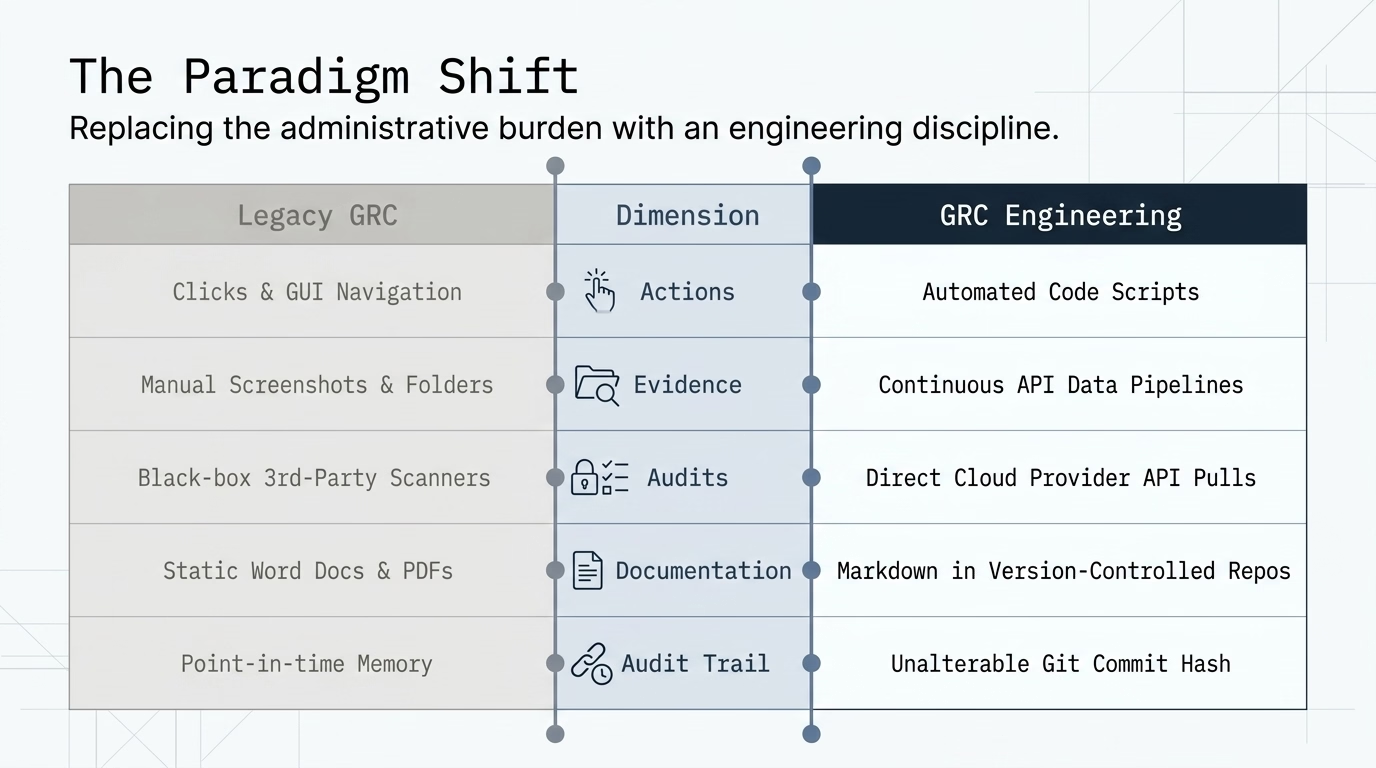
Nearly every system that holds compliance evidence exposes an API, so we pull evidence status daily into each client's GitHub repository. This goes beyond the GRC platform: the SaaS tools a company runs, its cloud providers, on-prem systems, firewall and endpoint consoles, identity providers, and ticketing systems like Jira all expose APIs that return the exact records an auditor asks for. The evidence already sits in these systems. GRC engineering is gluing them together so it flows into one place automatically, instead of being screenshotted and pasted by hand.
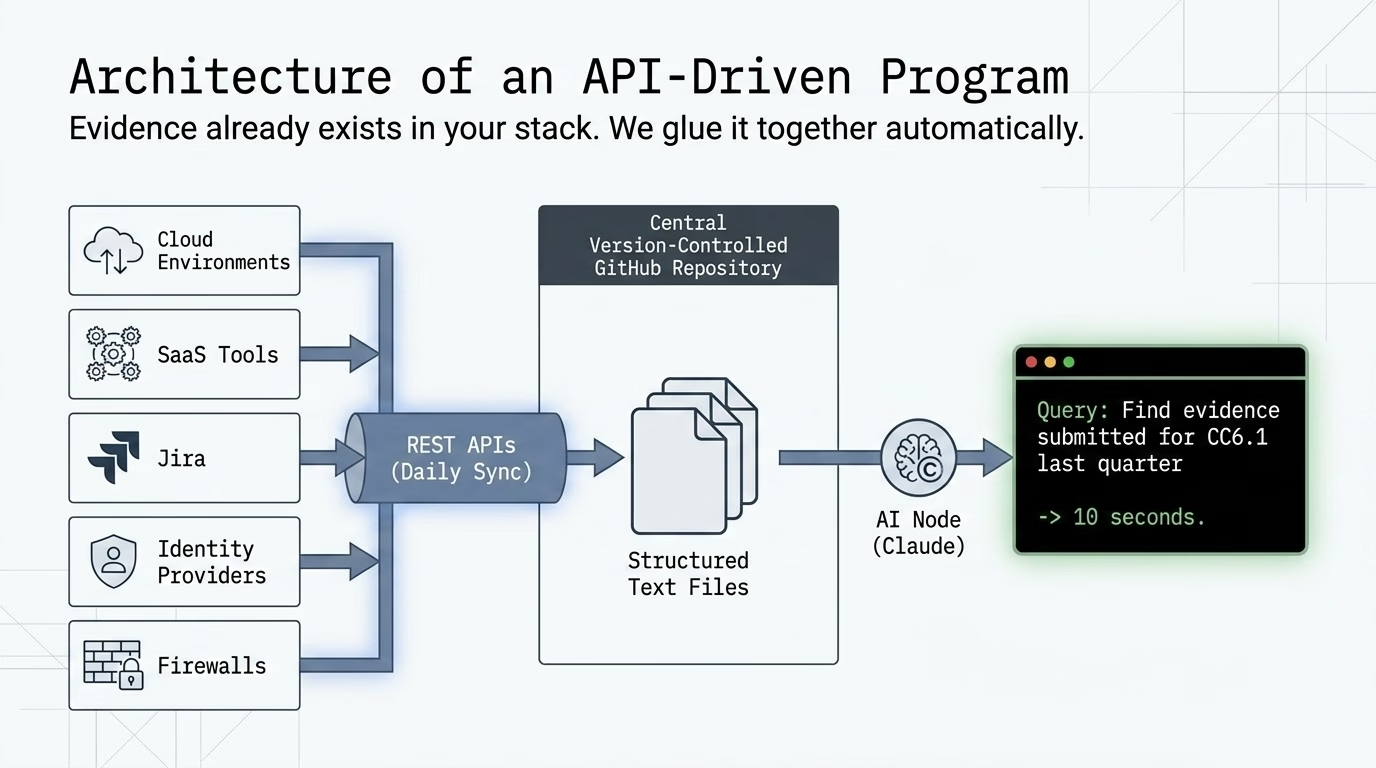
Each client has their own isolated repo. The status data lands as structured text files. If anything changed since yesterday, the diff is visible in GitHub. To find what evidence was submitted for a specific control, the team asks Claude to search the text files. Instant. No logging in, no navigating a GUI, no waiting for pages to render.
The GRC platforms still do the work. Evidence gets submitted there. Policies get managed there. Audit workflows run there. But the monitoring function, the where do things stand right now across all clients, is completely off-platform.
When the team refines control language for one client, say a tighter description of how access reviews work, that improvement can be audited against every other client repo in seconds. Not hours of clicking between tenants. Seconds. Improvements compound across the entire practice.
Tip
Inventory which of your existing systems expose APIs before investing in custom monitoring. The GRC platforms (Vanta, Drata, Scrut) expose REST APIs, but so do most of the SaaS tools, cloud providers, firewall consoles, identity providers, and ticketing systems already in your stack. Starting with a simple daily status pull from one source and building from there is more reliable than trying to integrate everything at once.
Security Audits as Code
We run cloud security audits directly through cloud provider APIs instead of third-party scanning tools. Those tools, some open source, some paid, were mostly written by someone else, potentially outdated, with no visibility into what was happening under the hood.
Now we take read-only access to a client's cloud environment and run audits directly through the provider's APIs.
The scope is flexible. Run a CIS Benchmark Level 1 audit against this AWS account. Or more targeted: check IAM configurations against CIS controls 1.1 through 1.22. Or context-specific: the client is worried about data residency, focus on storage and logging configurations.
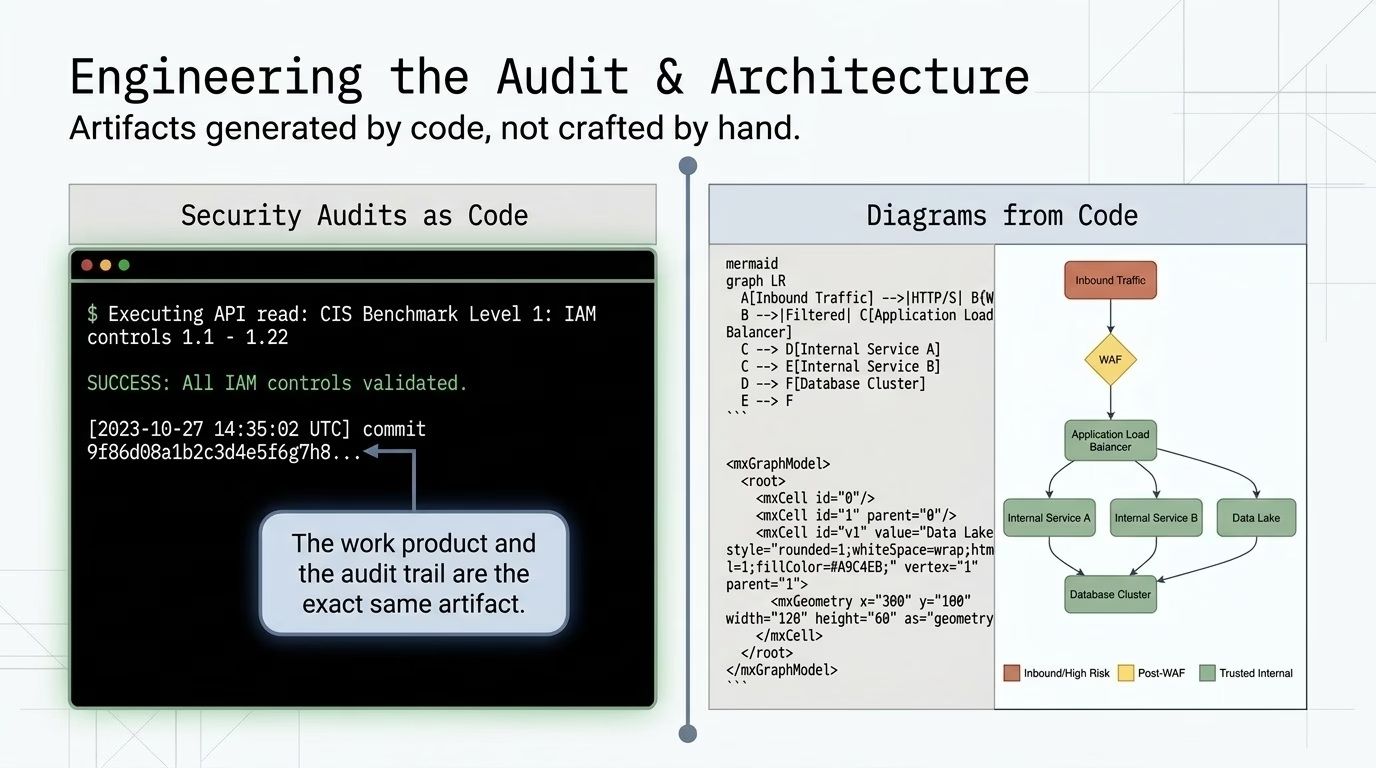
The scripts live in version-controlled repositories. Credentials sit in GitHub Secrets, not on anyone's laptop. Every audit run has a timestamp and a commit hash. If a client or auditor wants to see exactly what was checked and when, it is all there.
Compare that to running a third-party tool where the methodology is a black box and the only output is a PDF report.
For clients, this means full transparency. They can see the exact scope that was checked, review the methodology, and verify the findings. If their auditor asks how this assessment was conducted, the answer is a commit log.
This connects directly to what a Consulting as Code approach looks like in practice: the work product and the audit trail are the same artifact.
Architecture Diagrams From Code
We generate client architecture diagrams as code instead of building them by hand. Understanding client architecture is one of the first things we do on any engagement, and these diagrams used to take hours of careful work in Lucidchart or Visio.
Data flow diagrams use Mermaid syntax. The output is nearly perfect. Describe the flow, Claude generates the Mermaid code, and the diagram comes out clean and accurate. Minimal hand-editing required.
Network and system architecture diagrams use draw.io XML. Draw.io files are just XML under the hood, and Claude can generate and edit XML extremely well. We describe the architecture, reference a previous template, and Claude generates a new draw.io file.
We maintain color conventions for traffic risk:
- Red for inbound traffic (highest risk, before filtering)
- Yellow after the firewall or WAF
- Green for internal traffic from trusted sources
Claude applies these consistently. It gets the template right, applies the colors, and places components roughly where they should be.
Network diagrams still need manual finishing. The topology and layout require a human eye. But the tyranny of the blank page is gone. The first draft, the most intimidating part especially for junior team members, is generated in seconds. We take it to the finish line by hand.
Even after a diagram exists, we can edit the XML directly for minor changes: move a box, update a label, change a color. No opening the GUI and clicking around.
The whole stack is free. Draw.io is open source. Claude generates the XML. No Lucidchart subscription. No commercial tool with usage limits and feature gates. The only tradeoff is that draw.io's real-time collaboration is not as polished. For a small team version-controlling files in GitHub, it is not a dealbreaker.
Policies and Documents in Markdown
Every internal document is written in markdown: policies, procedures, meeting summaries, architecture notes, risk assessments, project plans.
Markdown gives just enough formatting to make documents readable without the overhead of .docx. It is perfectly consistent. It renders natively on GitHub. Every AI tool reads and writes it flawlessly. The files are tiny.
The only time we convert to Word is for final client deliverables. Clients expect polished .docx files, and that is fair. Automated scripts convert the markdown to formatted Word documents with proper styling, headers, and page breaks. The content is written and reviewed in markdown; the .docx is just the packaging.
Policies as Code
When policies live as markdown files in a GitHub repo, they become living documents.
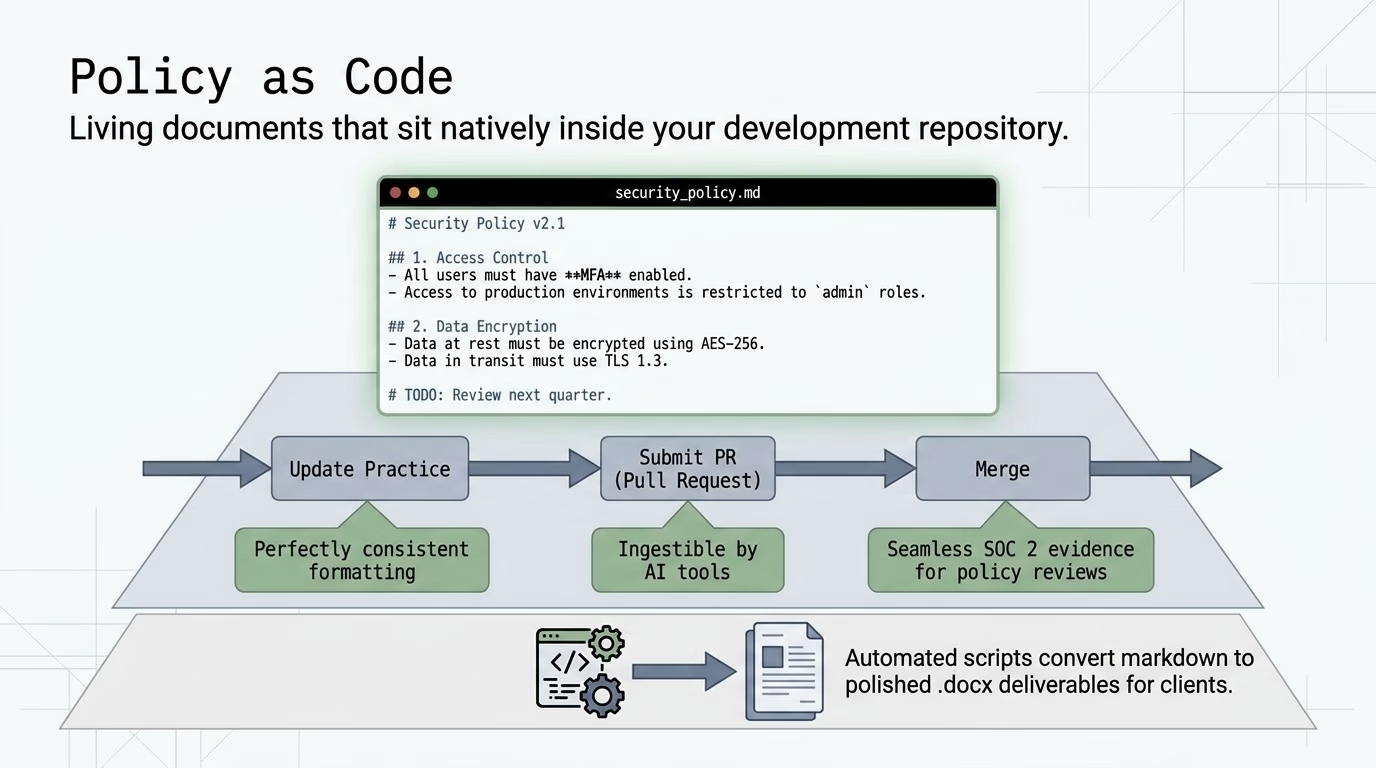
Team members and clients can submit pull requests against policies, the same way developers submit pull requests against code. A change gets reviewed, discussed, and merged with full history.
Run GRC as a managed program, not a side project.
Explore GRC Engineering ServicesMore importantly: because policies are markdown files in a code repository, they are ingestible by any AI tool. Clients can audit their actual practices against what the policy says. If there is a gap, they either adjust the practice or submit a pull request to update the policy. Either way, the disconnect between what we say we do and what we actually do gets caught and resolved continuously, not once a year before the audit.
The real unlock is that policies live where developers already work. They are in GitHub every day pushing code, so the security policy sits right next to their codebase, where they read it and work with it. That is policy as code, for real.
This is particularly relevant for SOC 2 documentation requirements, where evidence of policy review and update history is part of what auditors test.
Access Control
GitHub makes access control trivial to manage and audit. Each client repo is isolated. Team members get added when they join an engagement and removed when it is done. If a client wants visibility into their own repo, we grant access.
No complex grouping. No inherited permissions from nested folders. No wondering who has access to what. The permissions audit takes ten seconds.
For a cybersecurity consulting firm, running operations on a platform with built-in access control and audit trails is consistent with what we tell our clients to do.
What Clients Get From GRC Engineering
The efficiency gains stay internal only on paper. In practice, clients feel them directly.
Transparency they can verify. Every audit scope, every policy revision, every evidence check has a timestamp and an author. When a client wants to confirm what was done on their engagement, we do not rely on memory. We show them the repo.
Consistency they can trust. Templates, automation, and version-controlled workflows mean every client gets the same rigorous process. Nothing gets missed because someone forgot a step or was having an off day. The process is encoded, not memorized.
Faster turnaround, same depth. When evidence checks take minutes instead of hours and diagrams generate in seconds instead of being built from scratch, the time savings go back into the work that matters: understanding the client's environment, making judgment calls, solving real problems.
Continuity if people change. If a team member leaves mid-engagement, the next person picks up with full context. Every decision, document, and diagram is in the repo. No tribal knowledge gap. No scrambling to reconstruct what happened.
Cross-client improvements. When we find better control language for one client, we audit whether it applies to others. Tighter evidence workflows, cleaner policies, improved templates, they propagate. Every client benefits from the work done across the entire practice.
Build an effective security program first
Then map it to any framework your buyers require.
The Compound Effect
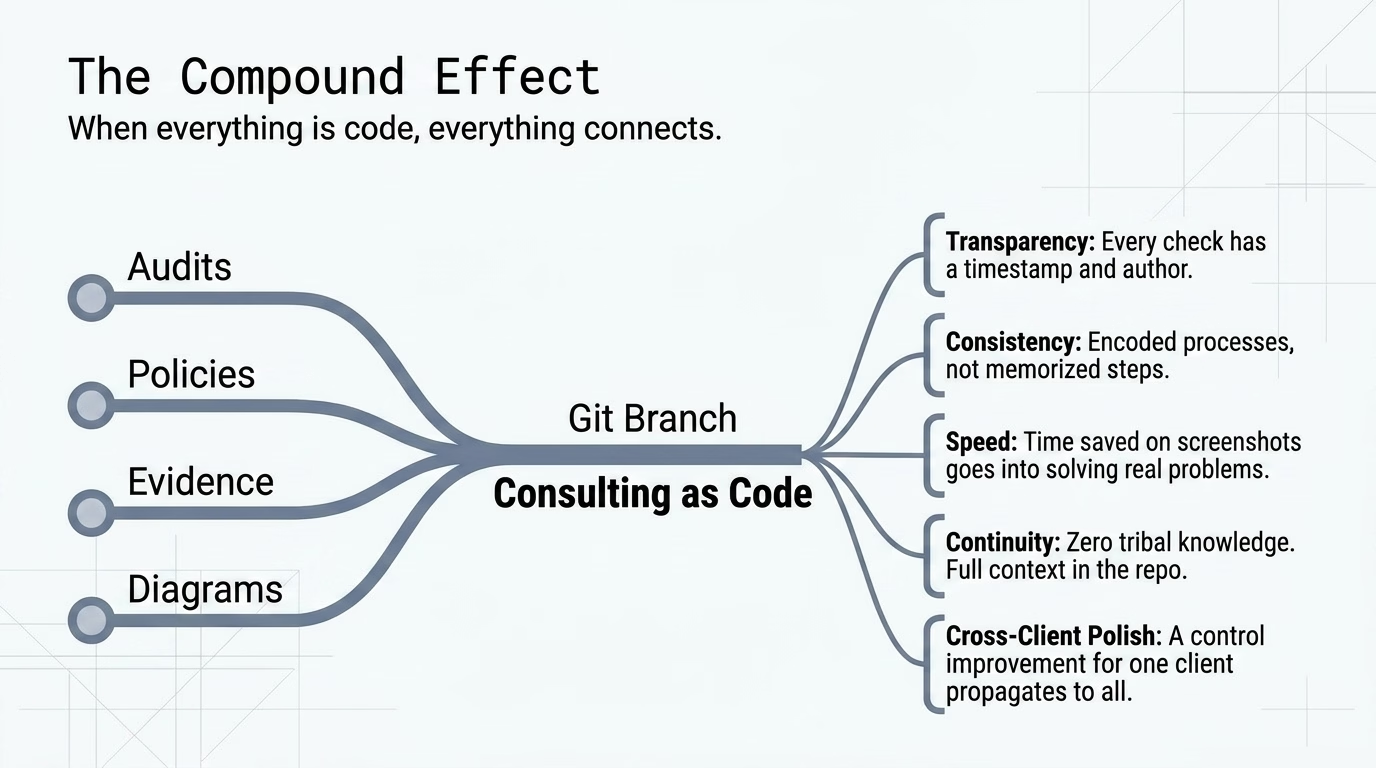
The real power of GRC engineering is the compound effect of all of them running together.
When everything is code, everything is searchable. When everything is in GitHub, everything has history. When everything runs through APIs, everything connects.
A client asks what evidence did we submit for CC6.1 last quarter? The answer does not come from digging through a platform. It comes from searching the repo. Ten seconds.
We need to demonstrate internal due diligence on how we manage client engagements? The version history, access logs, and process automation are all there, produced as the natural output of how we work.
A new team member joins a client engagement. They get access to the repo, read the markdown documents, and have full context in an hour. No tribal knowledge. No ask Sarah, she knows how this client works.
How to Start Practicing GRC Engineering
GRC teams can move toward engineering-led compliance by automating one workflow at a time. Start with these four steps:
- Pick one workflow to automate. Evidence status checking is usually the highest-value starting point. Check if the GRC platform has an API.
- Move one document type to markdown. Policies are a good candidate. Simple formatting, frequently referenced, easy to version control.
- Try one audit as code. Take a CIS benchmark and run it against a test environment through the cloud provider's API instead of the console GUI.
- Set up one GitHub repo. Even if it only holds documents at first. The version control and access management pay for themselves immediately.
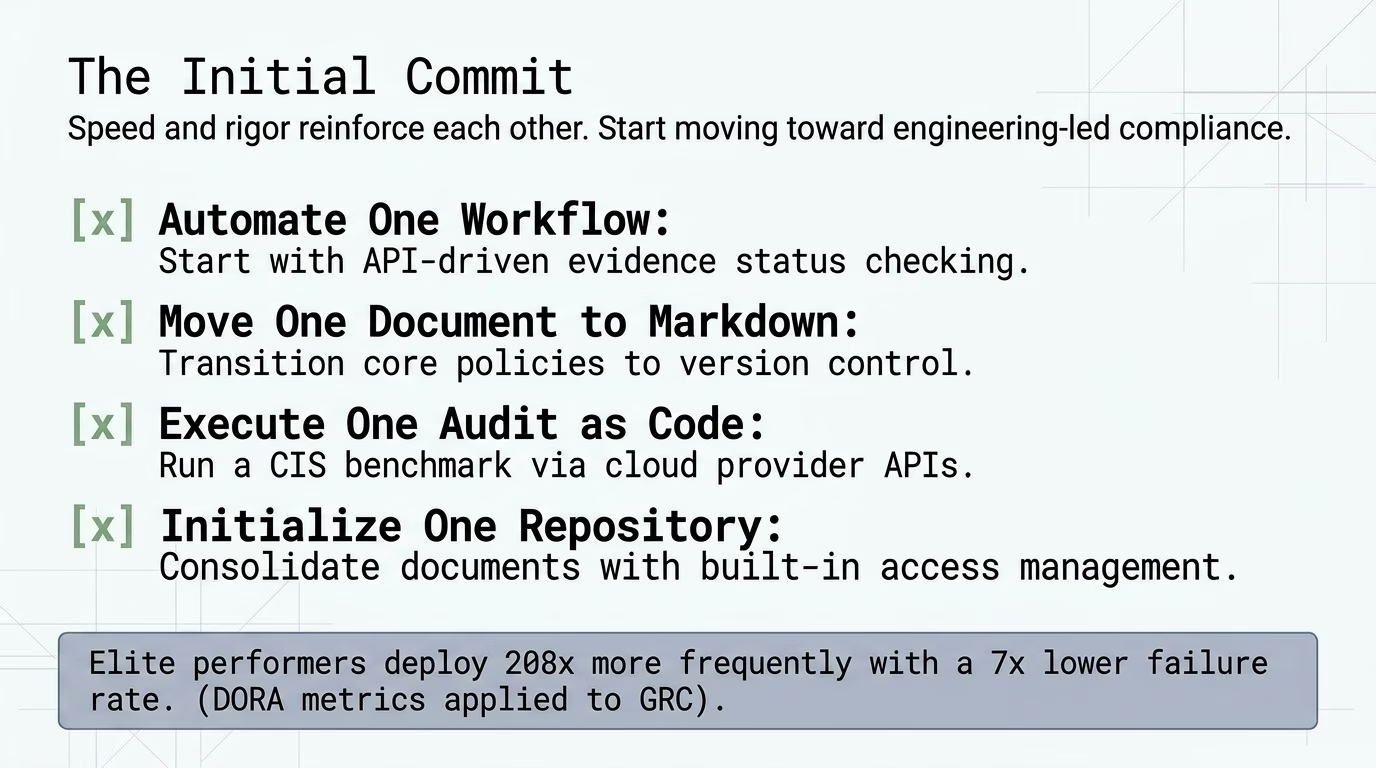
GRC engineering is a direction to move in, not a framework to adopt. Every manual process replaced with an automated one makes the next automation easier. This mirrors what DORA's research established for software delivery: elite performers deploy 208 times more frequently than low performers while holding a change failure rate seven times lower. Speed and rigor reinforce each other, in shipping code and in running compliance.
This is part of our Consulting as Code series. If you want to see where your security program stands, try our free readiness scorecard. Takes 5 minutes.
Frequently Asked Questions
What is GRC engineering?
GRC engineering is the practice of applying software engineering disciplines to governance, risk, and compliance work. That means using APIs instead of GUIs, storing policies and evidence in version-controlled repositories, automating audit checks through code, and generating documentation programmatically. The goal is a compliance program that is auditable, repeatable, and improves continuously rather than degrading between audit cycles.
How does GRC engineering differ from traditional compliance work?
Traditional GRC work is largely manual: logging into platforms, clicking through dashboards, copying screenshots into evidence folders, editing Word documents, and emailing files between stakeholders. GRC engineering replaces those manual steps with automated pipelines, API calls, and version-controlled workflows. The output is the same (a defensible compliance program), but the process is auditable by default, scalable across multiple clients or frameworks, and does not depend on any single person's institutional knowledge.
Do I need to code to practice GRC engineering?
Not necessarily, but comfort with basic scripting, command-line tools, and version control (specifically Git and GitHub) makes a significant difference. The barrier is lower than it sounds. Many of the automation patterns described here involve writing short scripts that call documented APIs, not building software from scratch. For teams without a developer background, starting with policies-as-markdown in GitHub and one API-driven evidence check is enough to begin moving in the direction of engineering-led GRC.
Which GRC platforms support API access for automation?
Most major platforms used in SOC 2 and ISO 27001 programs expose REST APIs: Vanta, Drata, Scrut, and Secureframe all have documented APIs for pulling control status, evidence records, and compliance posture data. The coverage and depth vary by platform. Before building automation against any platform, check whether the API covers the specific data you need to pull, and whether the rate limits are workable for your use case.