
.svg)
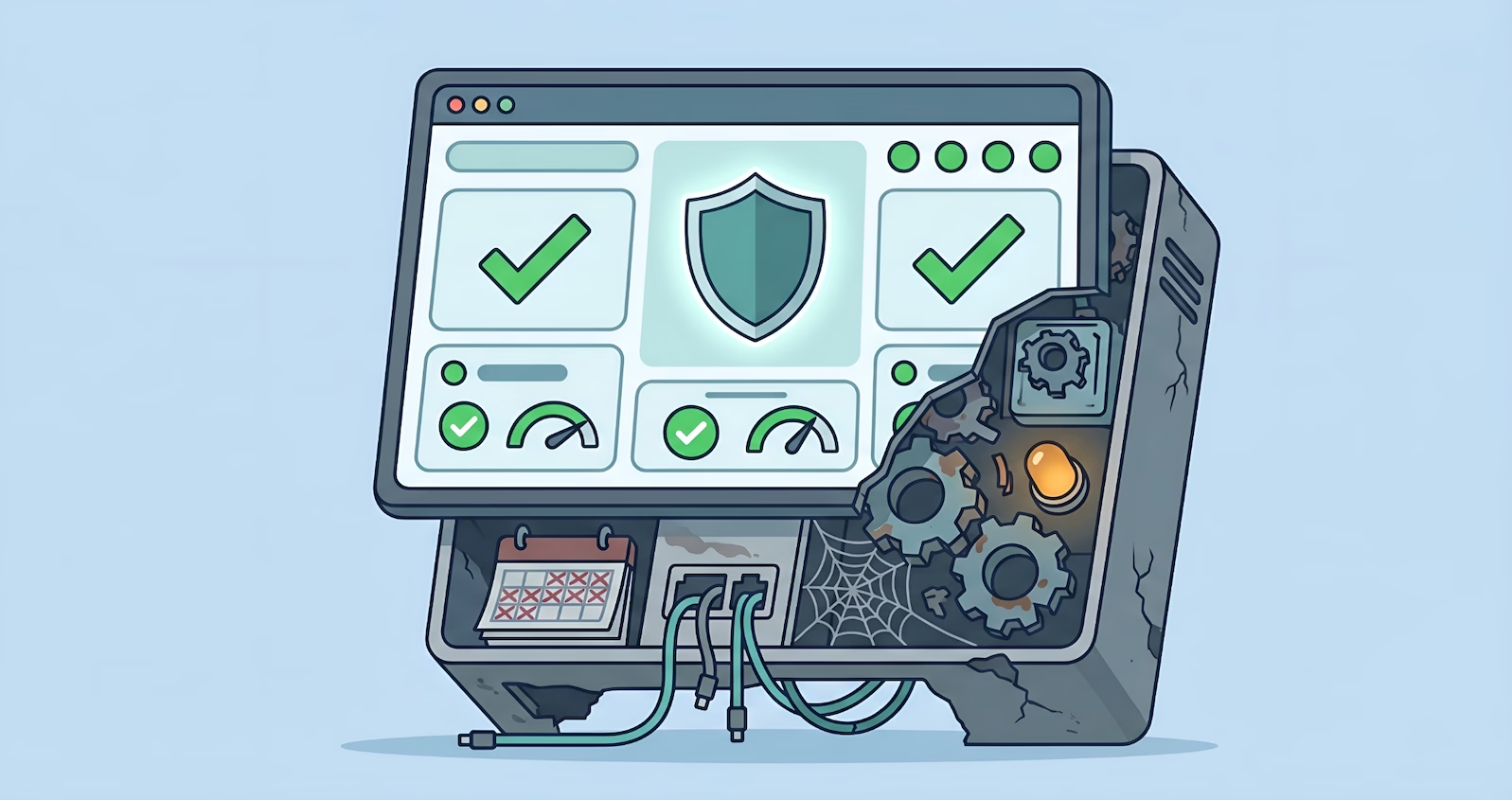
A company subscribes to a GRC platform. A consultant configures it, loads policies, maps controls, connects integrations. The dashboard turns green. Everyone moves on.
Six months later, the platform still shows green, but the program behind it has drifted. Integrations broke after an API update and nobody noticed. Three new employees were onboarded without being enrolled in device management. The quarterly access review never happened because nobody owned the cadence. The dashboard is a snapshot of a moment that has already passed.
This is the most common outcome when a GRC platform is treated as a one-time implementation rather than an ongoing operational system. The platform is not the problem. The missing operations work is.
GRC managed services exist to fill that gap. But the term gets used loosely across the market, and what one firm calls managed services another calls license resale with onboarding. This post breaks down what GRC managed services actually include, what they cost, and when they make sense versus handling platform operations internally.
The Setup-and-Abandon Pattern
A recurring pattern across early-stage compliance engagements: the initial setup gets done, the team is told they are compliant, and everyone moves on. The engagement was scoped as a project with a defined end point. The setup was the deliverable.
But a security program is not a project. It is a set of ongoing activities that need to happen weekly, monthly, and quarterly. Access reviews, vendor risk reassessments, policy reviews, evidence gap remediation, integration monitoring, training tracking, and control updates all require consistent execution. When nobody owns those cadences after the initial push, the program decays predictably.
The Drift Test
Ask your team: what does ongoing compliance work actually look like week to week? If nobody can answer with specifics, the program is drifting. A GRC dashboard showing green does not mean the program behind it is healthy.
One pattern that surfaces repeatedly: a company pays for a full year of consulting, but the relationship effectively ends after the initial configuration. The ops lead managing compliance alongside their primary responsibilities does not have the expertise for technical compliance tasks like endpoint configuration management or integration troubleshooting. The company doubled in headcount over the past year, and each new employee created compliance obligations that nobody was systematically tracking.
What GRC Managed Services Actually Include
Managed services for a GRC platform is the Operate engagement applied to compliance automation. It goes well beyond license resale or initial configuration.
Integration Monitoring and Remediation
GRC platforms pull evidence through API connections to cloud providers, identity providers, endpoint management tools, HR systems, and code repositories. OAuth tokens expire, API versions change, scopes get modified during system upgrades. Managed services includes monitoring integration health and restoring evidence flows before gaps accumulate.
Control Updates and Mapping
Compliance frameworks evolve. SOC 2 Trust Services Criteria get reinterpreted by auditors. The company's infrastructure changes as it adds services or expands into new regions. Managed services includes reviewing control mappings on a recurring basis and updating them to reflect the current state.
Evidence Gap Remediation
Even with automation, evidence gaps appear. Manual evidence items require human action on a schedule. Automated evidence sometimes fails silently. Managed services includes running regular evidence reviews and coordinating remediation with the appropriate internal teams.
Access Review Orchestration
SOC 2 CC6.1 requires periodic access reviews. In practice, this means pulling access lists for every in-scope system, comparing against authorized personnel, flagging anomalies, and documenting the review. For larger environments, this is a multi-day effort every quarter.
Vendor Risk Management Updates
Vendors change their security posture, certifications expire, new vendors enter the supply chain. Managed services includes maintaining the vendor risk register and collecting updated security documentation.
Audit Preparation and Coordination
Preparing the evidence package, running a pre-audit review to close gaps, coordinating with the audit firm, and serving as first point of contact for auditor questions during fieldwork. This is where the operational investment pays the most visible dividend.
Trust Center Management
Keeping the trust center current, updating certifications, adding new documentation, and monitoring which questions are not being answered automatically. A well-managed trust center handles the vast majority of prospect security inquiries without human involvement.
Implementation vs. Managed Services
Platform implementation is a one-time engagement. A consultant configures the GRC platform for the company's environment: connects integrations, maps controls, loads customized policies, sets up evidence collection workflows, and trains the internal team. This is the Assess and Build phase. It has a defined start and end.
Managed services is an ongoing engagement. The consultant operates the platform on behalf of the company, executing the weekly, monthly, and quarterly compliance cadences. This is the Operate phase. It runs continuously, typically on a monthly retainer with defined service levels.
The Expensive Mistake
Companies that treat implementation as the entire engagement end up in the setup-and-abandon pattern. The platform was configured correctly at the time of setup, but nobody maintained it after the consultant left. The companies that avoid this pattern ask from day one: who will run this 12 months from now?
The Partner Pricing Advantage
GRC platforms like Vanta, Drata, Secureframe, and Scrut offer partner pricing to consulting firms that manage multiple client accounts. This is not a minor detail. Partner bulk pricing can bring the platform subscription to a fraction of the retail cost the company would pay subscribing directly.
When a consultant manages the platform under a partner agreement, the company gets a lower subscription cost than retail, a consultant who knows the platform deeply from operating it across dozens of client environments, configuration based on patterns that work, and ongoing operations that maintain the investment instead of letting it decay.
Cost Reality
The buy-the-platform-and-figure-it-out approach often costs more than engaging a consultant with partner pricing. The subscription is cheaper, the implementation is faster, and the ongoing operations keep the program healthy between audits.
When Managed Services Makes Sense
| Managed Services Fits | Internal Management Works |
| No dedicated compliance or security operations role | Dedicated GRC analyst or security operations person on staff |
| CTO or ops lead managing compliance alongside primary role | Team has deep familiarity with the platform and framework |
| Rapid growth with recurring onboarding compliance obligations | Compliance program is mature with cadences running independently |
| Multiple frameworks apply (SOC 2 + ISO 27001, SOC 2 + HIPAA) | Internal team has bandwidth without competing with product work |
| Passed first audit but concerned about maintaining compliance | Single framework with straightforward control mapping |
For companies under 200 employees without a dedicated compliance function, managed services pays for itself in avoided drift, faster audits, and CTO time returned to product work.
What Changes When the Platform Is Actually Managed
When a GRC platform is properly operated, the security team gets their time back. Evidence collection, control monitoring, and trust center management run without consuming engineering bandwidth. The CTO stops being the compliance desk and returns to being the CTO.
The teams that get the most from their GRC platform are not the ones that automate the bare minimum to pass the audit. They are the ones that automate thoroughly enough that the vast majority of prospect security questions are answered without human involvement. That is not just efficiency. That is a fundamentally different allocation of security resources, away from paperwork and toward the work that actually reduces risk.
The Real ROI
The GRC platform is not the program. But when it is set up and maintained properly, it is what makes the program sustainable. Managed services is the difference between a compliance tool and a compliance system.
Evaluating a GRC Managed Services Consultant
The questions that separate real operators from license resellers:
- What does your weekly/monthly cadence look like? A real managed services engagement has a documented operational rhythm. Vague answers mean the service is reactive, not proactive.
- How do you handle integration failures? The answer should include monitoring, alerting, and a defined SLA for restoration.
- What is your partner tier with the platform? Higher tiers mean better pricing, direct vendor support access, and deeper platform expertise.
- How many clients do you currently manage on this platform? A consultant managing thirty clients has seen the full range of problems a program can hit. A consultant managing two is still learning.
- What happens during audit prep? The answer should describe a structured pre-audit review process, not just availability for questions.
Stop Managing Compliance Alone
See where your compliance program stands and what an effective security program looks like with managed operations.
Frequently Asked Questions
What is the difference between GRC platform implementation and GRC managed services?
Implementation is a one-time engagement where a consultant configures the platform, maps controls, loads policies, and trains the team. Managed services is an ongoing engagement where the consultant operates the platform on a recurring basis, handling integration monitoring, evidence gap remediation, access reviews, vendor risk updates, and audit preparation.
How much do GRC managed services cost?
Pricing varies based on the platform, number of frameworks, and company complexity. Consultants with partner pricing can offer the platform subscription at a fraction of retail cost, plus a monthly retainer for ongoing operations. The combined cost is typically lower than the platform's retail price plus the internal hours required to manage it.
Do I need managed services if I already have a GRC platform?
That depends on whether someone on the team is actively operating the program: running weekly evidence checks, quarterly access reviews, vendor risk updates, and integration monitoring. If the platform was configured once and nobody is maintaining it, managed services fills the gap before the next audit surfaces the drift.
Can I start with implementation and add managed services later?
Yes. Many engagements start with an Assess and Build phase (implementation), then transition to Operate (managed services) once the platform is configured. The risk of not planning for Operate from the start is the setup-and-abandon pattern, where the program decays after the implementation engagement ends.
Which GRC platforms work with managed services consultants?
Vanta, Drata, Secureframe, and Scrut all offer partner programs. The best platform choice depends on the company's tech stack, applicable frameworks, and integration requirements. A managed services consultant can recommend the platform based on experience across multiple client environments.
Ready to Start Your Compliance Journey?
Get a clear, actionable roadmap with our readiness assessment.
Contact Us
Free Report: The CPCSC Compliance Playbook
Join the waitlist for a free copy when it’s released.
About the Author

Former security architect for Bank of Canada and Payments Canada. 20+ years building compliance programs for critical infrastructure.