
.svg)
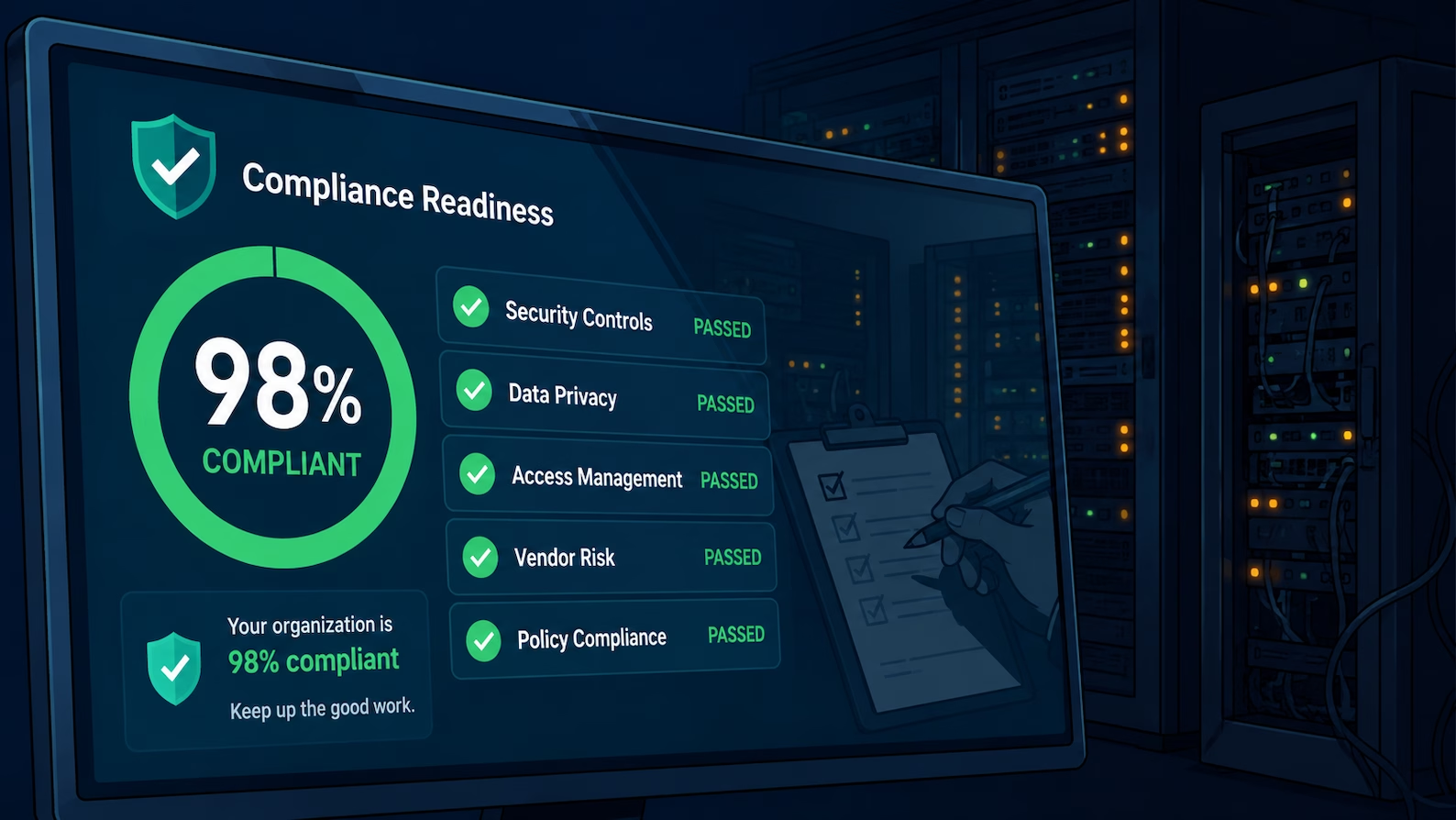
The GRC platform dashboard is green. Every automated test passes. The readiness score reads somewhere in the nineties. The team spent three months connecting integrations, mapping controls, and resolving every flagged issue. It looks like the hard work is done.
Then the auditor starts asking questions.
They want evidence for the co-location server that runs the legacy payment processor. They ask about the internal monitoring tool the infrastructure team built and deployed two years ago. They want to see how controls apply to the third-party data pipeline that sits outside the primary cloud environment. The GRC platform has nothing on any of these systems. The dashboard never showed them as gaps because, from the platform's perspective, they do not exist.
The green dashboard is not wrong; it reflects the state of every system the platform knows about. The problem is that it cannot report on systems it has no visibility into, and auditors are not limited to the same scope as the platform.
The Core Problem
A green GRC dashboard means: the connected systems passed their configured tests. It does not mean the full compliance scope is covered. It does not mean audit-readiness.
Why the Dashboard Is Accurate and Incomplete at the Same Time
GRC platforms like Vanta, Drata, and Secureframe work through an integration model. The platform connects to cloud providers, identity systems, endpoint management tools, CI/CD pipelines, and other SaaS applications via API. Once connected, it pulls configuration data, access logs, vulnerability scan results, and security settings automatically, stores the evidence, and maps it to the relevant controls.
This is genuinely useful. For a cloud-native company with infrastructure living entirely in AWS or Azure, an identity provider, and a standard SaaS stack, the integration surface aligns closely enough with the compliance scope that the platform covers most of what an auditor will ask about.
The platform then runs automated tests against what it knows. If MFA is enabled across the connected identity provider, that test passes. If encryption is configured correctly in the connected cloud environment, that test passes. The dashboard reflects the aggregate state of all tests: green where controls pass, flagged where they fail.
What the dashboard cannot do is report a gap it has no mechanism to detect. If a system is not within the integration surface, the platform has no visibility into it. It does not flag it as an uncovered system. It does not show a warning. It simply has no data on it, and no data looks like absence rather than presence.
The platform is accurate within its own frame of reference. The problem is that the auditor's frame of reference is broader.
What Auditors Check vs. What Platforms Cover
Auditors scope an engagement based on the systems, processes, and people involved in the service being certified. For a SOC 2 audit, the scope includes everything that stores, processes, or transmits the data covered by the trust services criteria. That scope is defined at the start of the engagement and documented in the system description. It is not limited to what is connected to a GRC platform.
| Platform covers | Auditor examines |
| Connected cloud infrastructure | All systems storing or processing in-scope data |
| Supported SaaS integrations | Legacy systems and co-lo infrastructure |
| Pre-built control tests | Every control in the agreed SOC 2 scope |
| Configured integrations only | Custom internal tools with access to in-scope data |
A co-location server that processes customer transactions is in scope. A custom internal tool with access to production data is in scope. A data pipeline managed by a third party that feeds into a primary system is potentially in scope. Legacy infrastructure that predates the cloud migration is in scope if it handles in-scope data.
When the auditor reviews controls, they review them against the full scope. They ask for evidence that access is reviewed across all in-scope systems, that vulnerability scanning covers all in-scope infrastructure, that change management processes apply wherever changes can affect in-scope data. If a system is in scope for the audit but outside the integration surface of the GRC platform, the platform has no evidence for it.
This dynamic is part of a broader automation reality: in a standard cloud-native environment, GRC platforms automate evidence collection for roughly 40 to 50 percent of SOC 2 controls. The remaining controls require manual effort regardless of how many integrations are connected. For companies with on-premises infrastructure, legacy systems, or custom tools, the automation percentage drops further. For a detailed breakdown, see What Vanta and Drata Can't Automate.
The integration-driven model is not a flaw in the platform. It is the nature of how the platform works. The problem is treating the integration surface as a proxy for compliance scope.
The Inventory Gap
The root cause of audit-ready failure despite a green dashboard is almost always an inventory gap.
The scope defined at the start of a compliance program should be based on a complete inventory of systems, people, and processes that touch in-scope data. In practice, that inventory is often built from the integration surface of the GRC platform rather than from a systematic discovery exercise. Teams connect the major cloud providers and identity systems, map the controls, get the dashboard green, and assume the scope is complete.
What that process misses are the systems that were never connected because they lack a supported integration, the systems that predate the compliance program and were never formally inventoried, and the systems that individual teams manage without central visibility. These fall into predictable categories:
On-premises infrastructure that runs alongside cloud workloads. Co-location racks that process data for regulatory or contractual reasons. Legacy monitoring, logging, or data processing tools built internally. Third-party services accessed via API rather than through a managed integration. Shadow IT that engineering teams deploy and maintain without formal procurement.
Two Bad Options at Audit Time
When the auditor asks about systems outside the integration surface, teams face two bad outcomes. They can try to produce manual evidence for systems the platform never covered, scrambling under time pressure. Or they can acknowledge the gap to the auditor and address the finding in the report. Neither is a clean outcome. Both are avoidable if the inventory was built correctly from the start.
Companies that have been operating for more than a few years almost always have at least one system outside the GRC platform's integration surface. The question is not whether the gap exists. It is whether the compliance program accounts for it.
How GRC Engineering Closes the Gap
GRC engineering approaches this differently: the compliance program starts with the inventory, not the integrations.
Before a control is mapped and before the GRC platform is configured, a GRC engineering engagement builds an asset inventory that covers everything in scope: cloud-hosted, on-premises, co-located, internally built, and third-party managed. The inventory becomes the authoritative source of record for scope. Controls are then mapped to the real scope, not to the integration surface.
This changes what the GRC platform is used for. Instead of being the program, the platform becomes a node within it. The platform automates evidence collection for the systems it integrates with, which it does well. For systems outside the integration surface, the program builds automated tests through other mechanisms: infrastructure-as-code scanning, custom API checks, scheduled evidence pulls, and automated configuration validation run outside the platform. The evidence is collected and stored in a way that maps to the controls, regardless of how it was gathered.
The result is that the audit scope and the evidence coverage align. Every system in scope has controls assigned to it. Every control has an evidence collection mechanism. When the auditor asks about any system in scope, evidence exists for it.
The GRC platform still runs. Its dashboard still matters. But it reflects one part of the program rather than the whole of it.
For a comparison of how the two parts fit together, see GRC Platform vs GRC Engineering: When You Need Both. For what this looks like operationally, see GRC Engineering in Practice.
What Audit-Ready Means
A company that has gone through a GRC engineering process answers auditor questions differently. The auditor asks about the co-location server. The evidence is there: access controls, configuration baselines, change management records, vulnerability scan history.
The auditor asks about the internal monitoring tool. The evidence is there: access reviews, encryption configuration, incident log exports. The auditor asks for the system description. It matches the actual infrastructure because it was built from an inventory, not assumed from an integration list.
There are no surprises. No last-minute evidence scrambles. No gaps that appear only when the auditor asks a question the platform never addressed.
This is what continuous compliance looks like when it is built on a program rather than a dashboard. The green light means something because it reflects a scope that was defined deliberately and covered completely, not a scope that defaulted to whatever the platform happened to connect to.
The difference between a green dashboard and genuine audit readiness is almost always the same thing: someone built the inventory first and designed the program around it, rather than assuming the platform's integration surface was the scope.
For companies running on-prem or hybrid infrastructure, GRC Compliance for On-Prem and Hybrid Environments covers the specific technical work involved in closing these gaps.
Close the Gap Before the Auditor Does
An effective security program starts with inventory, not integrations. We map what the platform cannot see and build coverage to match the actual audit scope.
Frequently Asked Questions
Why is my GRC platform showing green but the auditor is still finding gaps?
GRC platforms are integration-driven: they test the systems they are connected to and report the results for those systems. If your audit scope includes systems that are not within the platform's integration surface, the platform has no visibility into them and cannot flag them as gaps. The green dashboard accurately reflects what the platform tested. The auditor examines the full scope defined in the system description, which may be larger than what the platform covers.
What does audit-ready actually mean beyond a green dashboard?
Genuine audit-readiness means every system in scope has defined controls, an evidence collection method, and current evidence available. The system description matches the actual infrastructure. Evidence exists for every control the auditor will examine, not just the controls covered by the GRC platform's integration surface. A green dashboard is one input into audit-readiness; a complete, inventoried scope is the other.
What systems are typically outside a GRC platform's integration surface?
The most common categories are on-premises servers and storage, co-location infrastructure, legacy applications that predate modern APIs, custom-built internal tools with access to sensitive data, and third-party services that lack a supported platform integration. Organizations that have been operating for more than a few years almost always have at least one of these categories in their environment.
How does GRC engineering close the gap between a green dashboard and audit readiness?
GRC engineering starts with a complete asset inventory before configuring any controls, which establishes the real audit scope rather than defaulting to the integration catalog. It then designs controls for every in-scope system and builds automated evidence collection for systems outside the platform's integration surface. The result is a compliance program where the audit scope and evidence coverage align, so the green dashboard reflects genuine coverage rather than a partial view.
Should I replace my GRC platform with GRC engineering?
No. GRC platforms and GRC engineering are complementary, not competing. The platform automates evidence collection for the systems it integrates with, which it does efficiently. GRC engineering extends coverage to systems outside the integration surface and ensures the platform is working against an accurate picture of the full scope. Organizations that get the most from both use the platform for what it does well and use GRC engineering to ensure the platform's scope matches the audit scope.
Ready to Start Your Compliance Journey?
Get a clear, actionable roadmap with our readiness assessment.
Contact Us
Free Report: The CPCSC Compliance Playbook
Join the waitlist for a free copy when it's released.
About the Author

Former security architect for Bank of Canada and Payments Canada. 20+ years building compliance programs for critical infrastructure.