








Managed Security

GRC Engineering Services

Your GRC platform runs the tests it is given, not the ones your environment needs. We scope the controls, build the automated tests and wire the evidence across cloud, on-prem and co-location, so every audit runs on data instead of screenshots.

40 to 60 engineering hours back per audit cycle. Works inside Vanta, Drata, Secureframe, Scrut or Sprinto, or a pipeline we build.

Ali Aleali

Ali Aleali, CISSP, CCSP

Co-Founder & Principal Consultant

Former security architect for Bank of Canada and Payments Canada. CISSP, CCSP. 20+ years building security programs for critical infrastructure.

Connect on LinkedIn

What we engineer

The integrations and the cadence that turn a binder of policies into a living system. The controls are real, so the system that proves compliance to an auditor is the same one that keeps attackers out of production.

icon-9

Automated evidence collection

Datadog, GitHub Actions, cloud consoles, ticketing and on-prem tooling, including SIEM and log sources like Azure Sentinel and Wazuh, produce timestamped, verifiable evidence on their own.

icon-2

Continuous control validation

Controls are tested in real time against the live environment, not sampled once before an audit. Drift, stale evidence and broken integrations surface while there is still time to fix them.

icon-5

Controls tiered to the real environment

We scope each capability down to which systems, data and boundaries are in play, then tier controls by sensitivity and exposure. An internet-facing production database and a training server do not get the same treatment.

icon-6

A concrete, owned task list

Each generic control becomes a specific task: what to do, on which system, how often, who owns it and what evidence counts as done. The program reads like a task list, not a policy binder.

icon-7

Tests that reach on-prem and co-location

GRC automation platforms ship with few or no tests for on-prem systems. We build the tests that reach those systems and the rented racks, so a hybrid environment proves itself as cleanly as a cloud-native one.

icon-4

One program, every framework

Core controls defined once in a custom Security Program Manual, then mapped across SOC 2, ISO 27001, ISO 42001, HIPAA and the next questionnaire. Adding a framework is a mapping exercise, not a rebuild.

How it works

Assess, Build, Operate. GRC engineering is the layer that automates the evidence and validates the controls between audits, not just during them.

01

Assess

We map the real environment, cloud, on-prem and co-location, and compare what the policies claim with what the systems can demonstrate today. Output: the gap, prioritized by exposure.

02

Build

We develop the Security Program Manual capability by capability, turn each control into an owned task, wire the evidence sources and write the automated tests that fit your scope. Output: tests running in your platform or pipeline.

03

Operate

Tests run continuously, drift is triaged the week it appears, evidence accumulates on its own and auditor questions get answered in minutes with data they can verify.

Artifacts you hold at the end of the build

Built from your systems rather than a template. They survive staff turnover and stand up to an auditor or an enterprise buyer's security team.

  • Security Program Manual

  • Scoped control set, tiered by exposure

  • Owned task list per control

  • Automated tests in your GRC platform or pipeline

  • Evidence pipelines from cloud, on-prem and ticketing

  • Framework crosswalk (SOC 2, ISO 27001, ISO 42001, HIPAA)

  • Drift and exception log

  • Auditor evidence index

What changes in the first 90 days

The program stops being real for one week a year. Your engineers go back to the roadmap.

When GRC engineering is the right call, and when it is not

If we are not a fit, we say so on the scoping call.

Frequently asked questions

A GRC engineer builds and operates the systems that make compliance provable without manual effort. The role connects the monitoring tools, cloud consoles, ticketing and on-prem systems to collect evidence automatically, implements continuous validation so controls are tested in real time, and defines the scope, ownership and cadence behind each control. It pairs technical depth, knowing how systems generate logs and how pipelines become evidence, with the process discipline that keeps a program running between audits.

A GRC platform runs the tests it is configured with and can validate controls continuously through API checks. What it does not do on its own is understand the scope: which systems, processes and tools are in play. Out of the box its default tests rarely match the environment, and it has no visibility into infrastructure it is not integrated with, which is common with on-prem and co-location setups. GRC engineering maps the scope, designs the controls to fit it and builds the customized, sufficient set of automated tests that then run in the platform. We manage the leading platforms, including Vanta, Drata, Scrut, Secureframe and Sprinto, on our GRC platforms service; this is the engineering layer underneath.

No. A GRC automation platform helps, and we manage the leading ones, but GRC engineering does not depend on one. For teams without a formal platform, we build an effective equivalent from tools already in the stack: GitHub Actions and a code repository to run automated tests and store evidence, wired into the monitoring tools, cloud consoles and on-prem systems. The discipline is the same whether the tests run inside a commercial platform or a pipeline we build.

Yes, and it is where the difference is largest. Teams running rented racks and servers in co-location facilities have the hardest time tying physical access, on-prem logs and cloud admin records into one defensible evidence trail. We build that trail with tooling that reaches on-prem systems, for example SIEM and log collection through Azure Sentinel or Wazuh, so a hybrid environment produces the same continuous evidence as a cloud-native one.

Traditional GRC treats compliance as a periodic project: assemble evidence before an audit, fix findings, then set it aside. Controls drift, evidence goes stale and every new framework triggers a fire drill. GRC engineering inverts that. Evidence is produced continuously as a byproduct of normal operations, and controls are validated in real time, so audit preparation takes days instead of weeks. Because the checks run against the live environment, they also flag a genuine threat as it appears, so the program reduces real risk from attackers, not just audit findings.

GRC engineering is one discipline inside how we run a security program. On a fractional security team engagement the same lead owns the program, the Security Program Manual and the operating cadence, and GRC engineering is the layer that automates the evidence and validates the controls underneath it. Teams that already have security leadership can buy GRC engineering on its own; teams that do not usually start with the fractional security team and get the engineering as part of the Build phase.

See what the evidence can prove

Book a scoping call. We look at the real environment, cloud and on-prem, and show the gap between what the policies claim and what the systems can demonstrate today. You leave with a clear read and a plan, whether or not you work with us.

From the blog: GRC engineering

GRC Engineering: Building Compliance Into Infrastructure

At Truvo, GRC engineering is how we run compliance: we treat governance, risk, and compliance as an engineering discipline rather than an ...
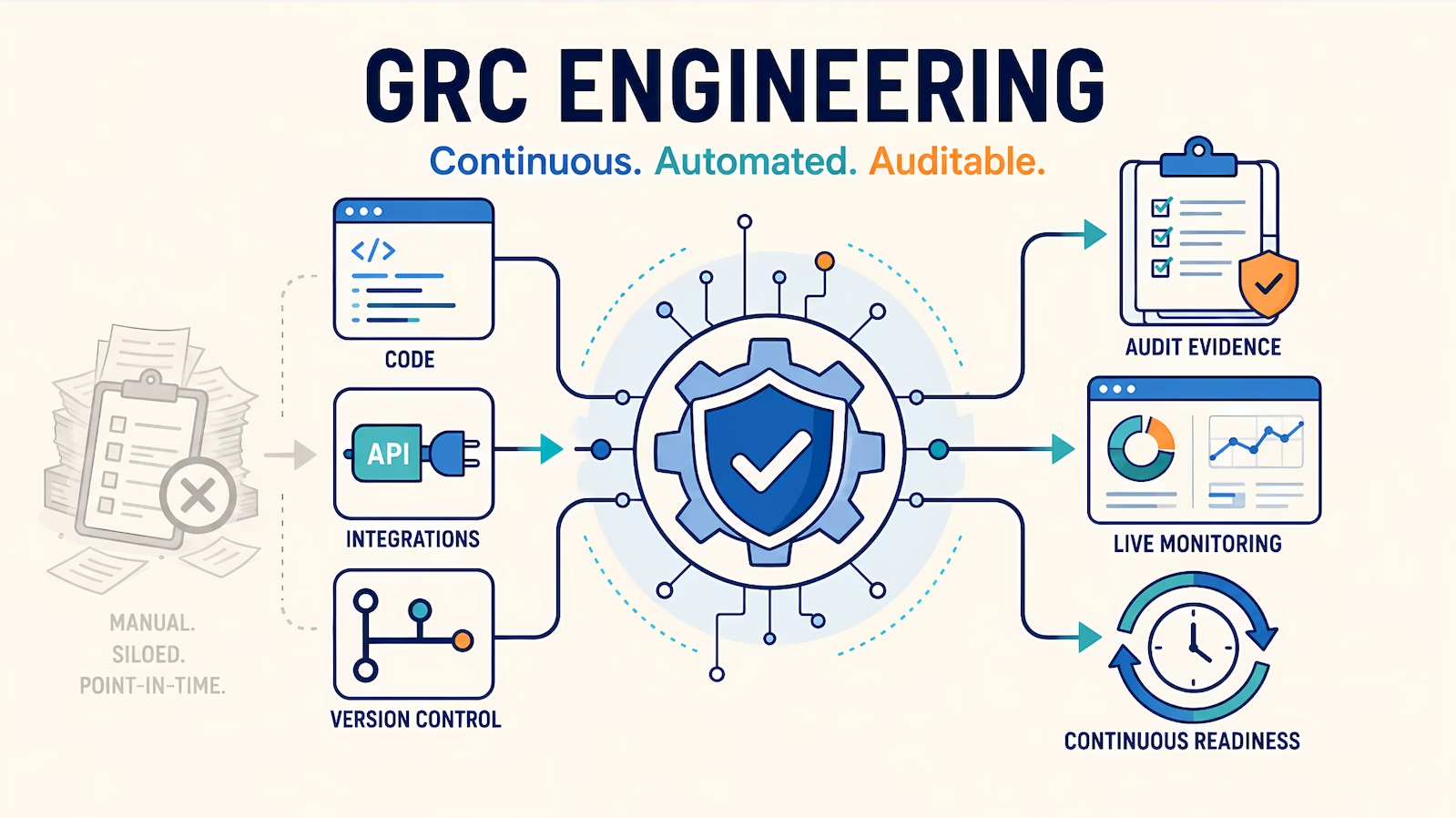
What is GRC Engineering? A Plain-Language Definition

GRC engineering has been picking up momentum in the security community. It is in job postings, conference agendas, and strategy conversations at ...
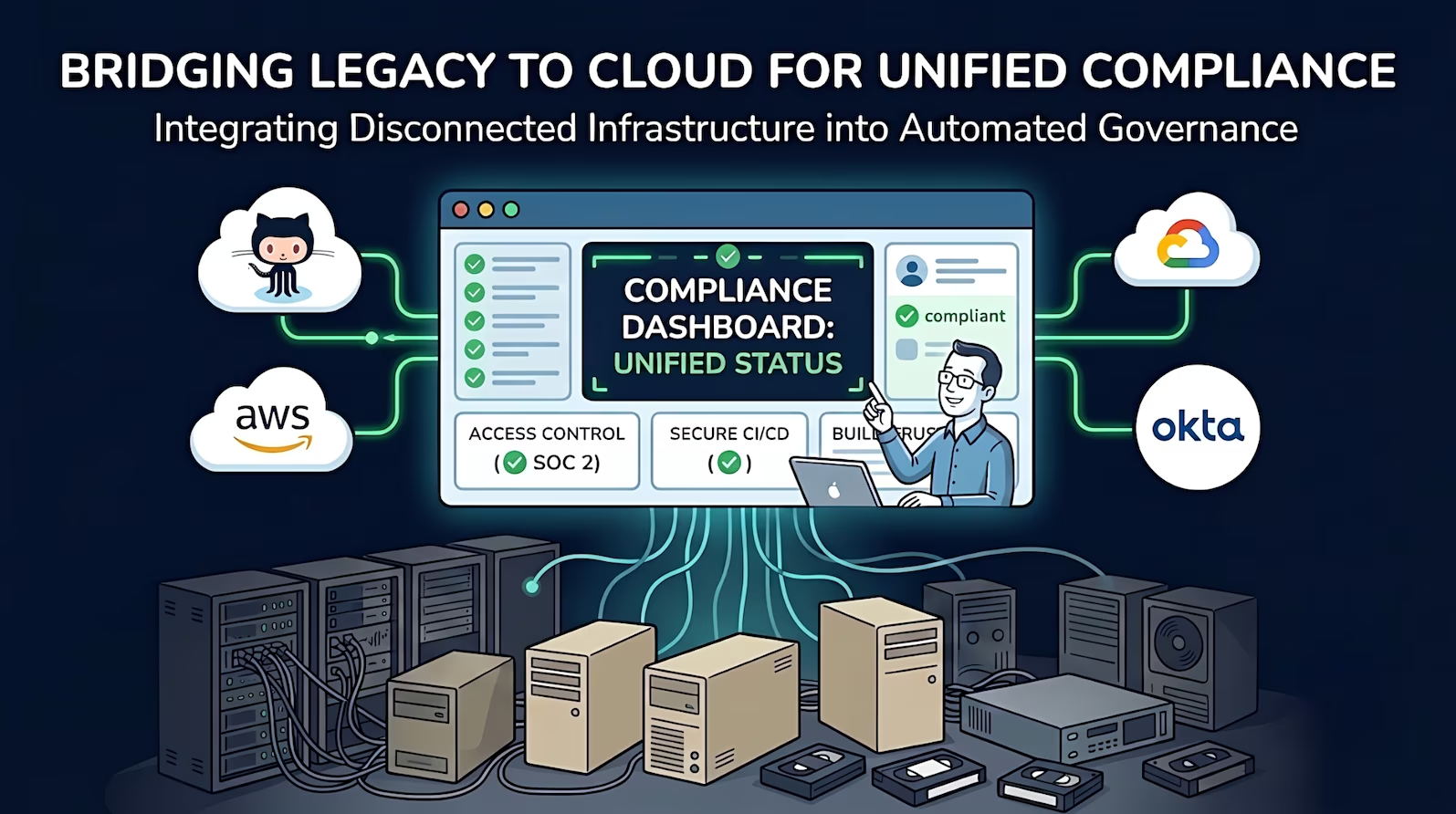
GRC Platform vs GRC Engineering: When You Need Both

We've seen all to often. organizations that have been running a GRC platform for six to twelve months: the dashboard is green, the audit prep feels ...