
.svg)

On paper, DIY compliance looks straightforward. Subscribe to a GRC platform, follow the control library, collect evidence, engage an auditor. The platforms market exactly this path: self-service compliance for a fraction of the cost of a consultant. And for a specific subset of companies, it works.
For the rest, the cost of doing it yourself is not the platform subscription. It is the 200 to 400 hours of CTO time that could have gone toward product development, the audit delays when the scope turns out to be wrong, the remediation rework when controls do not satisfy the auditor, and the enterprise deals that close with a competitor while the team is still figuring out evidence collection.
The DIY Path: What It Actually Involves
A company attempting SOC 2 without a consultant takes on every aspect of the program: scoping, policy writing, control design, implementation, evidence collection, auditor management, and ongoing operations.
Scoping is the first and most consequential decision. Which systems are in scope? Which Trust Services Categories apply? What is the system boundary? Getting this wrong means building controls for the wrong things, which means rework when the auditor identifies the gap. Scoping requires understanding both the SOC 2 criteria and the company's architecture well enough to draw the boundary correctly.
Policy development requires writing 20+ policies that reflect how the company actually operates. Templates are available from GRC platforms and open sources, but templates describe a generic company. The work is in customizing them to match real operations, and the risk is in adopting template language that does not match what the company actually does. Auditors ask questions. If the policy says one thing and the company does another, that is a finding.
Control implementation means configuring systems to meet the control requirements: enabling MFA across all systems, setting up access review schedules, configuring audit logging, implementing vulnerability scanning, establishing change management workflows. For a cloud-native SaaS company with a competent engineering team, this is familiar territory.
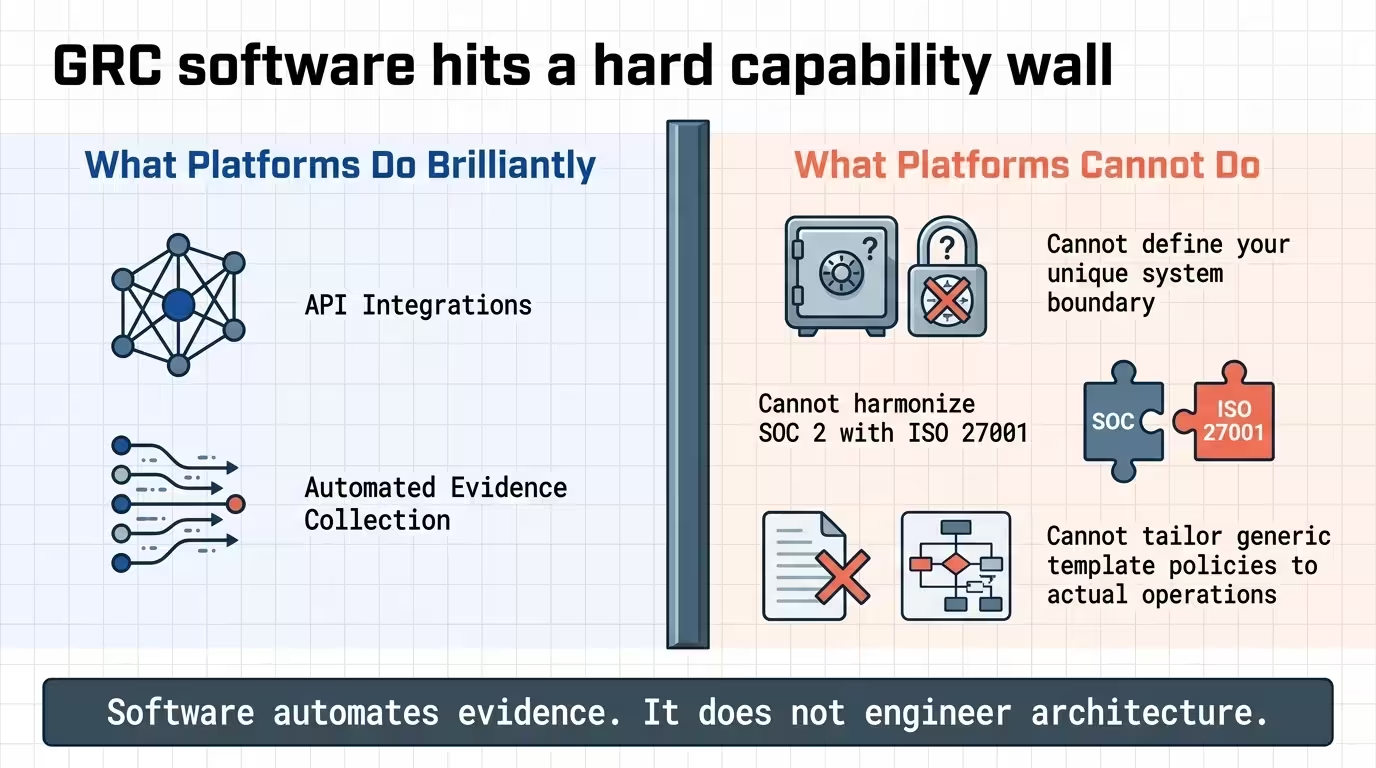
Evidence collection is where the ongoing burden lives. SOC 2 Security alone involves 70 to 80 controls, each requiring four or five pieces of evidence. Some evidence renews quarterly, some annually, some with every change. A GRC platform automates much of this through API integrations, but manual evidence (policy approvals, meeting notes, training records) still requires human effort.
The Evidence Math
70 to 80 controls. 4 to 5 evidence items each. Quarterly renewals. Annual reviews. That is what SOC 2 looks like without automation. A GRC platform handles much of the technical evidence through API integrations (configuration settings, MFA status, scan results, access logs). The manual evidence, policy approvals, training records, meeting notes, still requires someone to collect and organize it on schedule.
The Hidden Costs of DIY
The GRC platform subscription is visible. Auditor fees are visible. The costs that do not appear on any invoice are the ones that change the calculation.
| Hidden Cost | Impact | Typical Range |
| CTO opportunity cost | 200-400 hours diverted from product, hiring, customers | $75K-$200K implicit cost |
| Wrong scope | Rework, extended timeline, delayed deals | 4-8 weeks added |
| Auditor friction | Evidence format mismatches, scope disagreements | 2-4 weeks added per cycle |
| Qualified report | Report with exceptions, viewed as risk by buyers | Remediation + re-examination |
| Deals lost during process | Enterprise deals stall or go to competitors | Unquantified but often the largest |
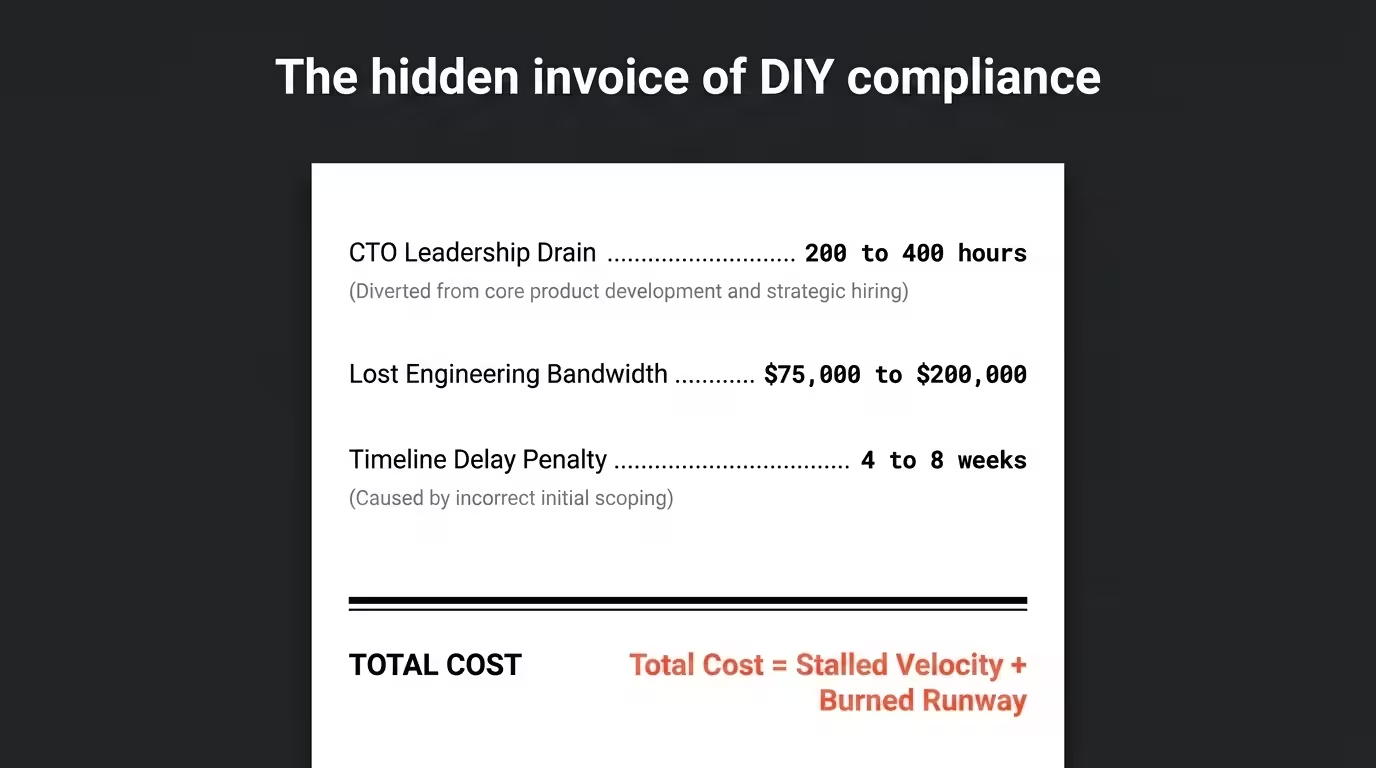
The CTO opportunity cost deserves emphasis. The person running the compliance effort is almost always the CTO, VP Engineering, or a senior engineer. At the opportunity cost of senior technical leadership, 200 to 400 hours over 4 to 8 months is $75K to $200K in implicit cost. Those are hours not spent on product development, customer conversations, hiring, or engineering leadership.
The Deal Timeline Problem
If a company takes 8 months to achieve SOC 2 instead of 4, every enterprise deal that required the report was delayed by 4 months. Some of those deals went to competitors who already had the report. The implementation timeline is not just an operational question. It is a revenue question.
When DIY Works
DIY compliance is viable for a specific company profile:
Companies that match this profile, particularly early-stage SaaS companies with strong engineering cultures, can execute a credible SOC 2 program with a GRC platform and a willing internal lead.
When DIY Breaks Down
The same decision becomes expensive when the company's situation introduces complexity that the DIY path does not handle well.
Complex infrastructure. On-premises components, hybrid cloud, multi-region deployments, or legacy systems that predate the cloud migration. Each architectural complexity adds scoping questions, control design decisions, and evidence requirements that a default GRC library does not address.
Multi-framework requirements. A buyer requiring both SOC 2 and ISO 27001, or SOC 2 and HIPAA, needs a harmonized control framework. Building that framework from scratch requires understanding how the standards overlap and where they diverge.
Tight timeline. A 90-day SOC 2 timeline leaves no room for the learning curve that DIY involves. Mistakes in scoping, control design, or evidence collection cannot be absorbed. A consultant who has done 20 SOC 2 engagements navigates the process without the trial-and-error that a first-time team experiences.
No internal security experience. A company with no one who understands access management, vulnerability management, incident response, or risk assessment will spend significant time learning the fundamentals before they can implement the controls.
Non-SaaS operating model. Professional services firms, companies operating in client environments, and organizations without traditional infrastructure face scoping challenges that default GRC platforms do not address.
The alternative to learning all of this under audit pressure is renting the judgment: a virtual CISO who has built these controls before and can hand the operating cadence to your team later.
The Template Trap
Some compliance vendors ship the entire security program in a week. Template policies with the company name swapped in, sent for signature. Nobody reads them. The audit passes because the paperwork exists, not because security improved. The first time a sophisticated prospect asks a pointed question about how a specific control works, the gap becomes obvious. A certificate without a program is compliance theater, whether it was done DIY or with a cut-rate consultant.
The Middle Ground: Assess First, Then Decide
The binary framing of DIY or hire a consultant misses a practical middle option. Engage a consultant for the assessment and scoping phase. Get the gap register, the scope definition, the control framework mapped to the company's actual architecture, and a roadmap with estimated effort for each gap. Then decide whether to execute internally or retain the consultant for implementation. Companies that lack the bandwidth for either path often find that a fractional CISO or a managed compliance engagement bridges the gap between DIY and full-service consulting.
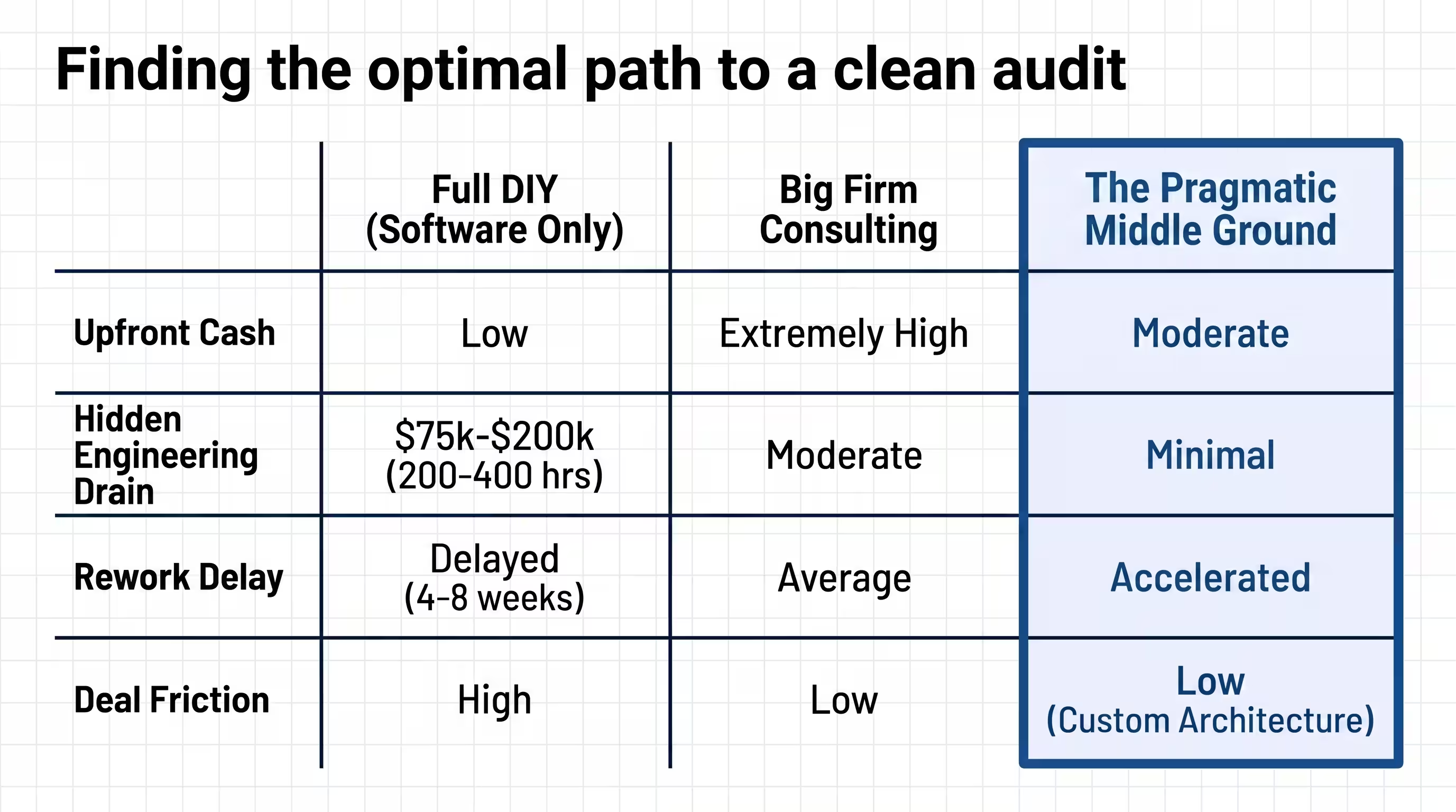
This approach costs a fraction of a full engagement and addresses the highest-risk phase: scoping. A company that knows exactly what needs to be built, in what order, and to what standard can execute the build internally with far less risk than a company figuring out scope and controls simultaneously.
The assessment also surfaces complexity that changes the calculation. A company that expected a simple SOC 2 but discovers multi-tenant data isolation requirements, or inherited infrastructure that predates the current team, or client contractual obligations that expand the scope, can factor that complexity into the decision before committing to a path.
The GRC Platform Question
Skipping the GRC platform to save money is like doing company books in a spreadsheet to save on accounting software. It works for the smallest, simplest cases. But SOC 2 involves 70 to 80 controls, each requiring multiple evidence items, some renewed quarterly. The platform automates evidence collection through API integrations. The time savings compound over the observation period. The platform is a tool, not a replacement for expertise, but it is a tool that pays for itself in avoided manual work.
Making the Decision
The calculation is not consultant fee versus zero. It is consultant fee versus CTO time, timeline risk, rework probability, and the revenue impact of delayed compliance.
For companies that match the DIY profile (simple SaaS, cloud-only, small team, single framework, no deadline pressure), the internal path is viable and often the right choice. The team builds institutional knowledge, owns the program, and develops the muscle to operate it independently.
For companies with complexity, tight timelines, or no internal security experience, the consultant engagement is not an expense to be minimized. It is the difference between a 90-day path to a clean report and a 9-month learning experience that may or may not produce one.
Not Sure Where You Stand?
Get a realistic picture of your security program maturity before choosing DIY or consultant.
The cheapest SOC 2 is not the one with the lowest invoice total. It is the one that produces a clean report, unblocks revenue, and builds a program the team can actually operate. Whether that requires a consultant depends on what the company brings to the table and how much time they have to figure out the rest.
Frequently Asked Questions
How much does it cost to do SOC 2 yourself?
Direct costs for DIY SOC 2 include a GRC platform subscription ($5K to $15K annually) and auditor fees ($15K to $40K depending on scope). The indirect cost is 200 to 400 hours of senior technical time over 4 to 8 months. At the opportunity cost of CTO-level leadership, the total investment is typically $50K to $100K+ when all costs are included, even without a consultant.
Is a GRC platform enough for SOC 2 without a consultant?
For simple SaaS companies with cloud-only infrastructure, under 20 employees, and a technical team willing to learn, a GRC platform can provide the structure needed for a first SOC 2 engagement. The platform automates evidence collection and provides a control library, but it does not make scoping decisions, customize controls to match operations, or manage the auditor relationship. Someone internal needs to own those responsibilities.
What is the biggest risk of DIY SOC 2 compliance?
Incorrect scoping. Getting the system boundary wrong means building controls for the wrong things and discovering the mistake during the audit. Rework adds 4 to 8 weeks and can result in a qualified report or failed audit. A consultant's primary value in the early phase is getting the scope right before the build begins.
When is hiring a compliance consultant worth the cost?
When the company has complex infrastructure (on-prem, hybrid, multi-cloud), tight timelines (under 90 days), multi-framework requirements, no internal security experience, or a non-SaaS operating model. In these scenarios, the consultant engagement typically costs less than the CTO time, rework, and delayed revenue that the DIY path produces.
Can we start DIY and bring in a consultant later if needed?
Yes, and this is a common path. The risk is that work done during the DIY phase may need to be reworked if the scoping was incorrect. The most efficient middle ground: engage a consultant for the assessment and scoping phase, then decide whether to execute the build internally or retain the consultant. This addresses the highest-risk phase (scoping) at a fraction of the full engagement cost.
How long does DIY SOC 2 take compared to working with a consultant?
First-time DIY engagements typically take 6 to 12 months from kickoff to report. With consultant support, the same company often achieves the report in 3 to 5 months. The difference is the learning curve: a consultant who has completed 20+ SOC 2 engagements navigates scoping, control design, and auditor management without the trial-and-error that a first-time team experiences.