
.svg)
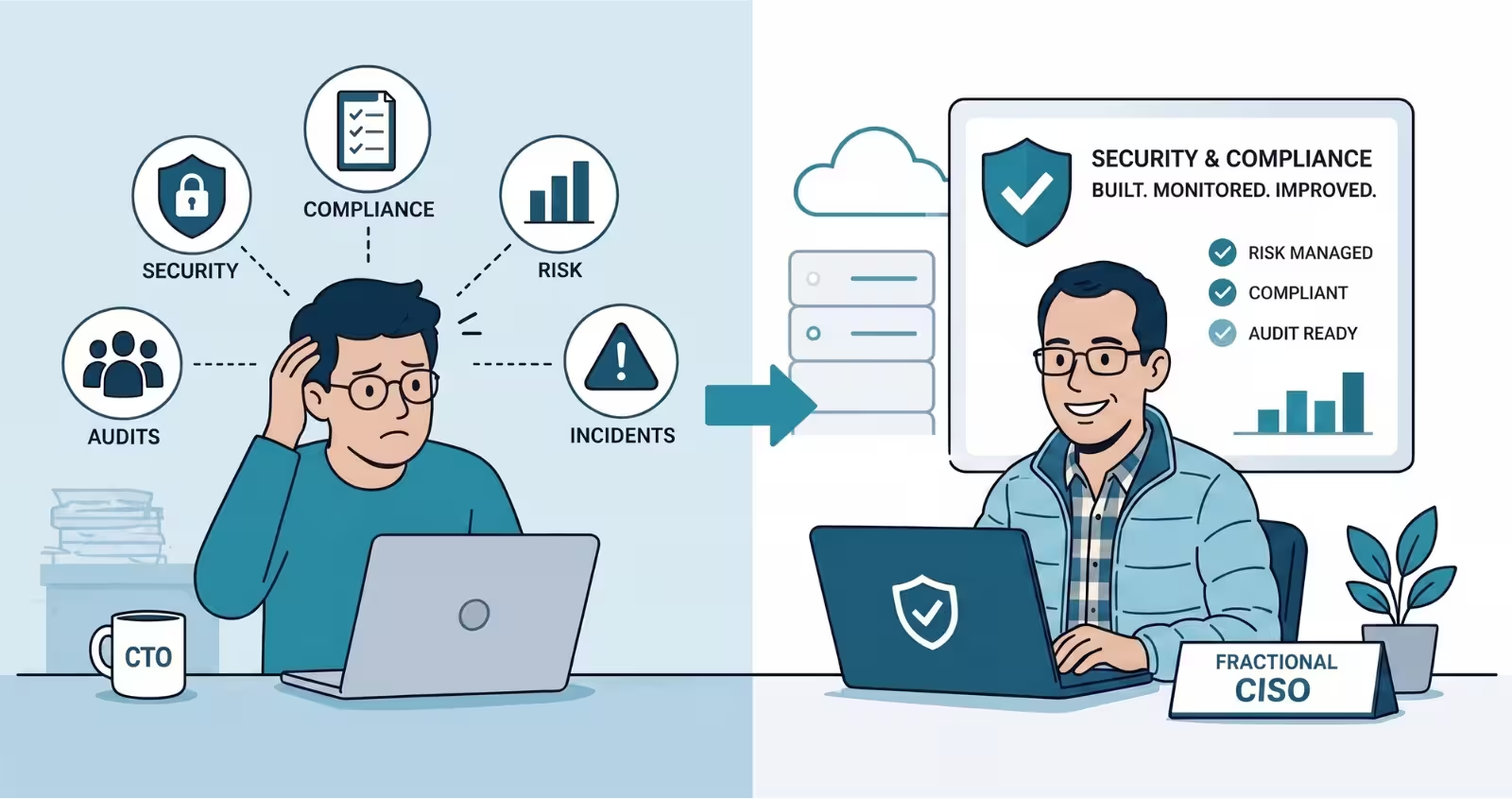
Security leadership at most SaaS companies follows a predictable pattern. The CTO handles it. Not because they volunteered, but because nobody else can. Access reviews, vendor security questionnaires, SOC 2 readiness, incident response planning: it all falls to the person already responsible for product, engineering, and infrastructure. The work gets done in gaps between everything else, which means it gets done inconsistently, reactively, and without the continuity that a real security program requires.
A fractional CISO changes that equation. Not by adding another vendor to the stack, but by putting someone in the seat who runs security as their primary job, on a schedule and scope that matches the company's actual needs.
What a Fractional CISO Actually Does
The title sounds strategic. The work is operational.
A fractional CISO embedded in a SaaS company typically owns the full lifecycle of the security program: designing policies that reflect how the company actually operates, implementing controls that map to the frameworks buyers are asking about, running the cadences that keep the program alive between audits, and representing the company's security posture to customers, auditors, and partners.
In practice, this means a weekly or biweekly operating rhythm. Access reviews get run on schedule. Vulnerability scan results get triaged and tracked. Security awareness training gets deployed and measured. Evidence for SOC 2 CC6.1 and CC6.2 gets collected continuously, not assembled in a panic before the audit window opens. Policy exceptions get documented with rationale instead of ignored until someone asks.
Key Distinction
The difference between fractional security leadership and advisory work: an advisor tells you what to do. A fractional CISO does the work, or at minimum runs the system that ensures it gets done. The deliverable is not a report. It is a functioning security program.
The CTO Bandwidth Problem
The pattern across dozens of SaaS companies looks the same. Security starts as something the CTO handles directly. At 10 to 20 employees, this works. The CTO knows every system, every user, every integration. Access management is informal because the team is small enough that everyone knows who has access to what.
Then the company grows. Or an enterprise prospect sends a security questionnaire. Or a SOC 2 requirement appears in a contract. Suddenly the CTO is spending 10 to 15 hours a week on security tasks that have nothing to do with building product. Access reviews for 40 users across a dozen systems. Policy documents that need to reflect actual operations. Vendor risk assessments for third-party integrations. Evidence collection for an observation period that requires continuous demonstration of control effectiveness.
The opportunity cost is real. Those are hours that could go toward product development, engineering leadership, hiring, or customer conversations. And the security work itself suffers because it is competing for attention with everything else on the CTO's plate. The hidden costs of DIY compliance compound quickly once you factor in that CTO time.
Right-Sizing in Practice
A small technology company with a two-person IT team recently worked through this exact tension during SOC 2 readiness. The head of IT pushed back on controls that felt over-engineered for their size. The solution was right-sizing: taking what they were already doing and adding just enough structure to make it demonstrable. For access management under SOC 2 CC6.1, that meant a simple spreadsheet tracking who has access to what, updated when changes happen. For access reviews under CC6.2, an annual check that takes 30 minutes because there are only seven people.
That right-sizing work is exactly what a fractional CISO does. Not layering enterprise complexity onto small teams, but finding the minimum viable formalization that satisfies the framework and remains sustainable.
When Fractional Makes Sense vs. Full-Time
The decision is not primarily about budget, though budget is part of it. It is about what the company actually needs at its current stage.
| Factor | Fractional CISO | Full-Time CISO |
| Team size | 15 to 150 employees | 150+ with dedicated security staff |
| Framework needs | 1-2 frameworks, compliance-driven | Multiple frameworks, regulated industry |
| Security team | No dedicated security staff | 3+ security team members |
| Primary driver | Sales requirements, first audit | Board mandate, daily operations |
| Budget | Fraction of full-time salary | $200K+ total compensation |
The gap between these two scenarios is where fractional security leadership delivers the most value. The company needs real security operations, not just advice, but does not need (or cannot justify) a full-time executive.
That is the shape of our vCISO service: a named senior lead who owns the program, priced against a fraction of a CISO salary line rather than the whole one.
What the Operate Model Looks Like
A fractional CISO engagement typically follows the build-then-operate pattern that maps directly to how compliance programs work in practice.
Program Design
Design the security program architecture, write policies that reflect actual operations, implement controls across the technology stack.
Platform Configuration
Configure the GRC platform, connect integrations, close gaps identified in the readiness assessment.
Audit Preparation
Prepare evidence packages, align with the auditor on scope, and conduct readiness reviews before examination begins.
Continuous Compliance
Monthly access reviews. Quarterly risk assessments. Continuous evidence collection. Annual policy reviews.
Incident and Vendor Management
Incident response coordination. Vendor security reviews as new integrations come online. Security awareness training cycles.
Stakeholder Communication
Auditor liaison, enterprise customer security reviews, board reporting on program maturity and risk posture.
The operate phase is where DIY programs fail. The team that built the program exhausts their energy getting to readiness, and then the observation period starts. Without someone owning that cadence, the program drifts, evidence stops being collected, and the Type 2 audit reveals the gaps.
Watch Out for Template Programs
Some vendors deliver template policies with the company name swapped in, shipped in a week, signed without being read. The audit passes because the paperwork exists. The first time a sophisticated prospect asks a pointed question about how a specific control works, the gap becomes obvious. A fractional CISO builds a program the team can explain and operate, not a pile of signed PDFs.
How to Evaluate a Fractional CISO
Not all fractional security offerings deliver the same thing. The guide to vCISO services for mid-market SaaS groups the providers by what each one sells and gives the questions that separate them. The questions that separate real program operators from advisory practices:
Ask about operating cadences. If the answer focuses on deliverables (policies, reports, assessments) rather than rhythms (weekly reviews, monthly access audits, continuous evidence collection), the engagement is advisory, not operational.
Ask about evidence. A fractional CISO running a program should be able to show you what evidence gets collected, how often, and where it lives. If the answer is vague, the program is not being operated.
Ask about continuity. What happens between engagements? What happens if an incident occurs on a day the fractional CISO is not scheduled? A well-designed fractional model has answers to both questions.
Ask about the transition. At what point does the company outgrow fractional? A credible fractional CISO should be planning for the day the company hires full-time, not engineering dependency. The same rigor applies when choosing a SOC 2 consultant for the build phase.
The Revenue Connection
The business case for fractional security leadership is not risk reduction in the abstract. It is specific and measurable.
Enterprise deals stall when the company cannot answer security questionnaires credibly. SOC 2 readiness timelines slip when nobody owns the program full-time, and the costs add up in ways teams do not expect. Audit findings accumulate when the observation period runs on autopilot. Each of these has a direct revenue impact: delayed deals, extended timelines, remediation costs that could have been avoided.
A fractional CISO running the Operate model costs a fraction of a full-time hire and delivers something the CTO running security in spare time cannot: consistency. The program runs whether or not it is competing for attention with a product launch.
Stop Running Security on Spare Time
See where your security program stands and what it takes to build one that runs itself.
Security programs that run on CTO spare time work until they don't. The trigger is usually a compliance requirement, an enterprise deal, or an incident that reveals how much was running on institutional knowledge and good intentions. A fractional CISO is not the only solution, but for companies in the gap between handling it themselves and needing a full security team, it is the one that keeps the program running while the CTO gets back to building product.
Frequently Asked Questions
What does a fractional CISO do that a security consultant does not?
A security consultant typically delivers assessments, gap analyses, and recommendations. A fractional CISO operates the security program on an ongoing basis: running access reviews, collecting evidence, managing auditor relationships, and coordinating incident response. The distinction is between advising on what to do and actually doing the work on a recurring schedule.
How many hours per week does a fractional CISO typically work?
Most fractional CISO engagements run 8 to 20 hours per week, depending on the company's size, compliance requirements, and program maturity. The build phase tends to require more hours (16 to 20), while the operate phase settles into a steady cadence (8 to 12). The schedule adjusts during audit periods and incident response.
When should a company switch from fractional to full-time security leadership?
The transition point is typically when the security team grows to three or more people, when regulatory requirements demand daily security operations, or when the board requires a named CISO on the leadership team. Companies in regulated industries (healthcare, financial services) with complex compliance landscapes tend to reach this point earlier than general SaaS companies.
Can a fractional CISO help with SOC 2 certification?
SOC 2 is one of the most common drivers for fractional CISO engagements. The fractional CISO scopes the engagement, designs controls, implements the program, manages the GRC platform, prepares evidence, and coordinates with the auditor. The engagement typically covers both the build phase (readiness) and the operate phase (observation period through Type 2 examination).
How is a fractional security team different from a vCISO?
A fractional security team provides broader operational capacity than a single vCISO. Where a vCISO is one person in a leadership role, a fractional security team includes the people who execute the day-to-day work: evidence collection, control monitoring, vendor assessments, and program operations. The team model scales the operational capacity without requiring the company to hire multiple full-time security staff. For the delivery models, framework coverage, and evaluation questions in detail, see the guide to vCISO services for mid-market SaaS.
Ready to Start Your Compliance Journey?
Get a clear, actionable roadmap with our readiness assessment.
Contact Us
Free Report: The CPCSC Compliance Playbook
Join the waitlist for a free copy when it’s released.
About the Author

Former security architect for Bank of Canada and Payments Canada. 20+ years building compliance programs for critical infrastructure.