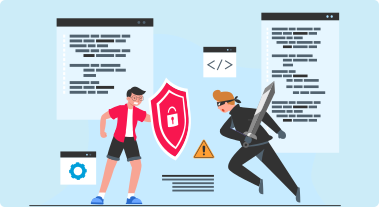
Supply chain cyber risk has become one of the most pressing cybersecurity challenges for businesses of all sizes. A single compromise in a supplier’s network can cascade into a major security breach, impacting multiple organizations at once. Both small and medium-sized businesses (SMBs) and large enterprises are vulnerable to supply chain attacks, but for different reasons. While SMBs often lack the resources for rigorous third-party security assessments, enterprises struggle with the complexity of managing thousands of vendors.
Here’s why supply chain risk is rapidly increasing and how businesses can defend themselves.
1. Increased Reliance on Third-Party Vendors
Modern businesses operate in an interconnected digital ecosystem. From cloud services to logistics providers, companies rely on numerous third-party vendors to maintain efficiency. However, each vendor relationship introduces a new attack vector.
- SMBs often outsource IT and cybersecurity to managed service providers (MSPs), which can become prime targets for attackers. The Kaseya ransomware attack in 2021 exploited vulnerabilities in an MSP’s software, affecting hundreds of downstream businesses.
- Enterprises engage with hundreds or thousands of vendors, making it difficult to monitor security compliance across the entire supply chain. This complexity increases the risk of a weak link exposing the organization to cyber threats.
2. Rise in Software Supply Chain Attacks
Attackers are increasingly targeting software supply chains to inject malicious code into widely used applications. These attacks can spread rapidly and go undetected for long periods.
- SolarWinds (2020): Hackers compromised the Orion software update, affecting 18,000 organizations, including Fortune 500 companies and government agencies.
- MOVEit Breach (2023): A zero-day vulnerability in a file transfer software led to data leaks across hundreds of companies, demonstrating the far-reaching impact of a single supply chain vulnerability.
For SMBs, the risk lies in using third-party software without verifying security controls. For enterprises, the challenge is managing and securing thousands of applications across different business units.
3. Lack of Visibility and Control Over Vendor Security
Many companies lack full visibility into the security postures of their suppliers and partners. Businesses often assume that vendors have adequate security measures in place, but without continuous assessment, this assumption can be dangerous.
- SMBs may not have dedicated vendor risk management teams, leaving them blind to potential security gaps in their supply chain.
- Enterprises struggle with scale—monitoring hundreds or thousands of vendors across global operations is a complex and resource-intensive task.
Without clear vendor security requirements and regular audits, businesses expose themselves to compliance violations, data breaches, and financial losses.
4. Regulatory Compliance and Legal Liabilities
Governments and industry bodies are tightening regulations around supply chain security. Businesses that fail to secure their supply chains risk regulatory penalties, lawsuits, and reputational damage.
- CMMC (Cybersecurity Maturity Model Certification): U.S. government contractors must comply with strict cybersecurity requirements, including supply chain security assessments.
- CPCSC (Canadian Program for Cyber Security Certification): The CPCSC is Canada’s equivalent to the U.S. CMMC, designed to safeguard federal contracting information and bolster cybersecurity within the national defense supply chain.
- SOC 2 & ISO 27001: Many enterprises require their vendors to meet these standards, but compliance gaps remain a major challenge.
- Data Protection Laws (GDPR, CCPA): Companies are liable for breaches caused by their vendors, making third-party risk management a legal necessity.
SMBs may struggle with compliance due to limited cybersecurity expertise, while enterprises face the challenge of enforcing security requirements across a large vendor network.
5. Evolving Cyber Threats and Ransomware Risks
Cybercriminals increasingly use supply chain attacks to bypass direct security defenses and gain access to larger networks. Attackers often target small vendors with weaker defenses to infiltrate major enterprises.
- Ransomware-as-a-Service (RaaS) groups exploit third-party vulnerabilities to distribute malware at scale.
- Phishing and credential theft remain common entry points into supplier networks.
- Zero-day vulnerabilities in third-party software allow attackers to launch mass-scale attacks before patches are available.
Whether targeting a small business partner or a global enterprise, attackers leverage supply chain vulnerabilities as a force multiplier for cybercrime.
How Businesses Can Strengthen Supply Chain Cybersecurity
To mitigate supply chain cyber risks, businesses should implement the following strategies:
1. Build Third-Party Risk Management (TPRM) Program
- Conduct rigorous vendor risk assessments before onboarding new vendors.
- Require vendors to comply with security frameworks like SOC 2, ISO 27001, or NIST 800-171 and provide you the report(s)/certificate(s).
- Require vendors to provide you annual penetration test reports.
- Implement continuous monitoring instead of relying on one-time security assessments.
- Include minimum vendor security requirements in contract addendums wherever possible.
- Incorporate TPRM into your procurement process so that vendor selection considers cybersecurity requirements.
- Have a solid vendor off-boarding process.
2. Implement Zero-Trust Principles
- Restrict vendor access to only the minimum required systems and data.
- Use multi-factor authentication (MFA) and network segmentation to limit potential attack spread.
- Regularly audit vendor access privileges and revoke unnecessary permissions.
3. Strengthen Contractual Security Requirements
- Include cybersecurity clauses in vendor contracts, specifying security expectations and incident response protocols.
- Require vendors to maintain cyber liability insurance to cover potential breach damages.
4. Monitor for Emerging Threats
- Leverage threat intelligence to detect supply chain vulnerabilities before they are exploited.
- Require vendors to disclose security incidents promptly to enable faster response.
5. Develop an Incident Response Plan for Supply Chain Attacks
- Ensure your cyber incident response team has a process for handling third-party breaches.
- Run tabletop exercises to simulate supply chain cyberattack scenarios.
- Maintain backup and recovery plans to minimize downtime in case of an attack.
Final Thoughts
Supply chain cyber risk is no longer just an IT problem—it’s a business-critical issue. SMBs and enterprises alike must recognize that securing their vendors is as important as securing their own networks.
By implementing proactive third-party risk management programs (TPRM), zero-trust security models, and continuous monitoring, businesses can reduce supply chain vulnerabilities and stay ahead of evolving cyber threats.
Taking supply chain security seriously today will prevent costly breaches, regulatory penalties, and reputational damage in the future.