










Assess

AI penetration testing for LLM applications and AI agents

Your customers trust your AI features with their data and their systems. Traditional pen tests cover networks and applications, and AI features need testing of their own. Our AI penetration testing covers prompts, agents and model behaviour:

  • LLM application testing against the OWASP Top 10 for LLM Applications
  • AI agent red teaming for goal hijacking, tool misuse and unsafe actions
  • RAG and data testing for leakage across users and customers
  • AI endpoint and model hosting tests, in the cloud, on-prem or on neocloud GPUs
  • Findings with fixes, a retest, and evidence for SOC 2, ISO 42001 and AIUC-1

Scope your AI penetration test

Tell us what your AI features do and a specialist will follow up to book a scoping call.

What our AI penetration testing services include

Testing scoped to how your AI features work and what they can reach.

icon-5

AI threat model and scoping

We map your models, prompts, tools, data sources and integrations, then agree on which attack paths matter most to your product and your customers.

icon-2

LLM application testing

Testing against the OWASP Top 10 for LLM Applications (2025), including prompt injection, sensitive information disclosure, system prompt leakage, improper output handling and excessive agency.

icon-8

AI agent red teaming

Adversarial scenarios for agents that take actions: goal hijacking through indirect prompt injection, tool misuse, privilege escalation through connected systems, and unsafe tool calls, aligned with the OWASP Top 10 for Agentic Applications.

icon-7

RAG and data leakage testing

Tests for data exposure across users and customers, poisoned documents in the retrieval pipeline, and vector and embedding weaknesses.

icon-6

AI endpoint and infrastructure testing

Authentication, rate limits, scraping and abuse of your AI APIs, plus the model hosting environment, whether it is a hyperscaler, your own data center, colocation or a neocloud.

icon-4

Report, fixes and retest

We document each finding with a reproduction, its business impact and a recommended fix. We retest after remediation and issue a report your buyers and auditors can review.

How AI penetration testing works: Assess, Build, Operate

Scope and price agreed with you before testing starts.

01

Assess

Threat model and scoping, then manual testing and red teaming of your LLM applications, agents, data pipelines and AI endpoints.

02

Build

Your engineers fix the findings with our guidance. We retest each fix and issue the final report.

03

Operate

Repeat testing every quarter or after major model and prompt changes, so the evidence stays current for AIUC-1, ISO 42001, SOC 2 and buyer questionnaires.

What you hold at the end

Clear findings, verified fixes and a report you can share.

  • AI threat model

  • Executive summary for buyers

  • Technical findings with reproductions

  • Recommended fixes by priority

  • Retest results

  • Final AI penetration test report

  • Mapping to OWASP LLM and agentic risks

  • Evidence for SOC 2, ISO 42001 and AIUC-1

Why companies choose Truvo for AI penetration testing

Testing built for how AI systems fail.

Who AI penetration testing is for

Any company that puts an LLM or an AI agent in front of customers, or connects one to its own systems and data.

Frequently asked questions about AI penetration testing

AI penetration testing is a security assessment of systems that use large language models or AI agents. Testers attack the prompts, model behaviour, connected tools, retrieval pipelines and AI endpoints to find ways an attacker could leak data, bypass controls or make the system take unintended actions.

A regular pen test covers networks, applications and APIs. An LLM penetration test adds the AI-specific attacks: prompt injection, jailbreaks, system prompt leakage, data exposure through retrieval, and agents misusing the tools they can call. Many companies need both, and we can scope them together.

AI red teaming is adversarial testing that simulates realistic attacks and misuse against an AI system, including indirect prompt injection planted in documents, emails or web pages the system reads. It focuses on what an attacker can make the system do, beyond individual vulnerabilities.

The OWASP Top 10 for LLM Applications (2025), the OWASP Top 10 for Agentic Applications, and MITRE ATLAS, plus the risk categories in AIUC-1 for companies preparing for that certification.

AIUC-1 requires testing by qualified third parties at least every quarter across security, safety, reliability, data and privacy, and accountability risks, plus a penetration test of AI endpoints. We write our reports to serve as that evidence. AIUC conducts its own certification evaluations separately.

Yes. We test open-weight and self-hosted models wherever they run, including the hosting environment, model integrity and the isolation between customers on shared GPU infrastructure.

Scope your AI penetration test

Book a 30-minute call. We review your AI features and propose a scope and timeline.

From the blog: AI security

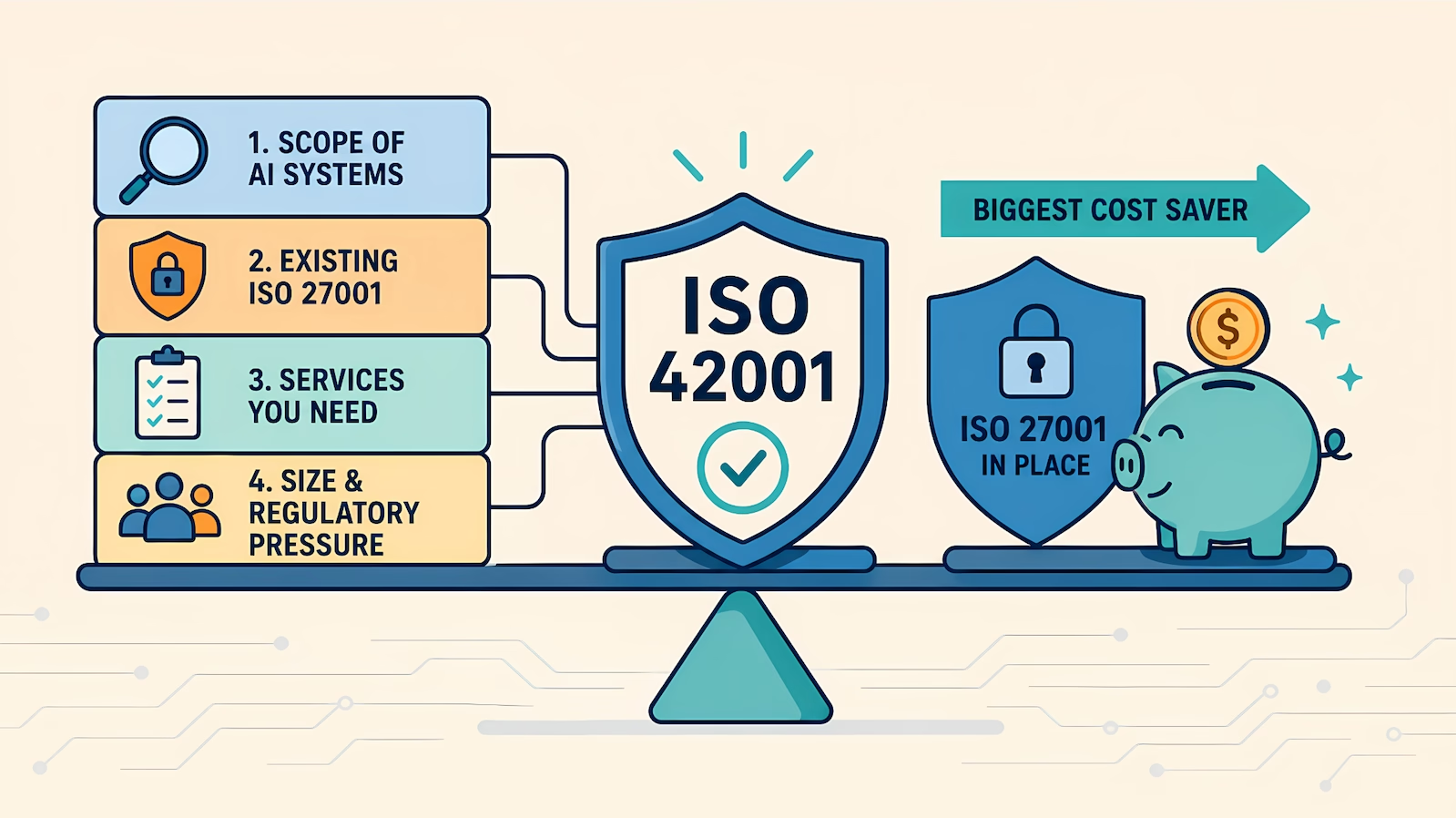
ISO 42001 Cost in 2026: The 4 Factors

ISO 42001 implementation and certification for small organization can land anywhere between roughly US$20,000 and US$55,000 for a first ...
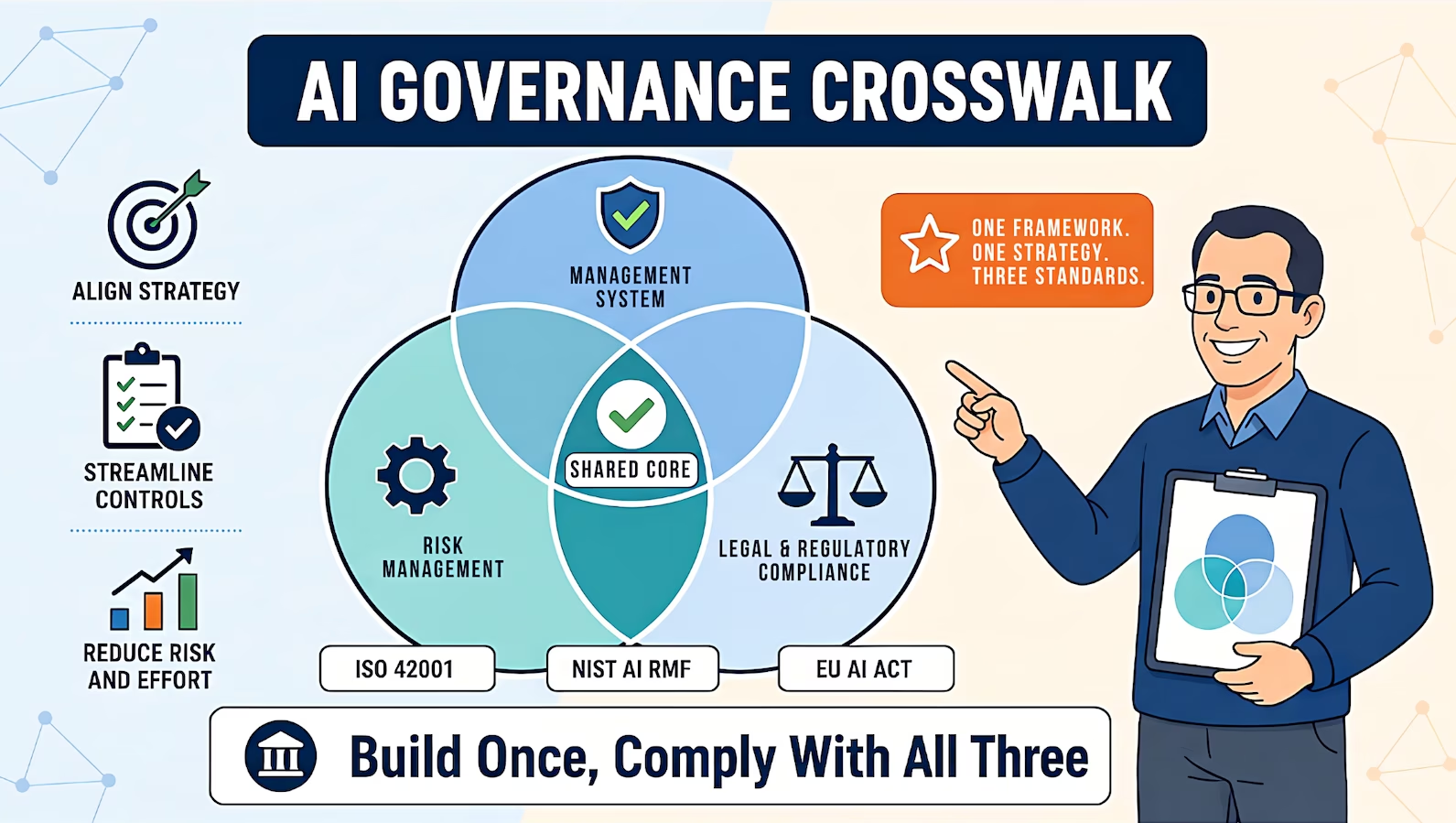
ISO 42001, NIST AI RMF, and the EU AI Act: The Complete Control Crosswalk

ISO 42001, the NIST AI RMF, and the EU AI Act overlap on roughly two-thirds of their controls. Design one control set against that shared core and ...
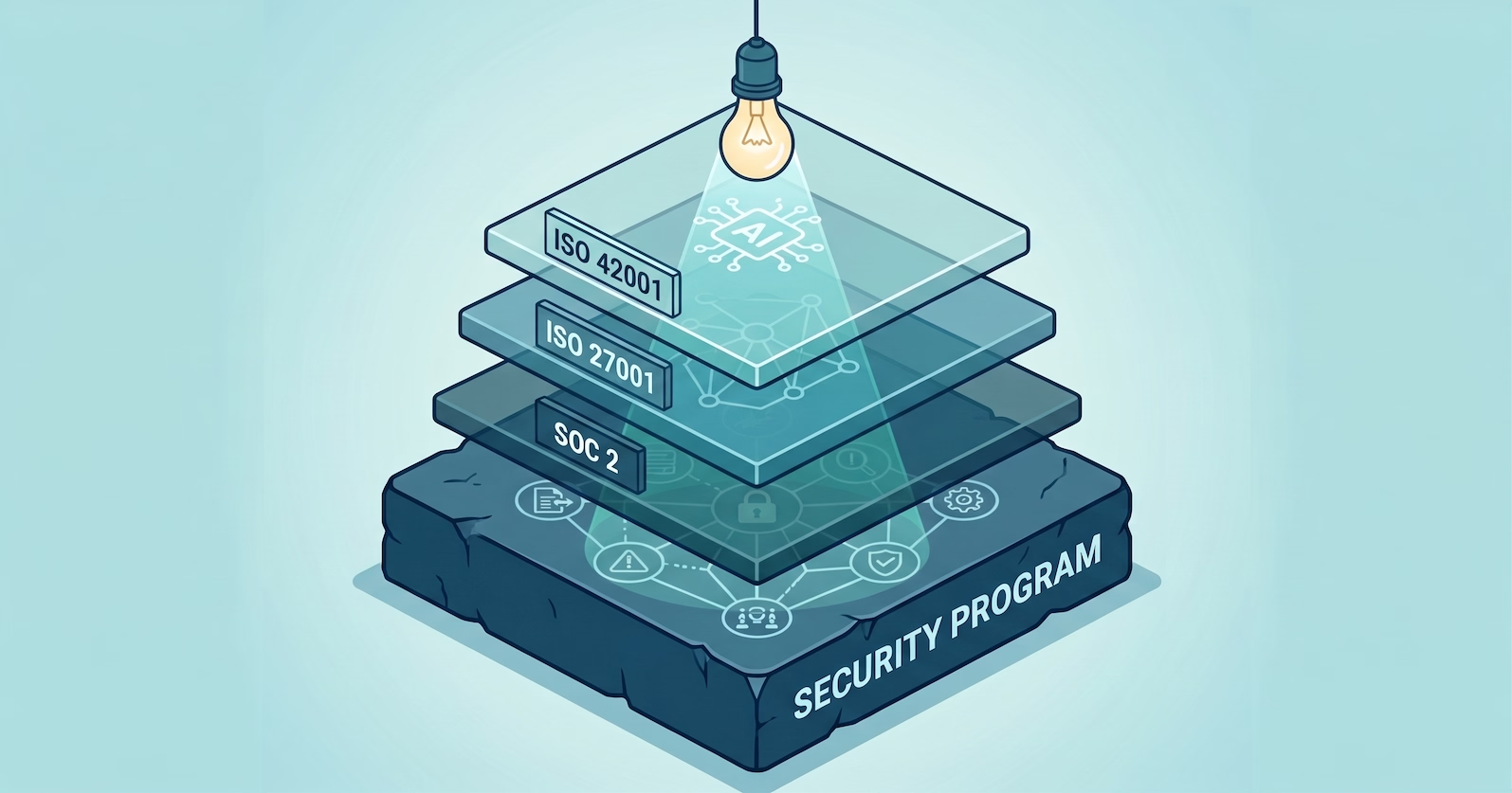
Most of ISO 42001 Is Already Built

How much of an existing SOC 2 or ISO 27001 program carries into ISO 42001, and why the framework tax is mostly imaginary for teams that built a real ...