
.svg)
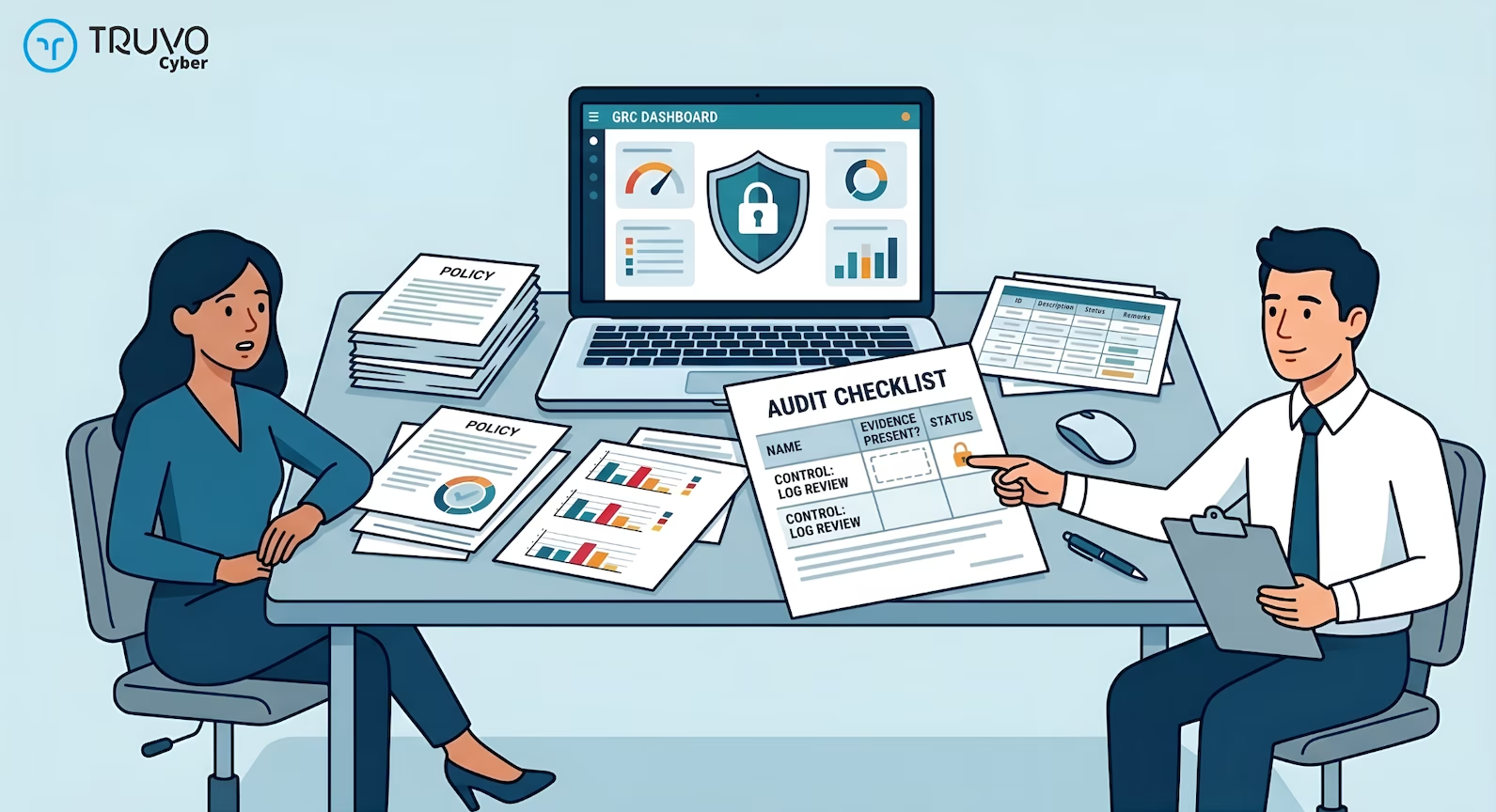
Most Canadian organizations preparing for ISO 27001 certification have the same question at the internal audit stage: who should run this, and what does bringing in outside help actually look like?
This post covers both. What a consulting engagement includes, what it costs in time, and why organizations that use external consultants for internal audits tend to show up to certification better prepared.
Where does your ISMS stand before you engage a consultant?
The ISO 27001 Readiness Scorecard gives you a structured gap view across the main certification areas in about ten minutes.
Why Organizations Bring in an External Team
The case for external consulting on ISO 27001 internal audits is not primarily about cost. It is about what an internal team can and cannot realistically do.
The perspective problem. Internal staff know the organization well. That familiarity is an asset for day-to-day operations and a liability for audit work. When you have built the controls yourself, or worked alongside the people who did, you develop blind spots. Controls that look sufficient from the inside often have gaps that an outside reviewer identifies in the first hour. Not because your team missed something obvious, but because familiarity makes the gaps invisible.
An external consultant walks in without that familiarity. They assess what is actually documented, what evidence is actually present, and what the controls actually do, rather than what they are supposed to do.
The fresh eyes advantage
An external auditor sees the current state, not the intended state. That difference is the mechanism by which a well-run internal audit actually prepares an organization for certification, rather than confirming what leadership already believed was true.
The bandwidth problem. Internal audits done correctly are not a one-afternoon exercise. A thorough internal audit covering Clauses 4 through 10 and the relevant Annex A controls takes significant time: planning, evidence collection, interviews, gap analysis, and a formal report. For most organizations, the staff who understand the ISMS best are also the staff who built and run it. Pulling them out of their regular responsibilities to audit their own work is a capacity trade-off most teams cannot sustain well.
Auditor experience. External consultants who specialize in ISO 27001 have been in the room with certification auditors. They know what auditors look for, how they frame nonconformities, and what kind of evidence holds up under scrutiny. That knowledge is not written down in the standard. It comes from doing the work across multiple certifications.
Security depth. The best internal audit engagements are run by teams with real security backgrounds, not just compliance process knowledge. A consultant who has designed and operated security programs sees control gaps differently than one who only maps policies to clauses. That difference shows up in the quality of the gap analysis and in the remediation guidance that follows.
Team breadth. A single consultant covers what they know. A team with different skill sets, including people with backgrounds in cloud infrastructure, vendor risk, technical controls, and governance documentation, can assess the full scope of an ISMS without creating bottlenecks. ISO 27001 internal audits touch people controls, technical controls, and organizational controls at the same time. Covering all of them well takes more than one perspective.
What the Engagement Covers
A standard ISO 27001 internal audit consulting engagement includes the following phases:
Audit planning and scope definition
Before fieldwork starts, the consultant documents the audit scope, objectives, and criteria. This includes a review of the Statement of Applicability and prior risk treatment plan. The planning phase is where a good consultant identifies which areas carry the highest certification risk and sequences fieldwork accordingly.
Evidence review
The consultant reviews documentation and tests that controls are actually implemented and functioning. For GRC platform users, automated test results serve as automated evidence. For controls without automation, the consultant identifies what manual evidence exists and whether it is current, complete, and approved.
Interviews
The standard requires that auditors verify people understand and follow documented procedures. Interviews with process owners, system administrators, and management confirm whether the ISMS is operational or just documented.
Gap identification and classification
Findings are classified as conforming, nonconformities (major or minor), or opportunities for improvement. A good consultant distinguishes between findings that will block certification and findings that are worth documenting but will not stop the audit from progressing.
Formal audit report
The deliverable is a written report meeting the documentation requirements of ISO 27001 Clause 9.2. This report becomes part of the evidence package reviewed by the certification body. It must be complete, dated, and signed.
Remediation guidance
Prioritized guidance on what to fix before the external audit. A consultant who has seen certification audits knows which nonconformities certification auditors focus on and how to sequence remediation so the highest-risk items are closed first.
Related reading: the five findings that come up before almost every certification and why the policy-evidence gap is the most common root cause.
Timeline and Timing
Internal audit engagements for organizations seeking initial ISO 27001 certification typically run two to four weeks from kickoff to final report, depending on organizational size, ISMS maturity, and the number of controls in scope.
The right timing window
Run the internal audit six to eight weeks before your Stage 2 certification audit. This leaves enough runway to receive the report, prioritize nonconformities, implement remediation, and produce evidence of corrective action before the certification auditor arrives. Closer than four weeks is high risk.
Organizations that run the internal audit too close to certification, or skip it entirely, arrive at the Stage 2 audit with nonconformities the certification auditor finds first. That typically means a delayed certificate and additional audit costs.
What to Expect from a Canadian Consulting Firm
Framework knowledge matters, but security experience matters more. The ISO 27001 standard provides the structure. The value an external consultant adds is in understanding what good looks like across the actual security controls, not just the compliance clauses. Ask whether the team includes people with hands-on security backgrounds, not only GRC practitioners.
Look for a team, not a solo practitioner. A single consultant can run an internal audit. A team with complementary skill sets runs a better one. Coverage across governance, technical, and operational controls without a single person becoming a bottleneck is a practical quality indicator.
Industry fit. Canadian organizations in regulated sectors such as financial services, healthcare, or defence supply chain have specific regulatory overlays that interact with ISO 27001. A consultant who understands those overlaps reduces the risk of audit findings that could have been anticipated.
Auditor familiarity. Ask whether the firm has direct experience with the certification bodies that commonly operate in Canada. Knowing how a specific auditor frames findings and what they prioritize in fieldwork is a meaningful advantage.
Questions worth asking any consulting firm
Which certification bodies have you worked with in Canada, and how recently? How do you classify findings between major nonconformities, minor nonconformities, and observations? Who on your team would conduct the fieldwork, and what are their security backgrounds?
Also see: what to look for when evaluating an ISO 27001 internal auditor and how to decide whether to outsource the internal audit or run it internally.
Bring in the Right Audit Team
We run ISO 27001 internal audits as part of building an effective security program, not just checking boxes before the certification auditor arrives.
Frequently Asked Questions
What does an ISO 27001 internal audit consulting engagement cost in Canada?
Engagements vary based on organization size, ISMS scope, and the number of Annex A controls that are applicable. For small to mid-sized organizations, engagements typically run between two and four weeks of consulting time. The most useful starting point is a scoping conversation where the consultant reviews your Statement of Applicability and current maturity before providing a cost estimate.
Can our internal team run the internal audit themselves?
Yes, and some organizations do. The requirement under Clause 9.2 is that the internal audit is conducted by competent auditors who are objective and impartial, meaning the auditors cannot audit their own work. For many organizations, that requirement is difficult to meet internally, particularly if the ISMS was built and is maintained by a small team. External consultants satisfy the independence requirement by default.
How long before certification should we run the internal audit?
Six to eight weeks before the Stage 2 certification audit is a workable target. This provides time to receive the audit report, prioritize nonconformities, implement remediation, and produce evidence of corrective action before the certification auditor arrives.
What is the difference between an internal audit and a gap assessment?
A gap assessment is typically an informal review of where the organization stands against the standard's requirements. An internal audit is a formal process with defined objectives, documented evidence, classified findings, and a written report that meets the requirements of Clause 9.2. Certification bodies expect to see a formal internal audit report in the evidence package, not a gap assessment summary.
What happens if the internal audit finds major nonconformities?
Major nonconformities are findings where a required control or process is absent or systematically failing. Finding them during an internal audit is good, not bad: it means there is time to fix them before the certification auditor arrives. The internal audit report, along with documented corrective action, is itself evidence that the management system is functioning. Suppressing or under-reporting findings creates more risk, not less.
How is an ISO 27001 internal audit different from the certification audit?
The internal audit is conducted by the organization or its consultants. Its purpose is to verify that the ISMS is implemented and functioning before the certification body arrives. The certification audit is conducted by an accredited third-party certification body. Its conclusion determines whether the certificate is issued. A well-run internal audit reduces the probability of surprises at the certification stage.
What is the role of a consultant vs an auditor in ISO 27001 certification?
A consultant builds and prepares the ISMS; the certification auditor decides whether it earns the certificate. The consultant runs the gap assessment, writes policies, implements controls, conducts the Clause 9.2 internal audit, and guides remediation before certification. The certification auditor works for an accredited certification body, conducts the Stage 1 and Stage 2 audits, and issues (or withholds) the certificate. The roles are separated by design: a certification body cannot consult on an ISMS it certifies, and internal auditors cannot audit their own work. In practice, many organizations use a consultant for readiness and the internal audit, then face the certification body's auditors with the consultant managing that relationship.
Ready to Start Your Compliance Journey?
Get a clear, actionable roadmap with our readiness assessment.
Contact Us
Free Report: The CPCSC Compliance Playbook
Join the waitlist for a free copy when it’s released.
About the Author

Former security architect for Bank of Canada and Payments Canada. 20+ years building compliance programs for critical infrastructure.