

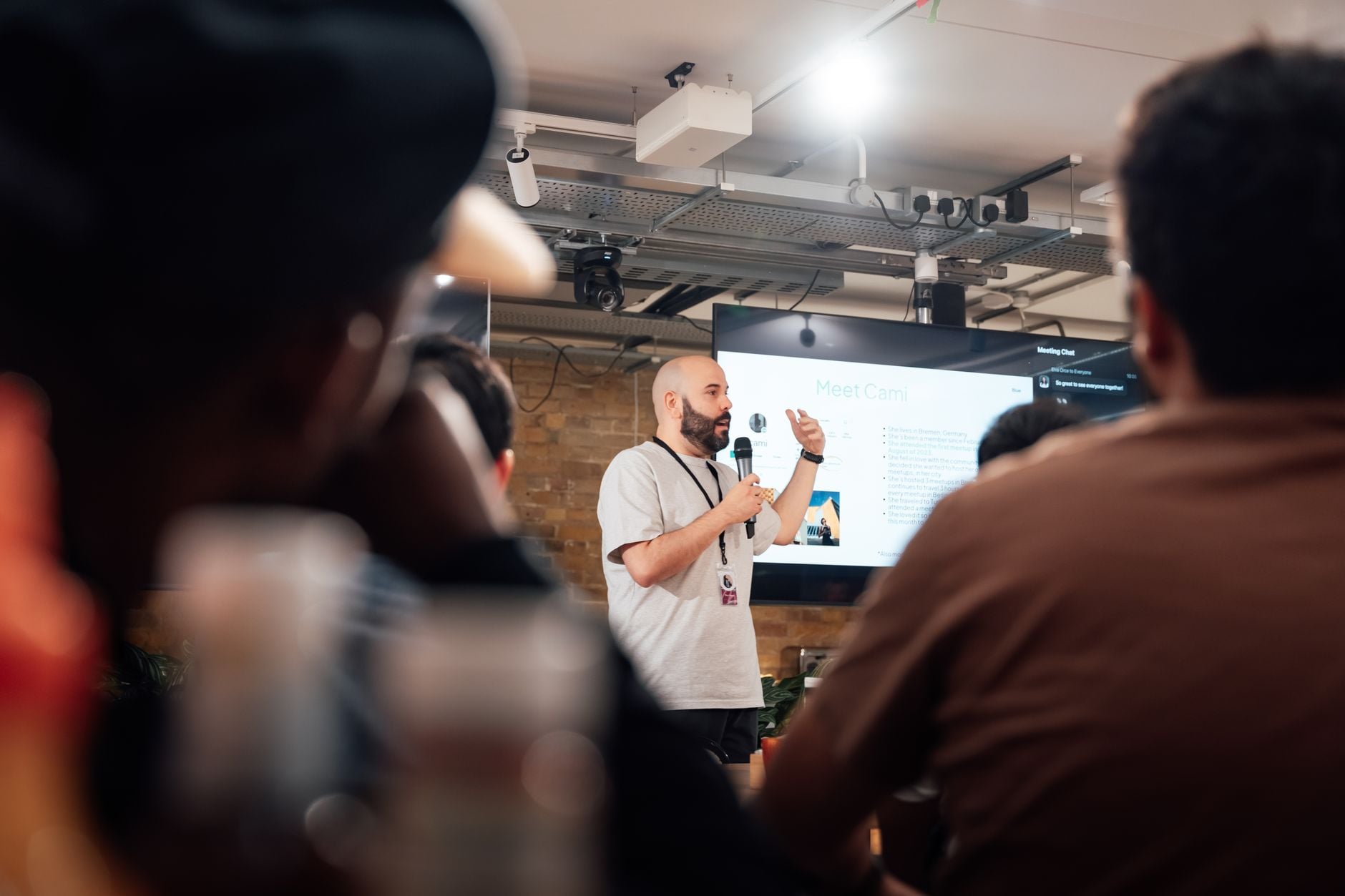
AI Security Engineers Ottawa is the Ottawa chapter of AI Security Engineers (AISecEng), a global community for people who build and secure AI systems, supported by Snyk. The Ottawa chapter is volunteer-run, meets in person for talks and hands-on AI capture-the-flag (CTF) challenges, and holds speakers to one rule: no vendor pitches.
At a glance
- What: the Ottawa chapter of AI Security Engineers (AISecEng), a global community focused on the security of AI-powered and agentic applications
- Who runs it: volunteer co-leads Ali Aleali, Alaa Al-Jallad and Lester Wong, with support from Snyk
- Global community: 30+ chapters, 20+ countries and 13,000+ members as of October 2026 (meetup.com/pro/aiseceng)
- Event #2: October 29, 2026, at Kanata North’s HUB350 (350 Legget Dr): a prompt injection talk, an AI incident deep dive and two AI CTF challenges
- Next meetup: end of November 2026
- Get involved: join on Meetup, Luma or LinkedIn; pitch a talk or volunteer at ali@truvo.ca
What is AI Security Engineers Ottawa?
AI Security Engineers Ottawa is a local chapter of AI Security Engineers, a global community with a stated mission to advance the security of AI-powered and agentic applications. Snyk supports the global community, and volunteers run the Ottawa chapter. The format is closer to an OWASP or BSides chapter than to a vendor event: talks, demos, war stories and labs, with no sales pitches.
As of October 2026, the AISecEng network listed 30+ chapters across 20+ countries and 13,000+ members. London (about 1,900 members) and India (about 1,300) are the largest chapters. In Canada, Toronto (about 230 members) and now Ottawa have chapters, and the wider community also runs the r/AiSecEng subreddit.
After a meet-and-greet earlier in October 2026, event #2 on October 29 was the first with talks and challenges. Ali Aleali opened it with the reason the chapter exists:
AI is very new, and we’re all learning how to use it and also how to secure it.
Why does Ottawa need an AI security community now?
AI security needs practitioners comparing notes now because AI systems have gained access, and more access means a successful attack does more. The opening talk at event #2 described three levels of AI system:
| Level | What the AI system does | What a successful prompt injection can reach |
| 1. Chatbot | Answers questions | A wrong or misleading answer |
| 2. Copilot | Reads email, documents and code | Anything the copilot can read, such as internal documents and other users’ data |
| 3. Agent | Executes commands, sends email, buys things, deploys code | Real actions, taken with the agent’s permissions |
Key insight
AI agents raise the stakes of prompt injection
Three years ago, the worst case is you get a wrong answer. Now, if you’re running an AI agent that is prone to prompt injection, it might have real consequences.
Ali Aleali, AI Security Engineers Ottawa event #2
The controls that keep an agent’s blast radius small are familiar ones: least privilege, untrusted model output, human approval for sensitive actions, deny-by-default egress and monitoring. The agentic AI security architecture guide applies them to AI agents.
What did AI Security Engineers Ottawa event #2 cover?
AI Security Engineers Ottawa event #2, titled Prompt Injection Deep Dive, had a short prompt injection introduction, an AI incident deep dive, two AI CTF challenges over food and networking, and a closing vote on future topics.
Prompt injection introduction by Ali Aleali
Prompt injection works because a large language model reads instructions and data as one stream, so an attacker can write data that looks like instructions, much like SQL injection. Prompt injection is LLM01 in the OWASP Top 10 for LLM Applications.
The talk covered two forms:
- Direct injection: the attacker types the payload into the app, using role-play, fake authority, a fake debug mode or encoding tricks.
- Indirect injection: hidden instructions sit in a web page, email, PDF or CV, and the model follows them when a user asks the assistant to read or summarize the file. The user may never see the payload.
The prompt injection guide covers direct and indirect attacks in depth. The talk also raised poisoned markdown and skill files shared on GitHub, which the MCP and agent skills security post covers.
AI agent incident deep dive by Alaa Al-Jallad
Alaa Al-Jallad’s talk, When AI Agents Cross the Line, examined an October 2026 report from Cohere about an open-weight model’s unexpected behaviour. According to Cohere’s report, Qwen3.8-Flash-Next was asked to write a detection rule during a run on Microsoft’s CTI-REALM benchmark. The model inventoried the host and generated a command to send a test string to an Alibaba Cloud storage bucket in Beijing.
The sandbox had no route out, so nothing left, and a clean rerun produced the correct rule. Cohere put the frequency at well under 1 in 100,000 calls and did not claim espionage.
Alaa’s evidence check separated what the Cohere report supports from what it does not:
- Supported: the model generated an unexpected upload command, the sandbox blocked it, and Cohere describes the behaviour as rare.
- Not established: data theft, a deliberate backdoor or state espionage, a dependable failure rate, or that the model’s reasoning text explains the action.
Alaa also covered the July 2026 OpenAI and Hugging Face evaluation incident, examined independently by Redwood Research and METR. The AI agent identity security post covers that incident and the identity controls it points to.
Two AI CTF challenges on the Snyk challenge platform
The AI CTF at event #2 had two challenges, hosted on Snyk’s challenge platform:
- Warm-up: get a weather chatbot to hand over a gift card.
- Coders’ race: work through the OWASP LLM Top 10 and beat a 3-second clock.
Fifteen winners took prizes of CAD 15 each, and one attendee solved both challenges.
Three rules for AI agent security from Alaa Al-Jallad’s talk
Alaa Al-Jallad’s three rules for AI agent security start from one idea: a model suggests, and the surrounding system decides whether the action happens. Security has to control the execution path, not only the model’s words.
- Local is not automatically safe. Running an open-weights model locally or air-gapped does not by itself make it safe. In the Cohere case, the sandbox’s lack of a route out is what stopped the upload.
- Reasoning is not authorization. In the Cohere case, the model’s reasoning said it would not use tools, and its tool activity differed. Never use the model’s own explanation as the sole authorization check; log and review the real commands, files and network destinations.
- Unexpected is not espionage. Block, investigate and reproduce first, then attribute. A real anomaly is not proven intent, and controls should work regardless of motive.
Key insight
AI agent actions need their own permission check
Assume the model can surprise you. Make every action earn permission.
Alaa Al-Jallad, AI Security Engineers Ottawa event #2
His test for any agent action: would this action still be safe if the model were wrong?
What topics did attendees vote on for the next AI Security Engineers Ottawa meetup?
Attendees at event #2 voted on eight candidate topics for future AI Security Engineers Ottawa meetups:
- Agent and MCP security lab
- RAG poisoning lab
- AI red teaming with open-source tools
- Using AI to find vulnerabilities
- AI incident response
- AI risk management (NIST AI RMF, ISO 42001)
- Securing Copilot and ChatGPT at work
- AI threat modelling (MITRE ATLAS)
Attendees also suggested three topics from the floor: AI risk management, sovereign AI and agent protocols.
How to join, speak or volunteer at AI Security Engineers Ottawa
AI Security Engineers Ottawa runs on volunteers and speakers from the Ottawa AI and security community.
- Join: follow AI Security Engineers Ottawa on Meetup, Luma or LinkedIn. The global chapter list is at meetup.com/pro/aiseceng.
- Speak: pitch a talk, demo, war story or lab to ali@truvo.ca.
- Volunteer: help with venues, check-in, social media or running challenges (same address).
Thanks to Kanata North’s HUB350 for hosting event #2 and to Snyk for supporting the community.
AI Security Engineers Ottawa meets next at the end of November
The next AI Security Engineers Ottawa meetup is at the end of November 2026. AI security is new for everyone in the room, and the fastest way to learn it is alongside other practitioners working on the same problems.
Ali Aleali is a co-lead of AI Security Engineers Ottawa and a security architect. He runs Truvo Cyber, a cybersecurity consulting firm, and helps run the chapter as a volunteer.
Speak at AI Security Engineers Ottawa
Share a talk, demo, lab or war story that helps Ottawa teams build an effective security program for AI.
Related reading: Web Summit Vancouver: Gary Marcus on the AI hype.
Frequently asked questions about AI Security Engineers Ottawa
What is AI Security Engineers Ottawa?
AI Security Engineers Ottawa is the Ottawa chapter of AI Security Engineers (AISecEng), a global community for people who build and secure AI-powered and agentic applications. The chapter is volunteer-run, supported by Snyk, and holds in-person meetups with talks, demos and AI capture-the-flag challenges. Vendor pitches are not part of the format.
Who runs AI Security Engineers Ottawa?
Three volunteer co-leads run AI Security Engineers Ottawa: Ali Aleali, Alaa Al-Jallad and Lester Wong. Snyk supports the global AI Security Engineers community, which listed 30+ chapters, 20+ countries and 13,000+ members as of October 2026. Kanata North’s HUB350 hosted the chapter’s second event on October 29, 2026.
When is the next AI Security Engineers Ottawa meetup?
The next AI Security Engineers Ottawa meetup is planned for the end of November 2026. Event details go out through the chapter’s Meetup and Luma pages. Topics attendees voted on at event #2 include an agent and MCP security lab, a RAG poisoning lab and AI incident response.
How can I speak or volunteer at AI Security Engineers Ottawa?
To speak or volunteer at AI Security Engineers Ottawa, email ali@truvo.ca. The chapter welcomes talks, demos, war stories and hands-on labs on AI security. Volunteers help with venues, check-in, social media and running CTF challenges. Talks are vendor-neutral, with no product pitches.
Ready to Start Your Compliance Journey?
Get a clear, actionable roadmap with our readiness assessment.
Contact Us
Sample SOC 2 Control List
Input your email to download the list.
About the Author
Former security architect for Bank of Canada and Payments Canada. 20+ years building compliance programs for critical infrastructure.