
.svg)
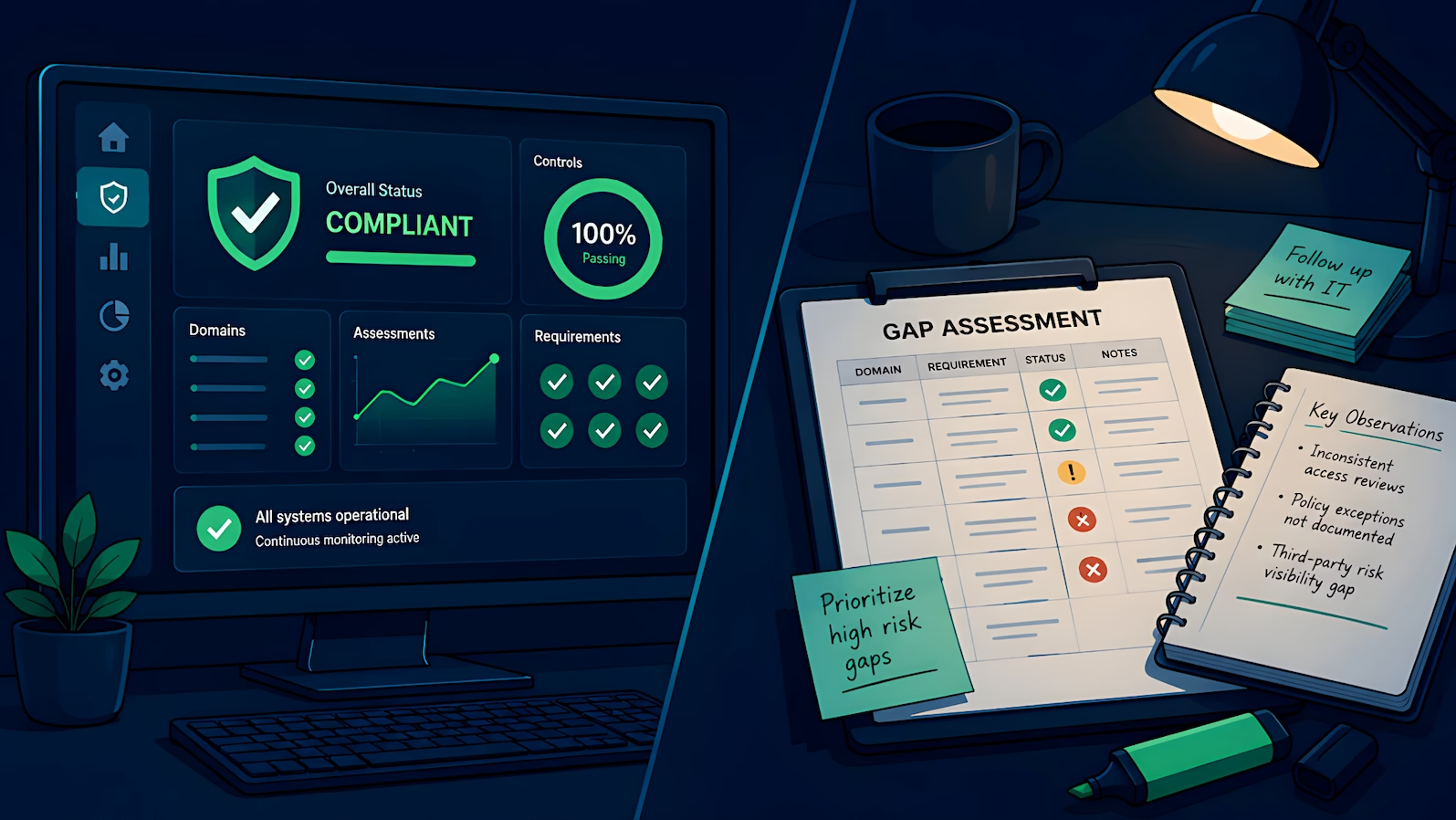
A SOC 2 readiness assessment and Drata solve different problems. The assessment tells you whether your control environment is adequate before the auditor arrives. Drata tells you whether your controls are operating after the program is running. Getting that sequencing wrong, treating the platform as a substitute for the assessment, is one of the more predictable ways to enter an observation period unprepared.
The core distinction
Drata monitors whether controls are operating. A readiness assessment evaluates whether those controls are designed correctly, scoped properly, and supported by evidence that meets audit standards. Both matter. Neither replaces the other.
What a Readiness Assessment Is (and Is Not)
A SOC 2 readiness assessment is a structured gap analysis conducted before the auditor begins formal review. It maps your current controls against the applicable Trust Services Criteria, identifies where you fall short, and produces a remediation roadmap with enough runway to close the gaps before the observation period begins.
Timing is the critical variable. For SOC 2 Type 2, the observation period runs three to twelve months. Any control failure during that window is a potential finding in the final report. By the time the auditor evaluates operating effectiveness, the time for remediation has passed. The assessment creates the gap between finding the problem and the clock starting.
It is not a software report, a self-assessment questionnaire, or a vendor deliverable. It is an expert evaluation of your control environment against what auditors look for, which is a different bar than what most teams apply to themselves.
What a Readiness Assessment Covers
Controls Gap
The technical controls are often in place: firewalls, MFA, encryption, endpoint management. What tends to be missing is the governance structure around them. Formal access review cadences. Documented vendor risk processes. Incident response procedures that have been tested, not just written. The control exists; the program surrounding it does not.
Evidence Gap
A control existing is not the same as a control being demonstrable to an auditor. SOC 2 Type 2 requires evidence of consistent operation over the observation period: access reviews documented, patch management with a dated record, firewall rule reviews with a timestamped output.
The most common pattern
The security work is happening. The documentation is not. When teams go looking for historical records before an audit, they frequently find that a process running reliably for years has left almost no trail. The fix is usually lightweight, but it requires a shift from doing the work to doing the work and recording it.
Policy Gap
SOC 2 requires documented, reviewed, and approved policies that reflect actual practice. A policy template with the company name inserted is not the same as a policy the team understands and operates against. The distinction surfaces when an auditor asks how a specific policy applies to a specific system, or when an enterprise prospect asks pointed questions in a security questionnaire.
Scoping Gaps
Scope decisions determine the complexity and cost of everything that follows. Two patterns appear regularly: companies over-scope by treating SOC 2 as organization-wide compliance when the audit applies to one product, and they under-scope by omitting critical subprocessors that handle customer data. Both create audit risk. For a detailed treatment, the SOC 2 scoping guide covers this in depth.
How Drata Fits Into a Readiness Assessment
Drata connects to infrastructure through API integrations and maintains a continuous record of compliance posture. It contributes to the assessment in three ways: automated checks surface control failures in near real time, collected evidence shows which controls have documentation and which do not, and its control list aligned to the Trust Services Criteria provides a working framework for the gap analysis.
What Drata does not do:
Evaluate control design. A control can be fully green in the Drata dashboard while being inadequate by audit standards. The platform monitors whether controls are operating, not whether they are designed correctly for the audit scope or what the auditor will actually test.
Make scoping decisions. Scope requires human judgment about which systems, people, and processes belong in the audit. The platform tracks what you configure into it; it does not tell you what belongs there.
Evaluate evidence quality. Auditors have specific expectations about evidence format and completeness that vary by control and audit firm. The platform stores evidence; an experienced reviewer evaluates whether it passes.
Evaluate policy adequacy. Drata can flag an overdue policy review. It cannot evaluate whether the policy reflects actual practice or would hold up under auditor inquiry.
Green dashboard does not mean audit-ready
Companies that go into their first audit with a well-configured Drata environment but without a proper readiness assessment tend to discover this distinction during the audit itself. The dashboard shows green. The auditor has questions about control design and evidence completeness that the platform was never built to answer.
For context on Drata's capabilities in a compliance program, see Drata vs. Vanta for SOC 2 automation.
How Long a Readiness Assessment Takes
For a company with a defined scope, a focused assessment runs two to four weeks:
- Week 1: Kick-off, scope confirmation, documentation review (policies, architecture diagrams, vendor inventory, existing evidence)
- Week 2: Control walkthroughs, evidence spot-checks, Drata environment review if applicable
- Week 3: Gap analysis synthesis, remediation backlog drafting
- Week 4: Report delivery, prioritization session, go/no-go recommendation
The relevant planning constraint: budget four to eight weeks of remediation time between assessment completion and the start of the observation period. The SOC 2 Type 1 vs Type 2 guide covers how the Type 1 format provides scheduling flexibility in that timeline.
What the Output Looks Like
A completed readiness assessment produces three deliverables:
Readiness Report
A written assessment of the current control environment against the Trust Services Criteria, with current state, gaps identified, and audit risk for each control area. This is the reference document the team works from during remediation.
Remediation Backlog
A prioritized gap list with owners, remediation approaches, and target dates, distinguishing quick wins (a missing policy, a lapsed access review) from longer-lead items (implementing a new process, reconfiguring a monitoring integration).
Go/No-Go Recommendation
An honest assessment of whether the organization can hit the target audit date, or whether the timeline needs adjustment before committing to an observation window.
Ready Before the Auditor Arrives
The readiness assessment is how an effective security program starts, before the observation clock starts running.
Who Should Run the Assessment
Internal Team
Viable for teams with prior SOC 2 experience. The risk for first-time audits is calibration: internal teams tend to evaluate controls against their own standards, which run higher than necessary on the technical side and lower than necessary on documentation and process governance.
GRC Platform Alone
Drata and similar platforms provide automated gap detection that is valuable and should be used. They are not a substitute for a structured assessment because they evaluate operational status, not design adequacy, scope completeness, or evidence quality.
External Consultant
Consultants who have run SOC 2 engagements across many organizations bring calibration that neither internal teams nor platforms can replicate: knowledge of what specific auditors ask, what evidence is sufficient for specific controls, and where design decisions create downstream problems.
Working With Truvo on a Drata Readiness Assessment
Truvo runs readiness assessments as the opening phase of SOC 2 engagements, including Drata-based programs. The assessment covers all four gap categories and, for teams already on Drata, includes a review of platform configuration against the specific requirements of the audit: whether integrations are correctly configured, whether evidence collection matches what the auditor will request, and whether controls are mapped to the right criteria.
Drata Managed Services | SOC 2 Accelerator | Contact Us
Frequently Asked Questions
What is a SOC 2 readiness assessment?
A SOC 2 readiness assessment is a structured gap analysis conducted before the formal audit begins. It maps your current control environment against the applicable Trust Services Criteria, identifies design and evidence gaps, reviews scoping decisions, and produces a prioritized remediation backlog. The goal is to surface and close gaps before the observation period starts, when findings become permanent.
Does Drata replace a SOC 2 readiness assessment?
No. Drata monitors whether controls are operating and automates evidence collection, but it does not evaluate whether controls are designed correctly for the audit scope, whether scoping decisions are sound, or whether evidence will meet auditor standards. A readiness assessment addresses these questions. Most Drata-based programs benefit from both: the platform provides ongoing monitoring, while the assessment provides the expert evaluation that precedes the observation period.
How long does a SOC 2 readiness assessment take?
For a company with a defined scope and accessible team, a focused readiness assessment runs two to four weeks. More complex environments with multiple products, legacy infrastructure, or previous audit findings take longer. After the assessment, teams should budget four to eight weeks of remediation time before the observation period begins.
What does a SOC 2 readiness assessment include?
A readiness assessment covers four gap categories: the controls gap (are controls present and correctly designed), the evidence gap (is documentation sufficient to demonstrate consistent operation), the policy gap (do policies reflect actual practice), and the scoping gap (are the right systems and people included in the audit). The output is a readiness report, a prioritized remediation backlog, and a go/no-go recommendation on the target audit date.
What is the difference between a SOC 2 readiness assessment and the SOC 2 audit?
A readiness assessment is a pre-audit evaluation conducted by your team or a consultant. It is collaborative and designed to find and fix gaps. The formal SOC 2 audit is conducted by an independent CPA firm. For SOC 2 Type 2, any control failure during the audit observation period becomes a finding in the report. The readiness assessment creates the time and information needed to address issues before that window opens.
Who should run a SOC 2 readiness assessment?
Teams with prior SOC 2 experience can run the assessment internally, but the risk is calibration: without a reference point for what auditors actually test, internal assessments tend to miss documentation and process gaps. External consultants who have run multiple SOC 2 engagements bring that calibration. GRC platforms like Drata provide automated gap detection that is useful but incomplete as a standalone assessment. For a first audit, an external-led assessment produces a more reliable readiness picture.
Truvo's readiness and gap assessment service sets out what that external-led assessment covers, including the evidence review and a realistic audit date.
Ready to Start Your Compliance Journey?
Get a clear, actionable roadmap with our readiness assessment.
Contact Us
Free Report: The CPCSC Compliance Playbook
Join the waitlist for a free copy when it's released.
About the Author

Former security architect for Bank of Canada and Payments Canada. 20+ years building compliance programs for critical infrastructure.