
.svg)
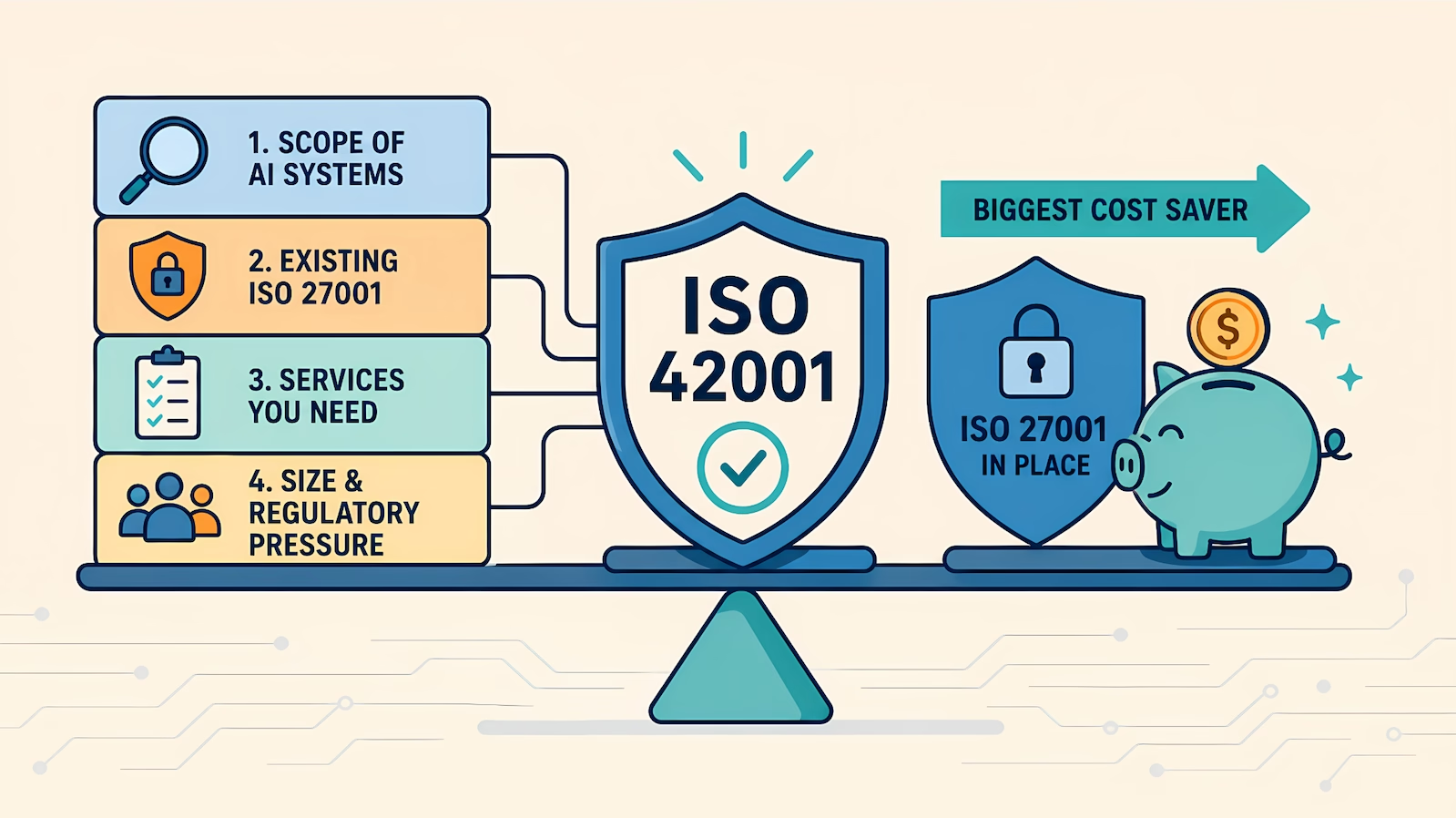
ISO 42001 implementation and certification for small organization can land anywhere between roughly US$20,000 and US$55,000 for a first certification, and a mid-size company can pay US$85,000 to US$150,000 in year one.
TL;DR: what ISO 42001 costs and what moves the number
The numbers at a glance
- Small organization, first year: roughly US$20,000 to US$55,000, covering gap assessment, implementation, and the accredited audit.
- Mid-size organization, first year: roughly US$85,000 to US$150,000.
- Ongoing maintenance: roughly US$10,000 to US$25,000 per year for surveillance audits and program upkeep.
- The biggest lever: an existing ISO 27001 program cuts the total by 40 to 60 percent, because the management system clauses overlap almost entirely.
- The four factors that set your number: (1) the scope of the AI management system and how many AI systems are in it, (2) whether you already hold ISO 27001, (3) whether you are buying a gap assessment, a full implementation, or only the audit, and (4) your organization size and which regulations are driving the work.
Ranges here reflect competent providers in the North American and UK markets in 2026, drawn from published cost analyses by CertBetter, Elevate Consult, and Sternberg Consulting. They are typical figures, not advertised prices.
Why is ISO 42001 priced so differently from one vendor to the next?
ISO 42001 is the first certifiable management system standard for AI, and its certification market is young. UKAS granted the first accreditations in January 2026, so accredited bodies such as BSI, LRQA, and NQA are only now auditing against recognized accreditation. Pricing has not converged: few auditors are accredited, few consultants have built a working AI management system, and quotes reflect that scarcity.
The audit and the preparation are also two separate bills. Certification is performed by an accredited body, and a consultant cannot certify work they helped build, so the audit fee and the implementation fee go to two different organizations. ISO 27001 and SOC 2 draw the same line.
A clean, well-run AI governance program is cheaper to certify because the auditor finds less to question. Each factor below measures how much of that program you have already built.
Factor 1: The scope of the AI management system
The largest variable in your cost is how much you put inside the management system. An organization with two AI features in one product is a fundamentally different engagement from one running forty models across multiple business units. Scope sets the size of the AI risk register, the number of impact assessments, the volume of evidence, and the days the auditor needs for the Stage 2 assessment.
Scope is also where teams inflate their own bill. Pulling every experimental model and internal tool into the first certification feels thorough, but it multiplies the documentation and audit effort without adding procurement value. A tighter initial scope, limited to the AI systems customers and regulators care about, is the cheaper and more disciplined place to start. You can expand it at surveillance time once the system is running.
Scope is the lever you control
A tight first scope, limited to the AI systems customers and regulators care about, is the single cheapest decision you can make. You can always widen scope at surveillance time once the system is proven.
Factor 2: Whether you already hold ISO 27001
An existing ISO 27001 program is the largest discount on this list, and the one teams underweight. ISO 42001 shares the same high-level management system structure as ISO 27001: context of the organization, leadership, planning, support, operation, performance evaluation, and improvement. If you already run an ISO 27001 information security management system, those clauses are built, evidenced, and audited. You are adding the AI-specific controls on top, not starting from a blank page.
Across the market, an existing ISO 27001 program cuts ISO 42001 cost by 40 to 60 percent. Your risk management process, internal audit function, management review cadence, document control, and corrective action workflow already exist. What remains is the AI-specific work: classifying your AI systems, building an AI risk register, running AI impact assessments, and authoring AI governance policies. This overlap is the practical reason we point teams at their information security foundation first. We cover how the controls map in detail in the overlap between ISO 42001, ISO 27001, and SOC 2, and if you have not chosen an information security baseline yet, which to pursue first, ISO 27001 or SOC 2 is the right prior question.
The biggest cost lever
An existing ISO 27001 program cuts ISO 42001 cost by 40 to 60 percent. The cheapest path to ISO 42001 runs through a mature information security program.
Factor 3: Gap assessment vs full implementation vs audit
"How much does ISO 42001 cost" is really three separate purchases. Conflate them and the quotes you collect stop being comparable.
A gap assessment measures your current state against the standard and produces a roadmap. It is the smallest commitment, often a few thousand to low five figures, and it tells you honestly how far you are from a Stage 1 audit. Teams with an existing ISO 27001 program sometimes find the gap is narrow enough to close internally.
A full implementation is the work of building the AI management system so it holds together: scope definition, AI system inventory, risk register, impact assessments, policy set, control design, and evidence collection. This is the largest single cost for most organizations and the line item with the widest spread, because it is where program maturity and scope compound.
The accredited audit is a separate fee paid to the certification body, delivered in two stages: a documentation review (Stage 1) and an assessment of the system in operation (Stage 2). You pay for both, and you pay the certification body, not the consultant. Buying only the audit makes sense if your program is already built and you simply need it certified. Buying only a gap assessment makes sense if you want to understand the work before committing. Most first-time certifiers need all three, which is why the headline ranges bundle them.
Factor 4: Organization size and regulatory drivers
Larger organizations cost more for reasons that have little to do with AI: more employees, more vendors, more sites, more cloud accounts, and more stakeholders to align. This is why the mid-size first-year range (US$85,000 to US$150,000) sits well above the small-organization range. Audit days scale with footprint, and so does the internal coordination an implementation requires.
Regulation is the other half, and its timelines have moved. Budget against the current ones. The EU AI Act applies in phases: general provisions from 2 August 2026, transparency obligations from 2 December 2026, the standalone high-risk obligations under Annex III from 2 December 2027, and obligations for AI embedded in regulated products from 2 August 2028. Several of these deadlines were postponed in the May 2026 Digital Omnibus, as documented by Gibson Dunn and Kennedys. In the United States, state-level rules such as Colorado's AI law are pushing organizations toward documented AI governance ahead of any single federal standard. ISO 42001 is not the same thing as legal compliance with these regimes, but a functioning AI management system is the structure most teams use to demonstrate the governance those laws expect. The closer your AI touches regulated decisions, the more scrutiny the auditor applies, and the more the engagement costs.
Budget against the real timeline
The EU AI Act's standalone high-risk obligations under Annex III now land on 2 December 2027, not August 2026, after the May 2026 Digital Omnibus postponements. Budget against the actual deadline, not the headline.
ISO 42001 cost comparison: 2026 ranges
| Cost element | Small organization | Mid-size organization | With existing ISO 27001 |
| Gap assessment | Low five figures | Mid five figures | Reduced 40 to 60% |
| Full implementation | Included in total below | Included in total below | Reduced 40 to 60% |
| Accredited audit (Stage 1 + 2) | Paid to certification body | Paid to certification body | Largely unchanged |
| First-year total (gap + implementation + audit) | US$20,000 to US$55,000 | US$85,000 to US$150,000 | 40 to 60% lower than the base range |
| Ongoing maintenance (per year) | US$10,000 to US$25,000 | Scales with AI inventory and jurisdictions | Lower, shares the ISO 27001 surveillance cycle |
Figures synthesized from CertBetter, Elevate Consult, and Sternberg Consulting, 2026.
Where to start with AI governance
You do not need to commit to certification to start governing AI well. The sequence that keeps cost predictable is straightforward:
- Confirm your information security foundation. If you hold ISO 27001 or SOC 2, you have most of the management system already, and ISO 42001 becomes an extension rather than a new program. If you do not, that foundation is the first investment, and it benefits more than your AI work.
- Inventory your AI systems and define a tight scope. List the models and AI features that touch customers or regulated decisions. Resist pulling everything in at once.
- Run a gap assessment before buying an implementation. Know the distance to Stage 1 before committing to the largest line item.
- Separate the audit from the preparation in your budget. The accredited body is a distinct cost from any consultant, and the two are never the same vendor.
- Map your regulatory drivers to real deadlines. The EU AI Act's high-risk obligations now land in December 2027, not 2026. Budget against the actual timeline, not the headline.
ISO 42001 rewards the same discipline as every other certification. A real program is cheaper to certify than a paper one, and the closer the standard sits to a working security foundation, the smaller the incremental bill. Companies that treat AI governance as an extension of effective security, not a separate compliance project, tend to land at the low end of every range above. They also win the enterprise AI deals where this question now appears on the procurement checklist.
Truvo builds and operates ISO 42001 AI management systems on the same Assess, Build, Operate model we use for ISO 27001 and SOC 2, so the AI controls extend a program you can actually run rather than a binder assembled for the auditor. If you want to know where to start, score your readiness in a few minutes or see our pricing. Because the cheapest path to ISO 42001 runs through a mature information security foundation, that is usually where we begin scoping.
Planning ISO 42001? Let us scope it.
We build and operate your AI management system as an extension of an effective security program, so the certification becomes a byproduct, not a standalone project.
Frequently Asked Questions
How much does ISO 42001 certification cost in 2026?
A small organization typically pays US$20,000 to US$55,000 in the first year, covering gap assessment, implementation, and the accredited audit. A mid-size organization pays US$85,000 to US$150,000. Ongoing maintenance runs US$10,000 to US$25,000 per year. Where you land depends on scope, existing certifications, and regulatory pressure.
Does ISO 27001 reduce the cost of ISO 42001?
Yes, significantly. ISO 42001 and ISO 27001 share the same management system structure, so an existing ISO 27001 program cuts ISO 42001 cost by 40 to 60 percent. The risk process, internal audit, management review, and document control already exist. You add the AI-specific controls on top rather than building the whole system from scratch.
Is the certification audit a separate cost from the consultant?
Yes. Certification is performed by an accredited body such as BSI, LRQA, or NQA, which is separate from any consultant who helps you prepare. The audit fee and the preparation fee are two different line items paid to two different organizations. A consultant cannot certify work they helped build, which is the same rule that applies to ISO 27001 and SOC 2.
Can certification bodies even issue accredited ISO 42001 certificates yet?
Yes. UKAS granted the first ISO 42001 accreditations in January 2026, so accredited certification bodies including BSI, LRQA, and NQA now offer audits backed by recognized accreditation. Before that, certificates were issued without accreditation, which carried less weight in procurement. Confirm your chosen body holds accreditation for ISO 42001 specifically.
Does the EU AI Act mean I need ISO 42001 by August 2026?
Not for high-risk systems. The EU AI Act's general provisions apply from 2 August 2026 and transparency obligations from 2 December 2026, but the standalone high-risk obligations apply from 2 December 2027 after the May 2026 Digital Omnibus postponements. ISO 42001 is not legal compliance with the Act, but it is the governance structure many teams use to prepare.
What is the cheapest way to approach ISO 42001?
Build on an existing information security program, keep your initial AI scope tight, and run a gap assessment before committing to a full implementation. Teams that treat AI governance as an extension of effective security, not a standalone compliance project, tend to land at the low end of the published ranges and avoid year-two surprises.
Ready to Start Your Compliance Journey?
Get a clear, actionable roadmap with our readiness assessment.
Contact Us
Free Report: The CPCSC Compliance Playbook
Join the waitlist for a free copy when it’s released.
About the Author

Former security architect for Bank of Canada and Payments Canada. 20+ years building compliance programs for critical infrastructure.